Background Switcher (Hidden)

Showing posts with label Blackburnian warbler. Show all posts

28 Minutes of September

Tuesday, September 15, 2020

12 comments

 The morning started beautifully, at 8:17 AM with this spring's rose-breasted grosbeak, trying to sing. He'd gotten strawberry jam all down his front. Just kidding--he's coming into his first adult plumage, but it's gonna take a couple years. I love seeing them when they're just showing the first hints of their sex.


I went inside reluctantly, but I was due to be on a public radio fundraiser for WOSU with my dear friend Ann Fisher,  and I wasn't about to miss that! I am deeply honored to be asked to help with a fundraiser. Ann asks such wonderful, unexpected questions, and I adore her and hold her in highest regard. I feel like this narrow sort of nature savant, where she's a brilliant generalist who knows something about everything. I know I'm kind of a break from the news, and I like serving in that capacity.

Well, I'd no sooner hooked up the Zoom audio connection with the Columbus OH radio station than a little wave of fall migrants came sweeping into my yard. I'm inside sitting at my drawing table, all tethered by headphones plugged into my laptop, and all this is happening outside! 

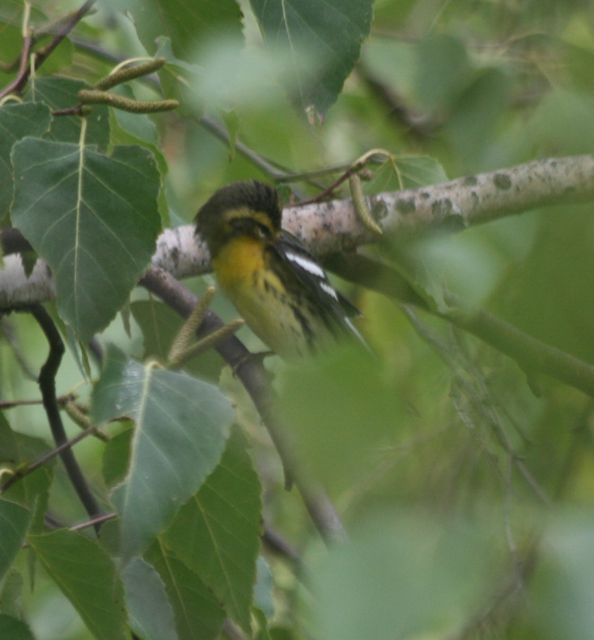
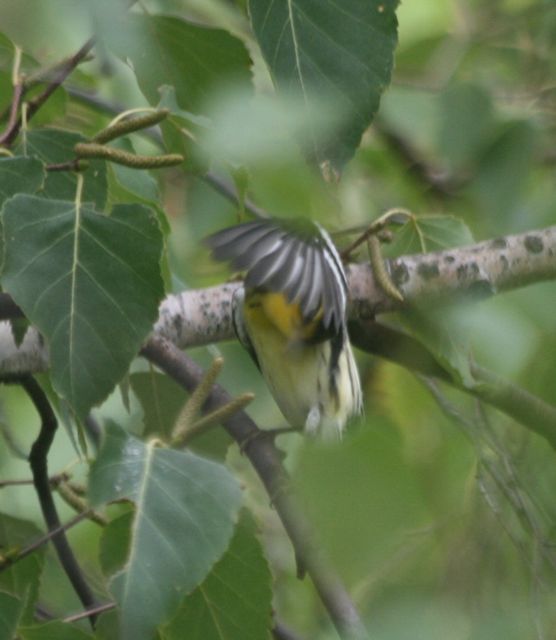
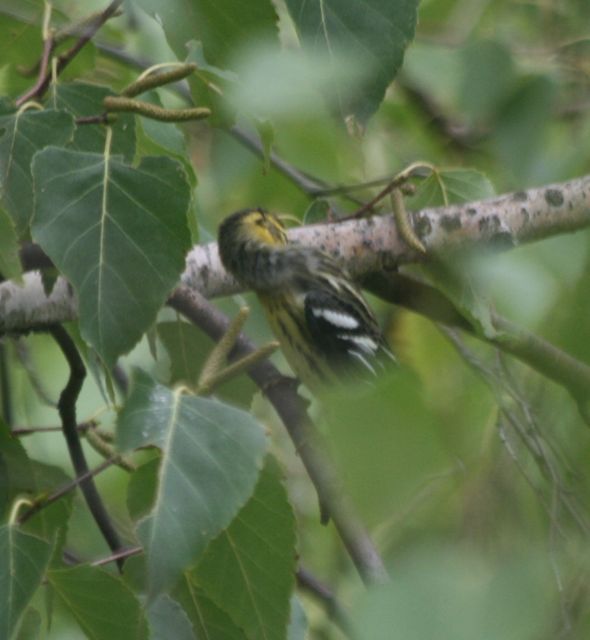
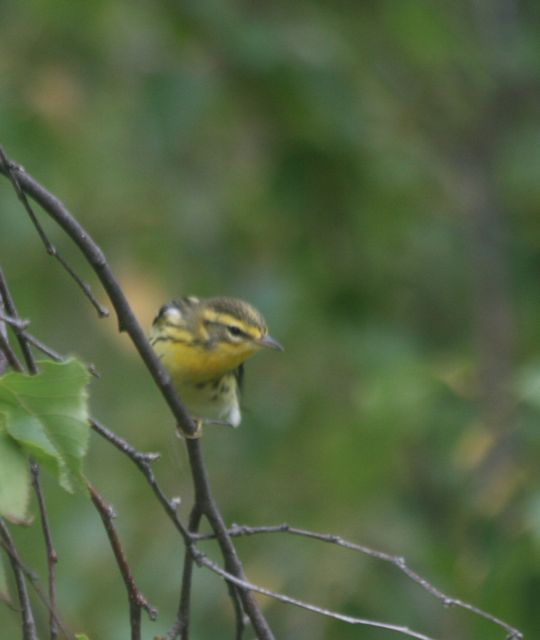
11:09 am: A young female Blackburnian warbler peers quizzically through the birch twigs. 
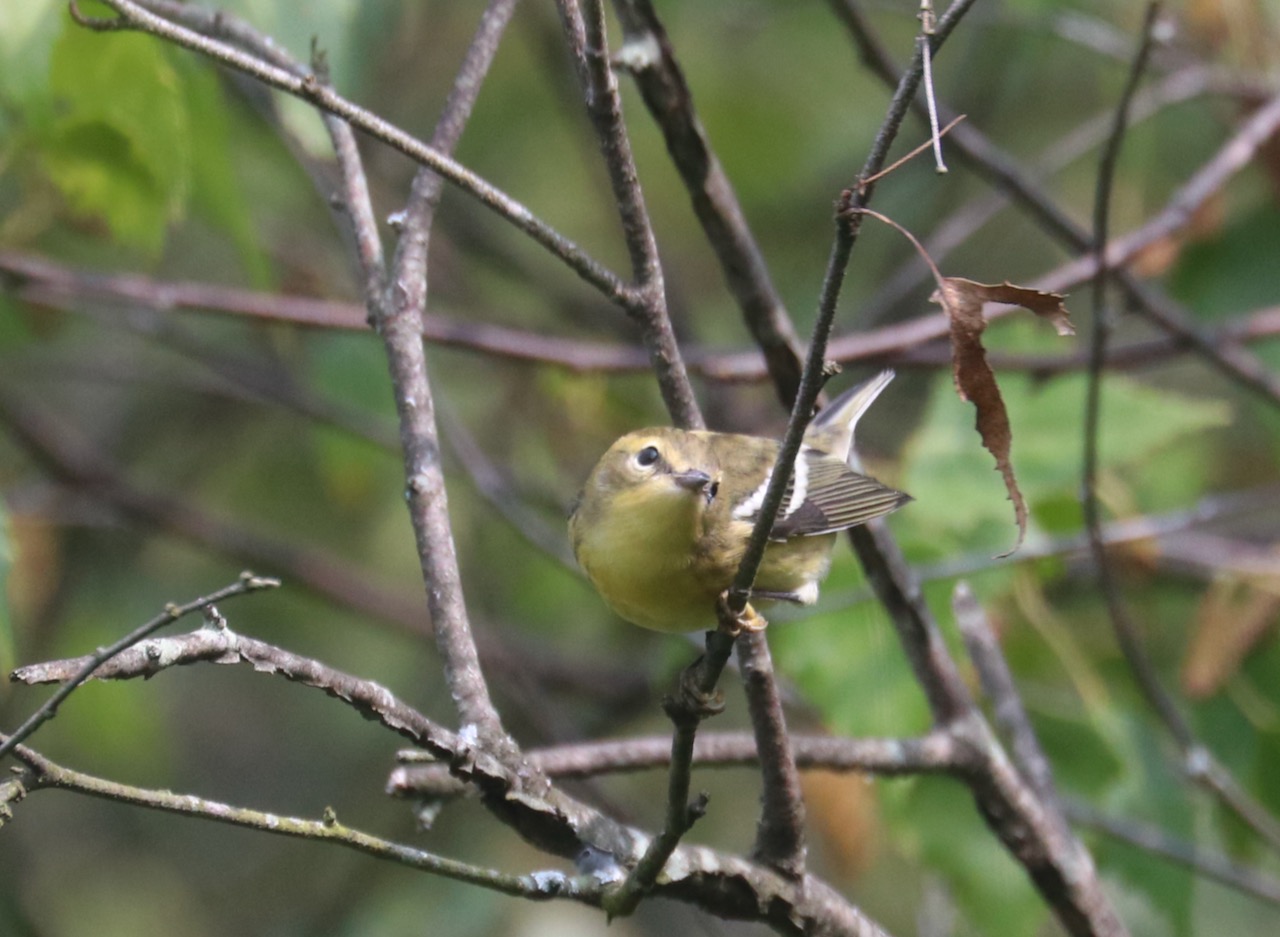

There's warbler action everywhere. I see a little magnolia go flitting through, but I don't get my lens on another bird until 11:14 when a young bay-breasted warbler lands on the feeder post.


You can see the traces of bay on his flanks, which tells us it's a male. How beautiful!


Bay-breast is sometimes hard to tell from blackpoll in fall, but you can almost always see a bit of bay on the flanks. The bay-breast has lead-gray feet and legs, while a blackpoll has yellow-orange feet. And baybreasts have sweeter, plainer faces and cleaner striping on the back than do blackpolls, which always look a tetch mean to me. Blackpolls have a stern line through the eye, bay-breasts less so.

At 11:19, the bay-breast fluttered over to a birch, where it made a lovely sight.


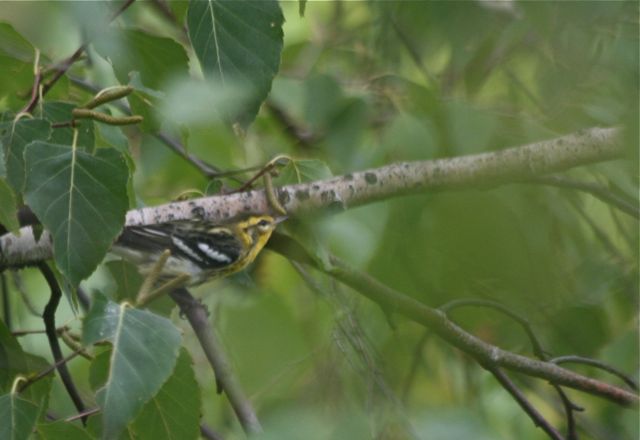
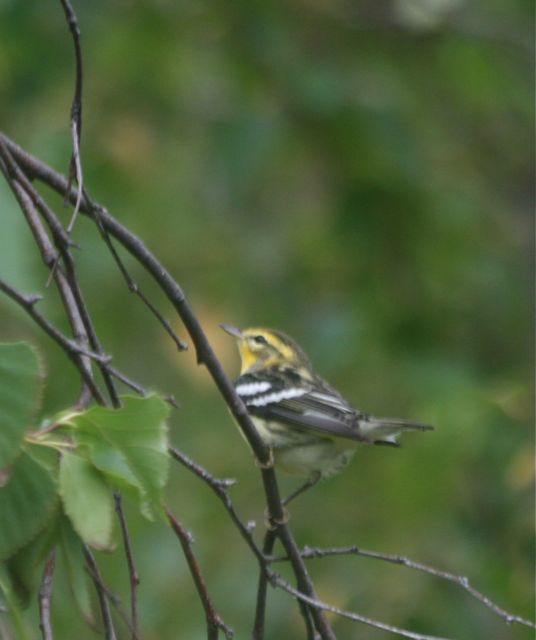
At 11:27, a beautiful young Blackburnian warbler appeared. I got a bunch of blurry photos, but this one was at least acceptable. It's a classic Audubon pose, showing every field mark--the very wide white wingbars, the pale backpack straps, and the strong, long eyeline. This is probably a young female, as it has no hint of orange in its yellow face. It's a girls' club today!


At 11:28, an eastern wood-peewee caught a little moth. How do I know it's a peewee and not an eastern phoebe? It's showing strong cinnamon wingbars, which a hatch-year phoebe would display as well. I know by the steepness of its forehead, and the slenderness of its body. Weird, but true. An eastern phoebe would look more flat-headed, with a larger head proportionate to its body.


Keep in mind that as I'm taking all these photos, I'm trying to sound cogent and informed about whatever Ann asks about. Ha ha! By now, Ann knows to ignore the sound of my shutter clicking as we talk. Science Chimp's gotta do what she's gotta do.
And it only got better! Here comes a  female black and white warbler, at 11:30! One of my very favorites!


Black and white warblers creep all over trunks and limbs, like a nuthatch does. They're looking for spiders, crickets, moths, larvae; anything that hides in bark crevices.
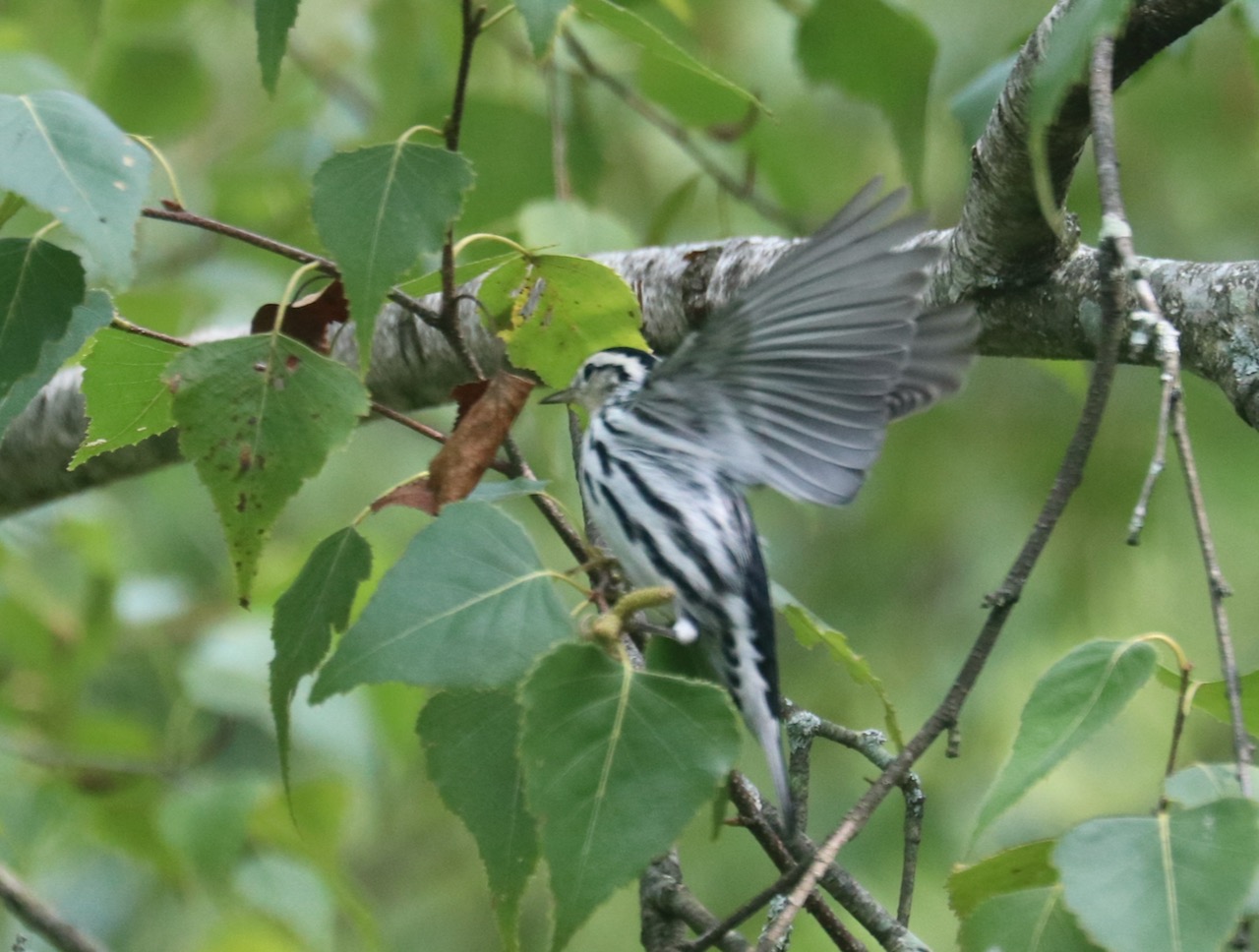

Here are the wings that will take her to a Costa Rican shade coffee plantation. And look, please, at the beautiful undertail and rump feathers, herringbone black and white. I always try to get a look at those perfect chevrons. 


We know this is a female by the clear white throat. A male would have black striping there. See that long, long bill, for probing in the bark? Black and whites also have a very long and strong hallux, or hind toe, for hanging head-down! Just like a nuthatch.


Only two minutes later, at 10:32, along comes a Cape May warbler. You're going to have to trust me on this ID. There are so many things that factor in here, but one of them is that we get floods of Cape Mays in the fall, and I just know them.   But how, you ask?


Well, there is no other fall warbler except perhaps a young female Pine, that has this precise shade of olive-drab. A young female Cape May and a young female Pine are the drabbest fall warblers there are. 

The strong but blurry streaking on the chest and flanks is another good field mark for Setophaga tigrina, the Cape May, the little striped tiger.


And finally it displays for the camera its best field mark in any plumage--the lime green rump.


This photo was taken at 10:32, and the warbler wave was over. 

Almost. A young bay-breasted warbler came right up to the studio window to say hello


and ask if I'd seen its most beautiful wings? Look at those long, tapered jobs--the wings of a long-distance migrant, who is headed to Central America. This bird is built to fly, and fly he will. 


Even I am agog at all that happened in my Ohio yard in those 28 minutes, and I'm grateful to be able to share it with you just a couple of hours after it happened.

It is a comfort, as America lies sick and burning, battered by discord as it is by hurricanes and thick smoke, to know that beautiful birds are still hatching, fledging, and now on the move, headed for the tropics, still living out their small but important lives. The smoke from California and Oregon has finally made its way to Ohio, to steal September's blue, and turn the sun into a smudgy thumbprint. Ann Fisher invited me on the show to give her listeners a nature break, and I'm here to tell you that the fall warbler migration is in full swing, today, right now. Get out there and take it in! It'll save you.

If you'd like to listen, the show is archived at https://tinyurl.com/zickonWOSU
If you'd like to give to WOSU, a $20 monthly sustaining donation will get you a subscription to Bird Watcher's Digest AND a fleece neck gaiter, too! 

Get out there and watch some warblers, will ya?

Delightful Spring

Wednesday, May 20, 2009

26 comments

Oh, what a delightful migration we've had. We've been busy, but have been home more than any May in memory. So I've had time to plant and weed and mulch and till and mow--all the things that somehow have to be added into the mix come spring. That makes me a much happier camper than when we run all over the country working festivals. I'm beginning to see what I should be doing less, what I should be doing more.


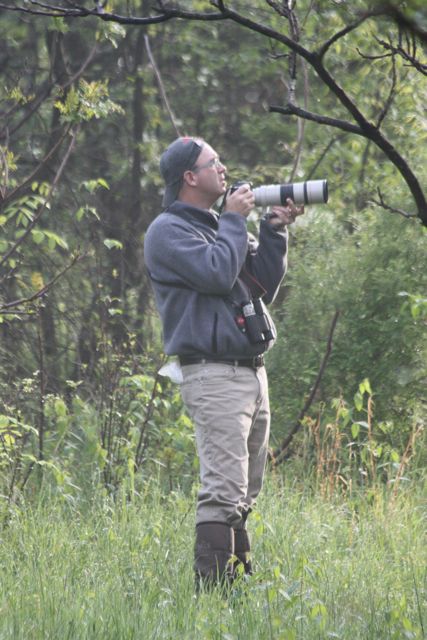
Going out to photograph birds with Bill in the morning is just about my favorite thing. We don't forget for a second how blessed we are that we can do this right outside our house, on this sanctuary we've made. Little visitors pass through and we try to capture their images, to show you these things we cherish. It isn't easy. Ask Bill of the Birds.


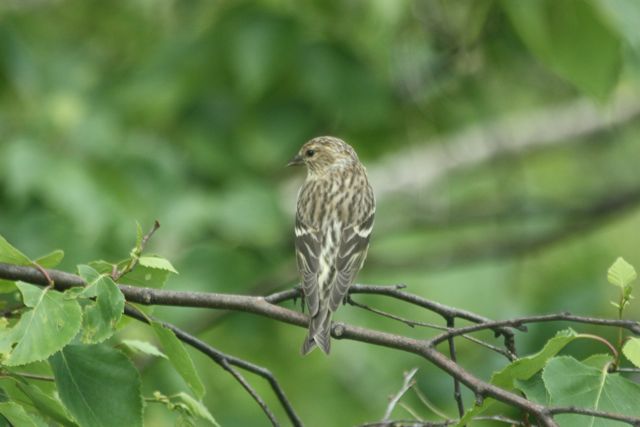
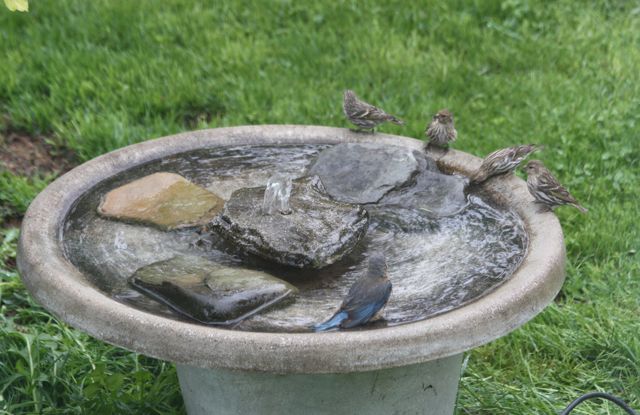
Pine siskins have finally left as of today. I wouldn't be too surprised to find them nesting around here, as they're nomadic little things, subject to whim. They share the Spa with a tired Gouty, the bluebird who's feeding four fledged daughters.


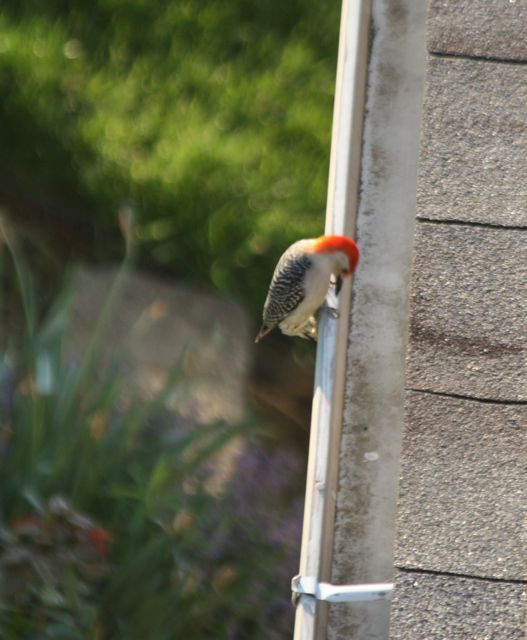
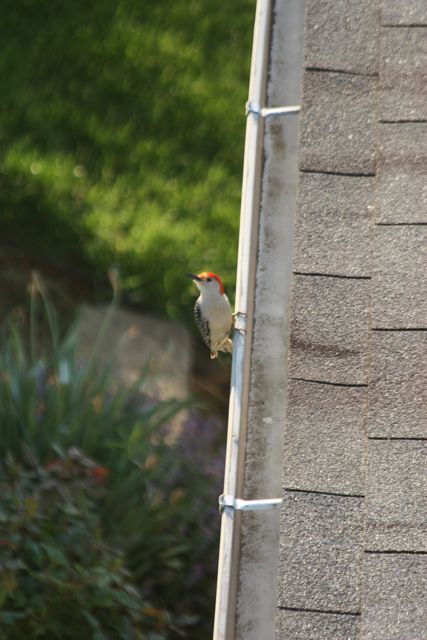
A red-bellied woodpecker has chosen the gutter over Phoebe's window for a drumming site.

He looks proud of himself at the end of each BRRUUUUUUMMMMPPP! Luckily, he drums after she's off to school, but she's not going to like it very much come summer vacation. These shots were taken from the birding tower, a perspective we don't often get on woodpeckers.


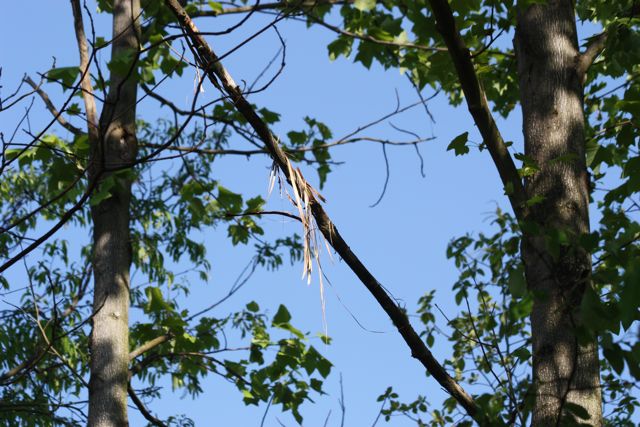
Discoveries await everywhere I turn. I heard a gnatcatcher's purr, looked up, saw this shredded bark and mused, "Ahh, nesting time. Everyone's gathering nesting material."
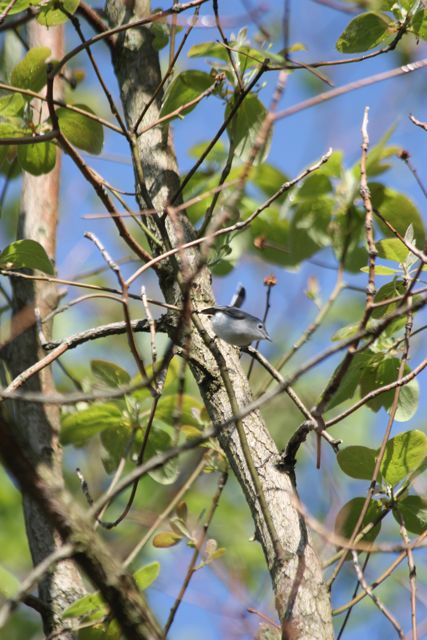
And there was the gnatcatcher, so I watched him until he led me to his nest.

It's done, and he plops right into it to incubate the eggs. See his tail sticking up like a popsicle stick?

Here's a closer look. Of all the birds that nest here, the blue-gray gnatcatcher reveals its nest the most readily. It's almost as if they're proud of it, the way they carry on and show it to you.
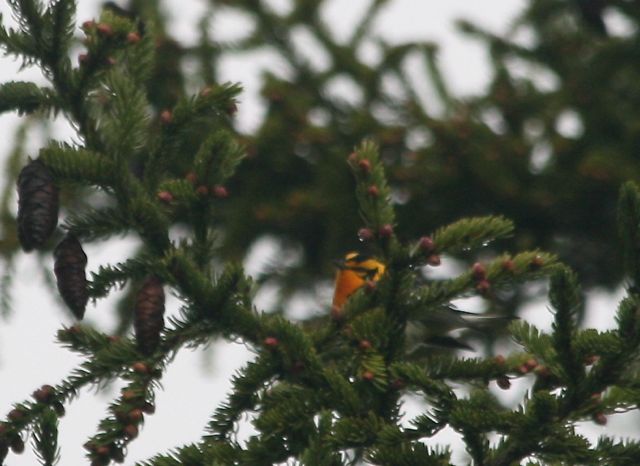
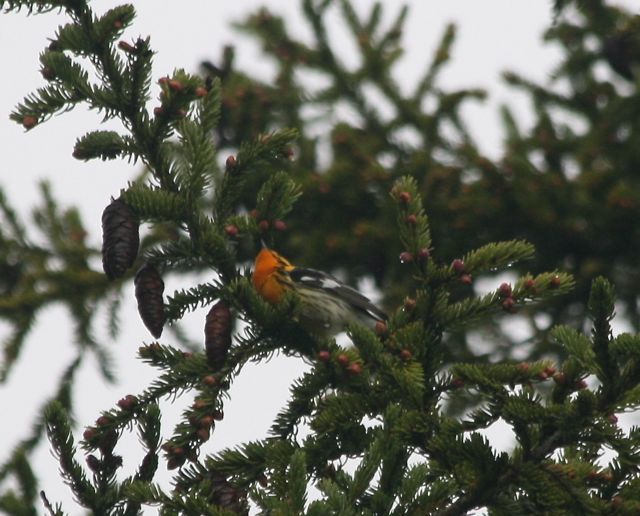
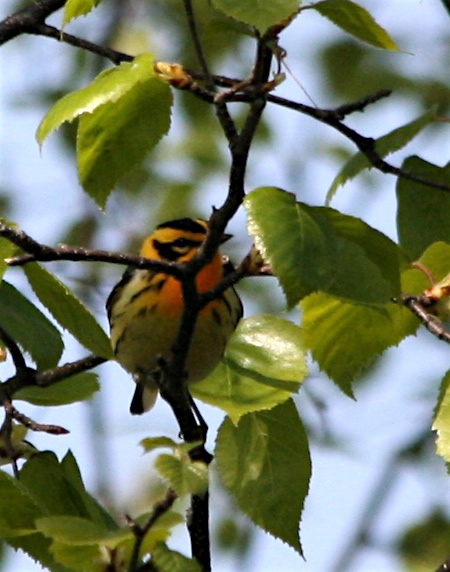
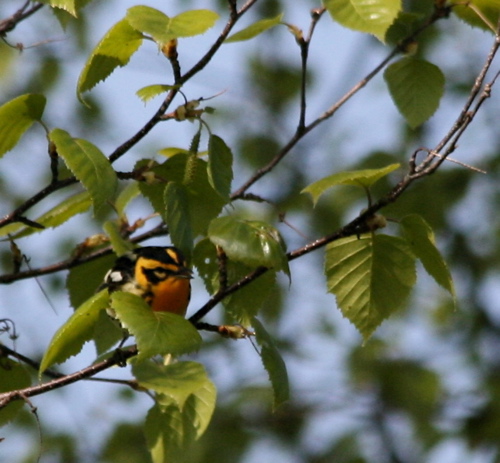
It's been the best spring for Blackburnian warblers that I can remember. That doesn't mean I've gotten stunning shots, but I keep trying.

Soon, the migrants will be gone altogether, but for now we seek them out and enjoy them while we can.

I've spent the day painting a beach scene with Caspian terns. I have to stretch way back in my memory to get the feel of the beach, but it's coming together nicely. The trick being not to get too tense and tight. Gotta let paint be paint. I've also been on the phone with Customer Service at Uncle Milton's, the manufacturer of the Pet's Eye View camera Chet used until it finked out on us. I gave them my blog URL, which is being passed around their HQ as we speak, and have high hopes they'll see the eminent sense of replacing this wondrous but broken little thing. I've gotten only four sessions out of it and am hungry for more. I keep seeing golden opportunities to send Chet Baker on photo safari.

Blackburniantics

Monday, September 29, 2008

13 comments
We've been starting every day with birdwatching off the deck and tower. Such joy, to spend an hour or two just watching birds. What a way to start the day. It's torture to come inside, but around 10 AM it slows down enough to let me go back into the studio. Soon enough, these little migrants, gaudy and flashy and delicate and exotic, will be gone, well on their way to their Central and South American wintering grounds. So we revel in them while we can, soaking them up and taking digital souvenirs of their stay with us.

It's a thrill to get enough pictures of a single species to make a little photoessay, perhaps get a tiny glimpse into their complex behavior, their lives. I gather what bits I may in the privileged moments I spend in their presence.

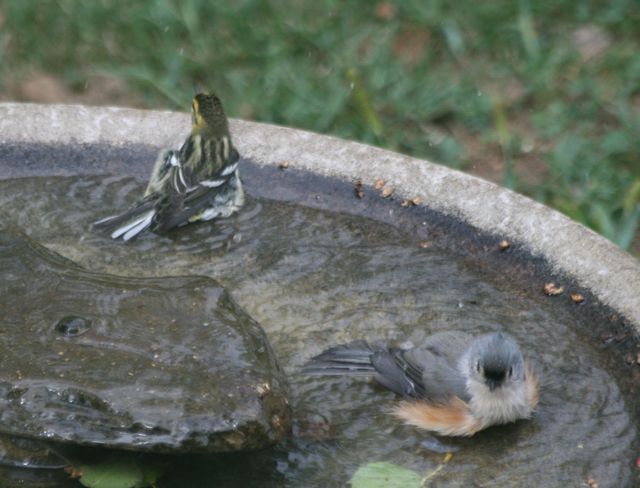
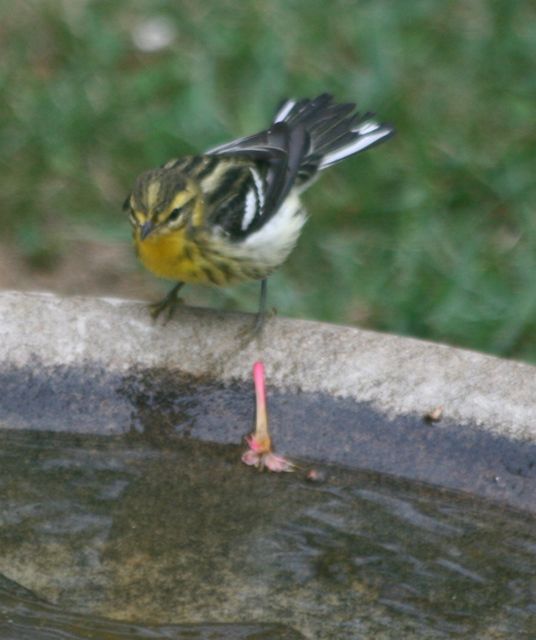
I glance at the bird Spa, which I do hundreds of times each day as I "work," and see something tiny, colorful, out of place. A warbler. Which one? Perhaps the titmouse wonders, too.
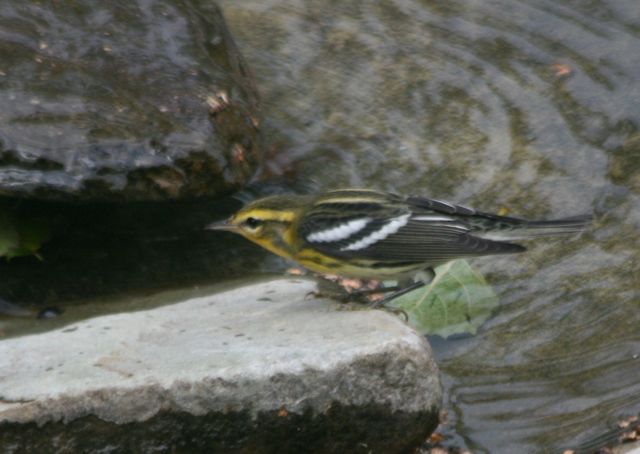
It jumps to the dry rock, revealing a cheek patch and the hint of a burning orange throat. Nice wingbars! A Blackburnian warbler. What a fine sight to greet the morning.
I study my books, but can't decide whether this is an adult female or a first fall male. No matter. It's beautiful.

Turning toward me, it shows its glowing throat. It takes a long, soaky bath.It repairs to the nearby birch to preen and fluff its damp feathers.Lots of work to do under the wings.I am flabbergasted at the length and flexibility of its neck. Blackburnians are such compact little warblers, but this neck would do credit to an ibis. And I'm stunned again to see it twist its tiny body into the most impossible position as it surveys the yard. If I drew a bird with its leg like this, any ornithologist worth her salt would shoot me down. Including me. Yep, that's the hind toe on the outside edge of the branch.
Soon, it's time to think about leaving. The warbler surveys the birch leaves for a morsel of food to speed it on its way, checks the sky.It hops up to an exposed branch, giving me a fleeting moment's more pleasure.It mounts to the top of the sycamore we planted close to our deck

and is gone.

Misty Mountains

Thursday, June 5, 2008

11 comments

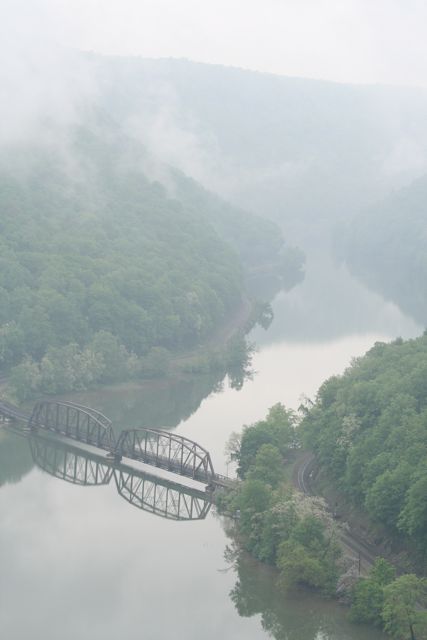
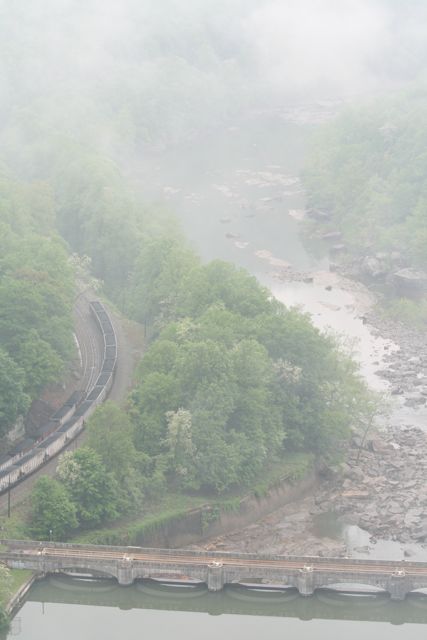
Some things are a lot more beautiful in the rain, and West Virginia's New River Gorge is one of them, I think. There's an overlook where you can lean over a fence and gaze down on the river and the slow-moving coal trains grinding along the tracks at the bottom of the Gorge. Hearing them gives me a wild, nameless feeling, mystery and longing rolled into it, marveling that those hundreds of cars are rolling along to a nameless destination, pulled by a locomotive a mile ahead.

Watching the coal in the seemingly endless train, I wondered how much longer we'd be taking coal out of these mountains. I hoped what I was seeing had been mined the old-fashioned way, by excavating from below, rather than by taking the mountain apart and dumping it in a valley.We always pause here and study the river and the rocks, looking for birds to fatten the festival list. It's like a game of I Spy--we scan carefully with binoculars and scopes, hoping to be the one to find the special hidden bird. Spotted sandpipers, black vultures, a gorgeous pileated woodpecker (seen flying from above!) and common loons rounded out the list for us this year.

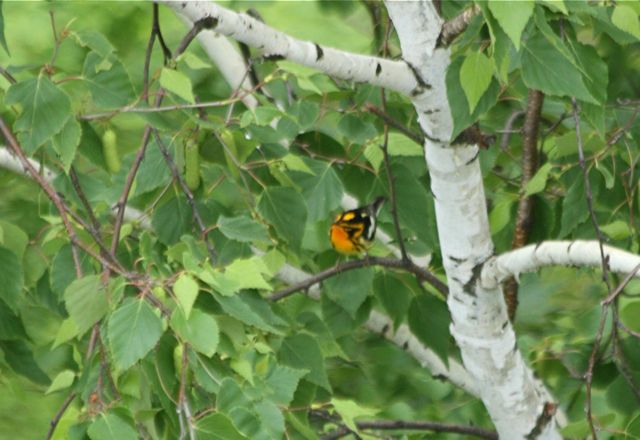
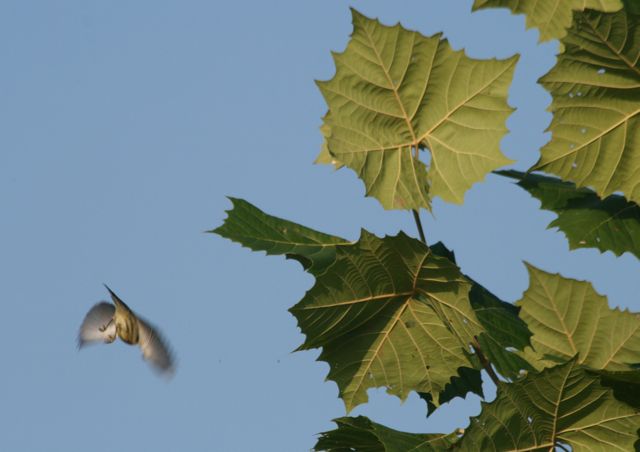
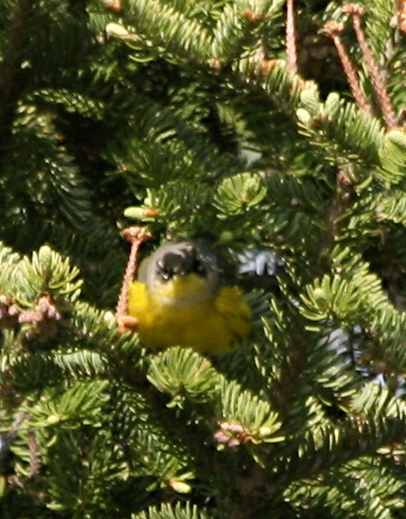
At higher elevations, Blackburnian warblers sing their thin song, a jingling, loose series of notes that ends in a fine, wiry spiral up past the limits of human hearing. Females are pretty--this one was in our yard this May--

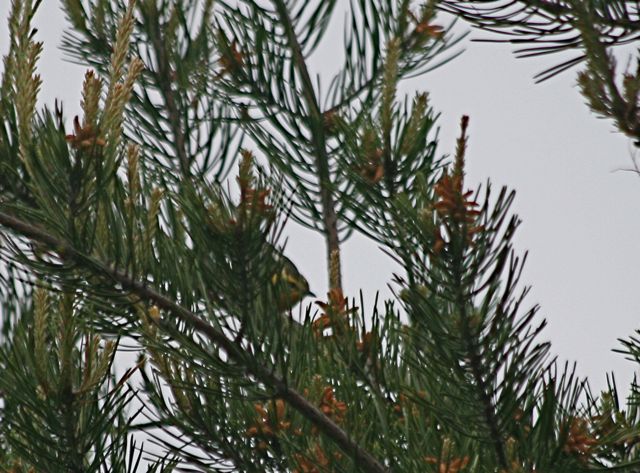
but males are breathtaking. They are fiery coals; you'd think they'd set the wet spruces aflame with their color.
A typical Blackburnian move--craning its head around to look under needles and leaves as it gleans for insects.The little warbler was named for an ornithologist named Blackburn (hence the capital letter), but the name fits it so perfectly--black and burning at the same time. I love to show Blackburnians to people, to hear the gasp when they've finally got the little midge in their binoculars. I especially remember my friend Patti's first Blackburnian. I never tire of hearing that sharp intake of air, that wonder exhaled.

Warbler Pileup

Thursday, May 24, 2007

0 comments

After giving a Friday night keynote at the Chequemegon Bay Birding and Nature Festival, I had a field trip Saturday morning, and then a free afternoon. Thank you, Ryan Brady, for inviting me, for letting me do my thing and experience the beauty of lakeshore Wisconsin. I owe you several! The keynote went really well; the field trip was fabulous. There's almost nothing trip leaders Matt and Betsy don't know about boreal wildlife and flora, from fungi right on up to bears. We noticed that there were waves of warblers going along the Sea Caves trail just west of Bayfield, and none of them seemed to want to fly out over the lake. Who could blame them? It was 32 degrees and snowing! This got my wheels turning about where to go Sunday afternoon. Using geography and bad weather to my advantage, I headed out to the two most prominent peninsulae on Wisconsin's north shore. I figured that migrants would not want to cross Superior with a headwind (it was coming out of the east, very strongly, whipping up whitecaps) and with the double handicap of severe cold and scarce food. They'd want to camp awhile, wait out the headwind, and fly when they'd had a chance to refuel and warm up a bit. And most importantly, I knew they would be stacking up on the north-pointing peninsulae, just as they stack up at Crane Creek on Ohio's north shore, and on Point Pelee after crossing Lake Erie. On Sunday, the temperature never got above 42, but it felt like a gift after Saturday, which stayed in the low 30's. Brrrr! I was swaddled in five layers, one of which was prime goosedown, and my best winter hat. I hadn't packed gloves (it just seemed like overkill for late May!), and by midday Saturday I was walking with my hands down my pants--first the front side, then the back--trying to thaw them. Note to self: Buns don't warm hands as well as belly does. Too well-insulated. Every time I lifted my binoculars it was like holding a big ice cube, and it would take my painstakingly warmed hands back to freezing again.
Roman's Point was just the ticket. Densely wooded in spruce, birch, sugar maple and balsam fir, it provided safe haven and caterpillars for more warblers than I've ever seen in one place at one time. When waves appeared, they'd swarm through the trees at all levels. Everywhere I looked was a bird, sometimes several. It was stunning, and I was completely alone to enjoy it. Maybe nobody else thought to go out the peninsulae, amazing as that seemed. It certainly would have been a good time to lead a field trip!
I rolled slowly along in my little rented Impala, snapping pictures out the window. When a good wave came along, I'd decar, and walk silently on the dirt road, moving as little as possible.

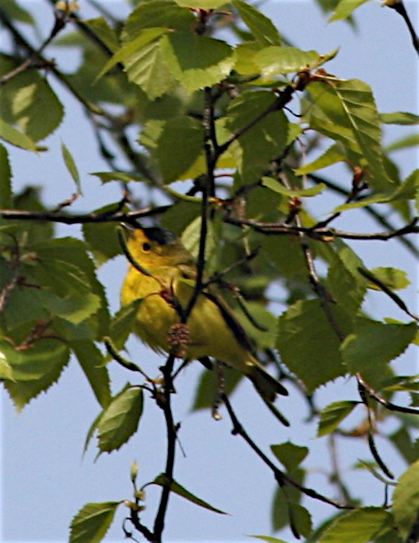
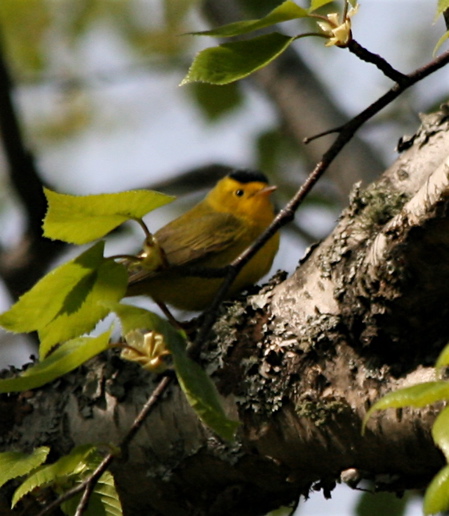
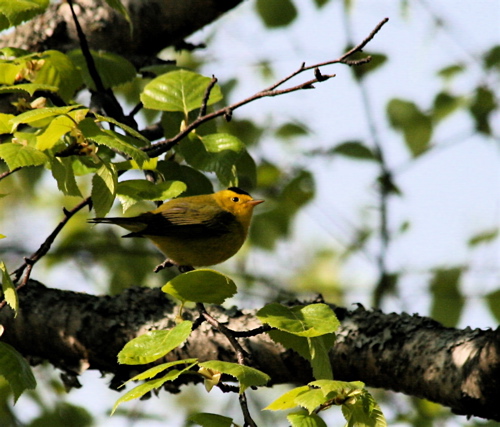
Wilson's warbler is quite common in the West, but a bit of a prize back East. We get them every few years on our farm, always in spring. The Wilson's male wears a yarmulke of black, and sings a staccato song that's somewhere in between a Nashville's and a magnolia's. It's one of the ones I have to chase down each time I hear it.

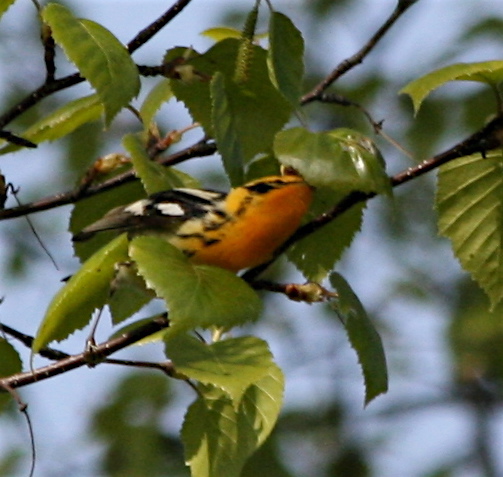
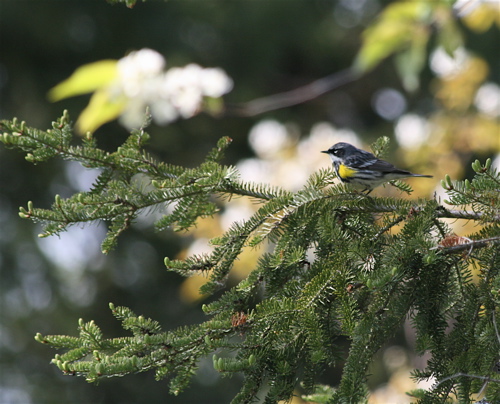
Finally-a Blackburnian low enough in a tree that I could get something recognizable. As cold as it was-42 degrees-these birds were pulling caterpillars out from under leaves with good frequency, and I felt happy to see them fill their stomachs with good food. I would hate to be a caterpillar on Roman's point, in an east wind at 42 degrees. There was a corps of gleaners looking to lay on fat, and they were gong to stay on the point until the wind shifted.
He stretched to grab a luckless caterpillar, giving me a pure shot of flame.

This little female magnolia warbler gave me pause for a moment; I'm always thinking about Kirtland's warblers and hoping for lightning to strike. But she was cute and she didn't have to be federally endangered to captivate me.
Black-throated green warblers were singing their distinctive whistling buzz--zee zee zee zu zee! everywhere I went. Black-bearded warbler would be a good name. It's rare to get one down low like this. Just another benefit of birding in rotten weather.


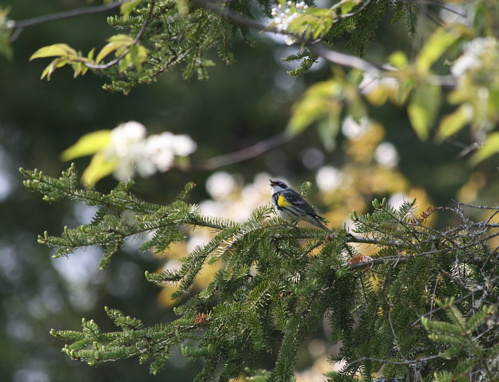
Asked why he never painted warblers, the great landscape and wildlife painter Francis Lee Jacques said, "The difference between warblers and no warblers in a landscape is very slight." As much as I love Jacques' work (he most famously painted the backdrops for the American Museum of Natural History's dioramas), I beg to differ.. To me, this spruce tree finds its spirit in the yellow-rumped warbler. His jingling song sifts through the spruce needles, hangs on the boughs like tinsel.
Wisconsin for spring warbler migration. Put it on your calendar for next year. Chequamegon Bay Birding and Nature Festival. Terrific people, ambitious field trips, migrants dripping off the trees. You might need to pack a parka and hat. And gloves. But remember: There's no such thing as bad weather, only bad gear. Oh, and you pronounce it Sha-WAH-mah-gun. It only took me three days to get it right. Definitely beats stuttering, "Check-kwa-MEE-gone" and having the locals look at you with real pity. Do yourself a favor. Pencil it in on your calendar right NOW.
[Back to Top]