Background Switcher (Hidden)

Showing posts with label white-tailed hawk. Show all posts

Anzalduas Farewell

Thursday, December 6, 2012

6 comments

On our last morning in Texas, we went to Edinburg Wetlands and Anzalduas Park, which looks right across the Rio Grande to Mexico. There were so many beautiful things at Anzalduas. I was hoping hard for scissor-tailed flycatchers, but we found other things. A kestrel, leaving a wire.


A glorious adult white-tailed hawk. Yum!


That bird in my previous post, heavily marked on belly and underwing, was a subadult.  This adult's immaculate and unlike anything else flying.


Bill spotted a fabulous serpent slithering away from us in the park: a Texas indigo snake!!


Liam and Phoebe wanted to get away from it!


It was about 4.5' long, quite thick, and not very fast.
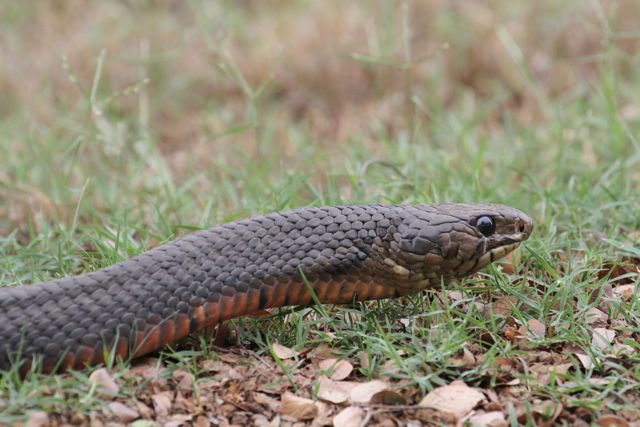

But highly intelligent and suspicious of my motives. Which were merely to capture its fluid beauty. It refused to cross the pavement while I was following it, even though some riprap and shrubbery on the other side beckoned safety. It knew that it would be unable to travel fast on smooth asphalt, so it stayed in the grass and gravel where it could gain some purchase with its belly scutes. Smart serpent.

But the stars of the show at Anzalduas (at least when the scissortails aren't there) are the vermilion flycatchers. Oh, what a bird. This is a female, I believe.


Check out the back of that crown!!


O perfect and beautiful bird, like a phoebe that got into the makeup trunk.


We waited, and the perfect happened: a young male vermilion flycatcher landed on a painted post. Ahhh. What a lovely Anzalduas farewell.


And so goodbye to the Rio Grande Valley Birding Festival, and the wondrous birds of south Texas.

Whistling Ducks, White-tailed Hawks and Kiskadees

Tuesday, December 4, 2012

5 comments
There are some truly awesome birds in Texas that, I'm sorry to say, the locals just take for granted. I saw my first black-bellied whistling ducks in the Amazon of Brasil. And flipped out when I saw a wild flock in Titusville, FL two years ago. They are something in flight. And they're all over south Texas, lipstick-pink bills, long legs and all. I love those things.


It was a duckapalooza at Edinburg Wetlands. Even though it was closed when we got there on Monday morning hoping to bird before catching our plane in McAllen. RATS. We birded the fringes with Phoebe and Liam on a rather dull gray windy day and still had a marvelous time. These are, from top, four shovelers, two green-winged teal and a willet.


Another mixed bunch of shoveler and green-winged teal. Look at Mr. Dead Center. He's in full nuptial plumage, with gorgeous buff undertail coverts and a chestnut and viridian head. Delish.


Dig the crazy green of the speculae of these sleeping greenwings (same birds as in top photo). Love it.


Golden-fronted woodpeckers are everywhere too. Closely related to our red-bellieds, they're Melanerpes woodpeckers (which includes the red-headed). This is a really pretty male, with golden nape and a red forecrown beanie.


Another bird that kind of snuck up on us was white-tailed hawk. They were all over the place! They're quite reminiscent of redtails, but for that white tail and the heavily marked belly and underwings. Wing shape is different, too--they're long in the "hand," or outer half of the wing, like a Swainson's hawk is.

Sorry, the light was awful. But the tapered wing is typical.


A gorgeous pair of great kiskadees yelled from a nearby snag.


The left bird shot his crown. Whoa!! Who knew they had a diadem? Many flycatchers do--watch for it on kingbirds and kiskadees. It's a fightin' thing. And the sorta-related kinglets have it too. 


Grassland Raptors of Guyana

Wednesday, January 28, 2009

7 comments
Every June, we go to the prairie pothole region of central North Dakota. I'm amazed anew each June as I am reminded how much life can be packed into a grassland. Maybe it's just that you can see the life of a grassland so much more easily than that of a forest. There is a whole lot of life in savannas.

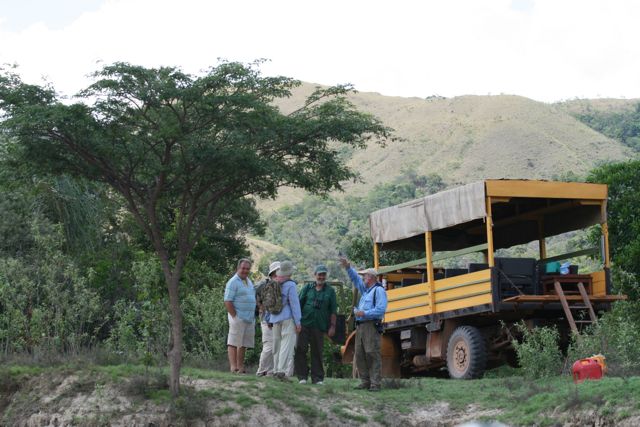
Our conveyance along Ginep Road near Rockview Lodge was a huge crawler diesel that went about ten to twenty mph along the dusty road. We were loaded into the open back, which afforded good, albeit dusty and diesely, birding ops. Time and time again in the tropics I find myself in vehicles like this, where one must bang vigorously on the cabin roof to get the attention of the driver when a good bird or animal hoves into view. Because everything is of interest, the Science Chimp's impulse is to bang nearly constantly on the roof, so I know enough to stay away from the cab.

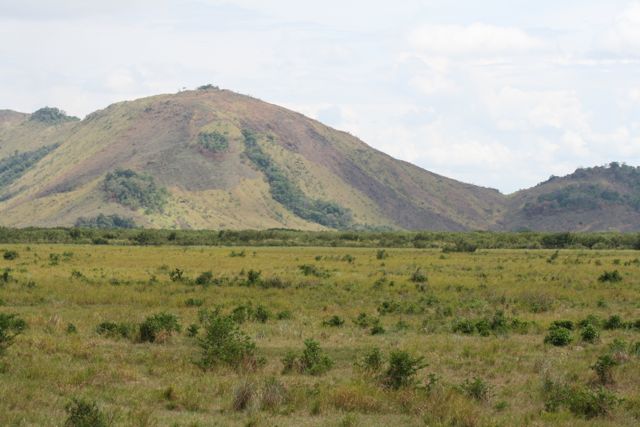
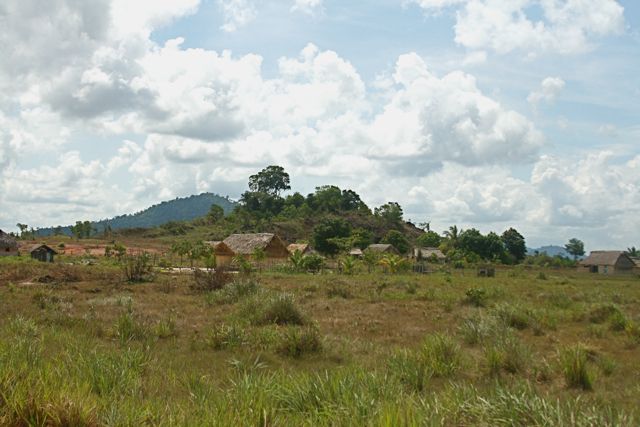
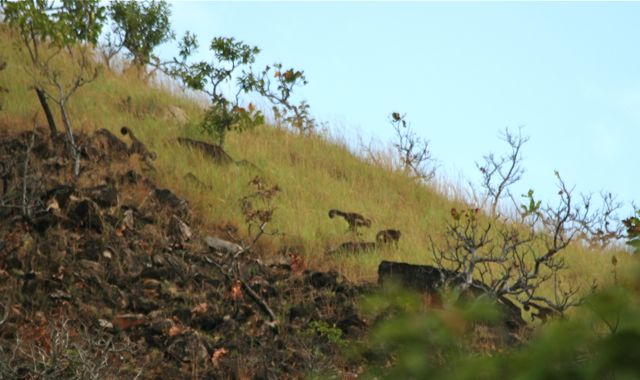
How different the savanna was from forest! This is natural savanna, formed where the soil is too shallow to support tree life. It was very odd to see a troupe of brown capuchin monkeys making their way from one treed hillock to the next. I really felt I was in Africa--again and again I believed that, and had to remind myself that this was South America.You can see the monkeys' curled tails as they bound down the hillside. Lovely creatures!

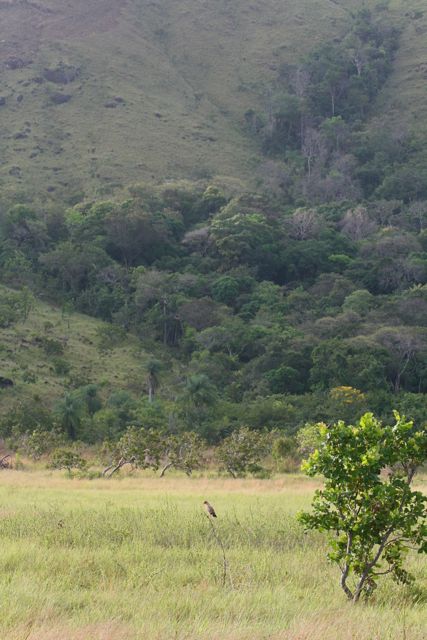
Here is a savanna hawk, to scale in its immense landscape.

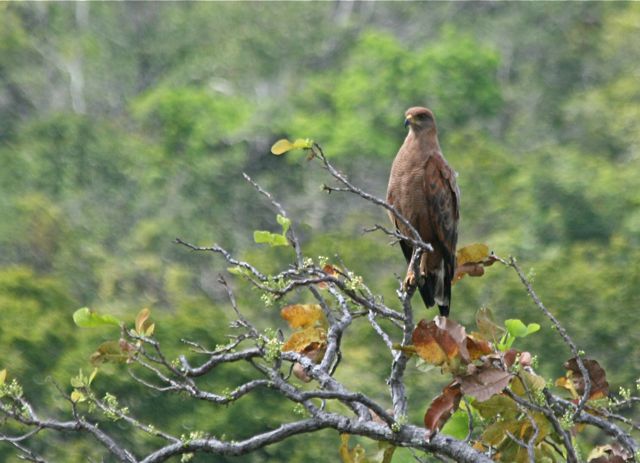
And here, a close-up (though not nearly close enough for me) of this long-legged beauty, Buteogallus meridionalis. What a gorgeous beast, long winged and big-bodied. It's after snakes and lizards mostly, and it loves a good grass fire, which sends its prey leaping and scuttling right into its strong yellow toes and stiletto talons. What you can't quite make out in this photo is the fine vermiculate barring on its neck and breast. Breathtaking.
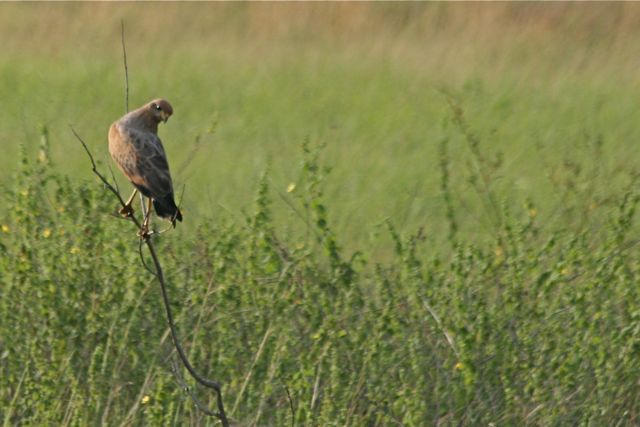
Another savanna hawk's eye gleams as it scans the scrub for lizards.

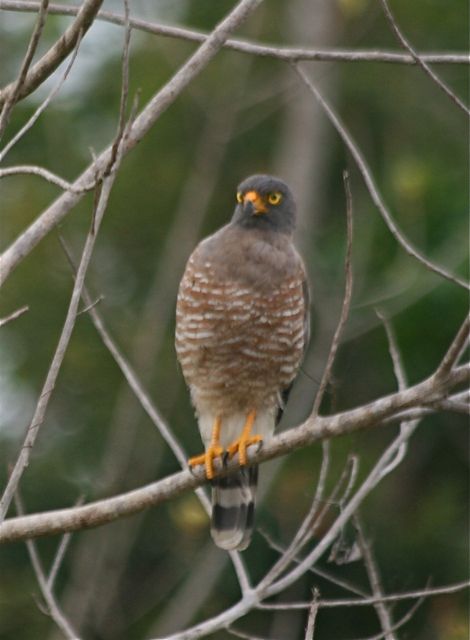
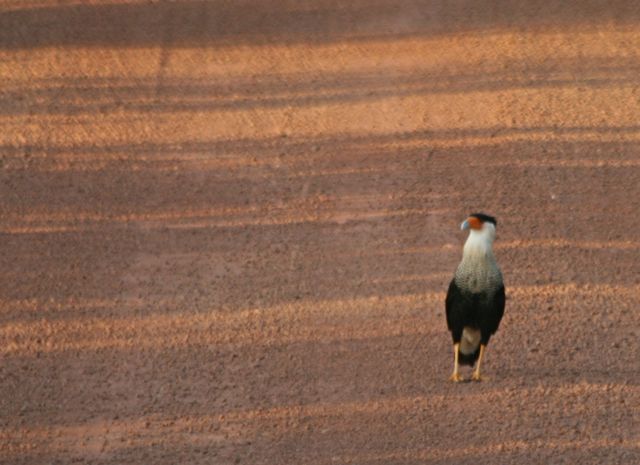
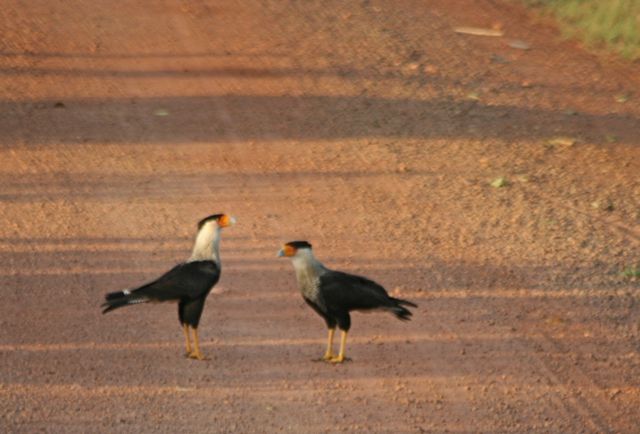
The roadside hawk (Buteo magnirostris) is a common little thing that might as well be called a riverside hawk. I always get a kick out of its No. 2 pencil-orange cere and feet. Crested caracaras (Polyborus plancus) always take my breath away. They are simply spectacular, and when they fly there huge white patches in the primaries flash. There's something a bit curassow-like about them as they stalk around, but they're raptors all right, and they're always looking for something dead, dying or disabled to exploit. Their feet are better for walking than grasping, so they feed on small prey from insects to small mammals, and exploit carrion as well. Polyborus means, loosely, "multiple gluttonies."
I like the name Mexican Eagle for this bird--this pair reminded me of the Mexican coat of arms.

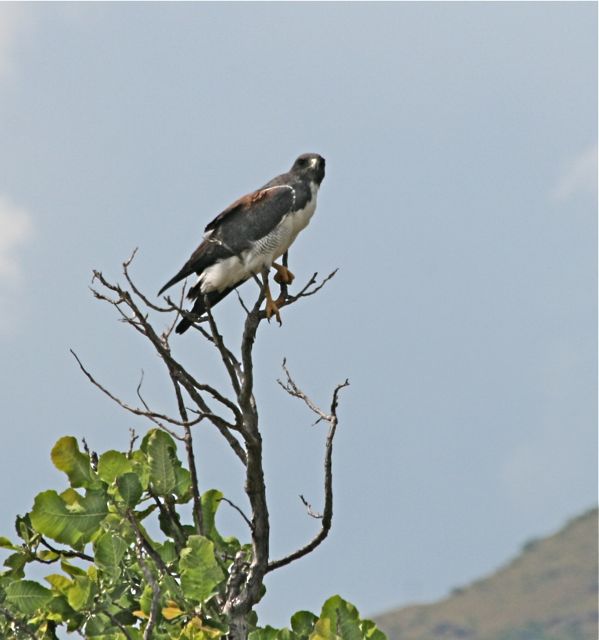
Oh! What are you, most beautiful thing? I know I know you...I've seen you before, with your snowy breast and chestnut shoulders. Your color scheme is the bomb.
Let me guess. Hmmm.
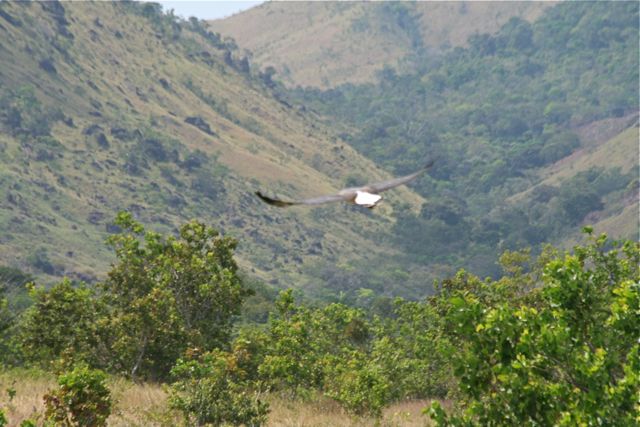
White-tailed hawk? (Buteo albicaudatus)

Yes. A raptor with a good, good name, and a voracious predator of everything from insects to rabbits. All told, I was very glad not to be a mouse on the Guyanan savanna.
[Back to Top]