Sometimes blog ants get way ahead of themselves. I've had a heck of a couple of weeks, and I've been riding on posts prepared earlier--like this one. Rather than go in and edit this, I decided to post it just as it was, before it gets any older. Grabbing at straws...I'm going to be in and out of touch for the next two weeks. Darting here and there, preparing for my
show in Millersburg, Pennsylvania Nov. 29-Dec. 1, sometimes away from my computer, always connected to my camera. I'll try to keep it up, but there may be a day or two here and there when I can't make it happen. I will say this: mounting a show of almost 70 works, during which I'll be giving a banquet talk, two gallery tours, a seminar, various TV and radio interviews, and dragging the whole family (including Chet Baker) along for the ride reminds me of the preparations for our wedding (though the kids weren't in on that one). The good part is that the Ned Smith Center for Nature and Art staff is doing all the planning. I'm only the bride, but still...Let's talk about milkweed, shall we?

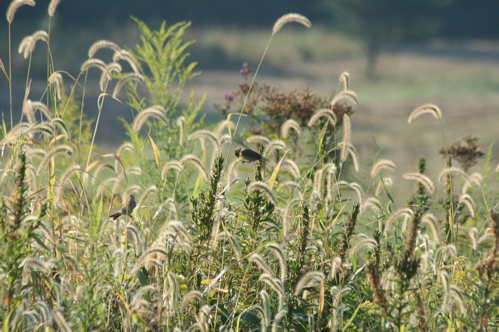
September 29: Summer is waning. Indigo buntings feed in the foxtail grasses in
our makeshift prairie, the one Bill burned and plowed for me to plant in May 2006. I often think that if I go out in late September and shake that prairie patch like a blanket, probably thirty indigo buntings would fly out.
I've enjoyed the meadow for its milkweed, and the milkweed for its monarchs. I read somewhere a wry complaint from a would-be student of caterpillars. She'd read that, to find caterpillars, all you have to do is look for their droppings. Find the droppings, and voila! you'll find the caterpillar. For some reason, she thought this was ridiculous.

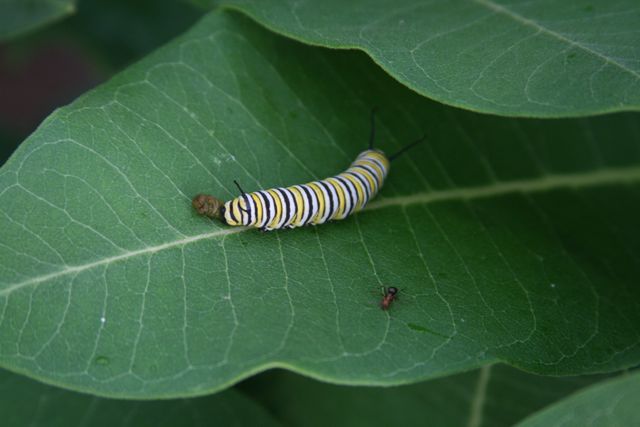
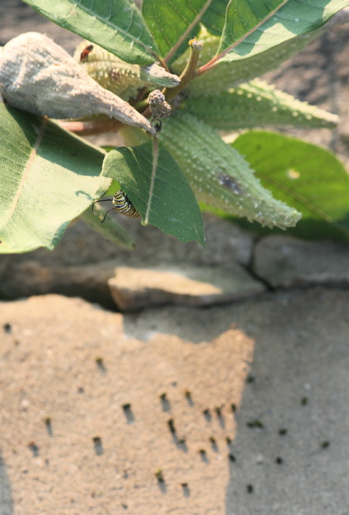
She needs to stop complaining and pay attention to droppings. They're usually a lot more obvious than the caterpillars who produce them. Both are in this photo, but I saw the frass first, then found the caterpillar.
One of my dearest friends from college, Martha Weiss, studies caterpillars, and what they do with their droppings, among other things. I so wish I had Martha's rollicking mind, wish I could channel her right now to explain this to you, but I'll have to stumble along by myself. Caterpillars know that their droppings can give them away to predators. And since the caterpillar's main function is to grow like Topsy, it eats constantly, and produces copious droppings. So many caterpillars construct hides of folded or chewed leaves stuck together with silk, and they have creative ways of making sure nobody finds them there. Some poop in the hide. Some climb out of the hide to poop. Some shoot their poop many feet through the air. It goes on, getting more whimsical all the time. Martha watches, discovers, and tells the scientific community and her classes at Georgetown University all about poop functions, hide building, caterpillar learning skills, and myriad other things most of us never think about. Lucky students! In another life I'd come back as one of Martha's grad students.
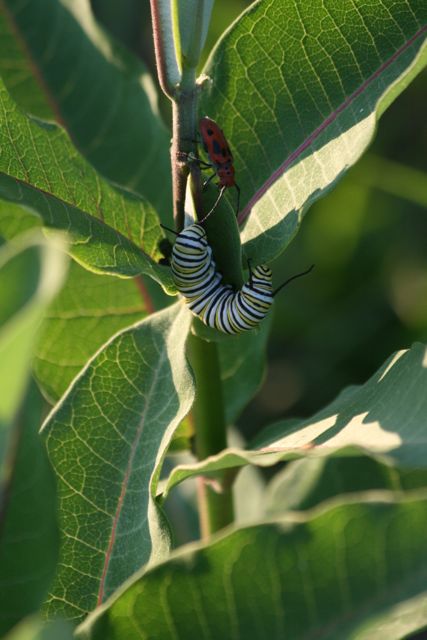
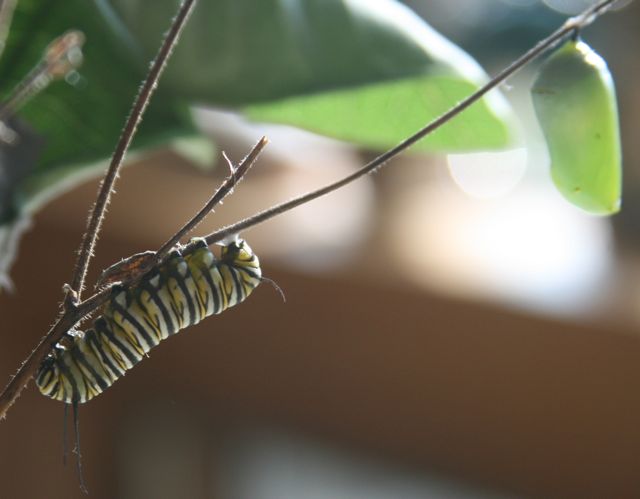
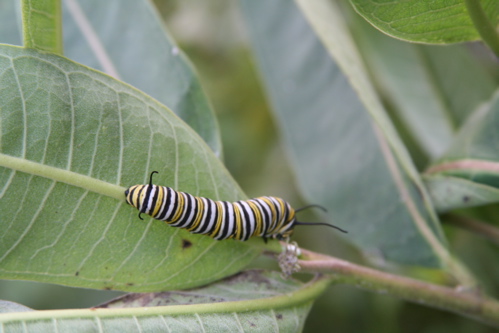
Monarch caterpillars don't think much about their poop, at least in a behavioral/evolutionary sense, because they don't have to. It's no big deal if a predator finds a monarch caterpillar, because they're poisonous. They pick up cardiac glycosides from their poisonous foodplant (milkweeds) and incorporate those toxins in their tissues. Just for good measure, they warn would-be diners with aposematic coloration. Black, yellow and white are a nice combo, don't you think?

To predators, those combined colors (along with black and red and black and orange) are equivalent to a Mr. Yuck sticker. Think about it: Skunks, coral snakes, monarchs, Gila monsters, ladybugs, milkweed bugs, black widow spiders, the poisonous pitohui bird from New Guinea...I could do this all day. All variations on black, white, maybe a little yellow, red or orange. Even barbets and
toucans have aposematic coloration, and sure enough, their flesh, which happens to be
blue, tastes just terrible (I'm told). Maybe blue flesh is just a little reminder for those who didn't connect their black, yellow, white and orange feather coloration with distatefulness. What you are about to eat will not taste normal, and is Not Good. All of which makes me wonder about woodpeckers...but let's stick to bugs for now.
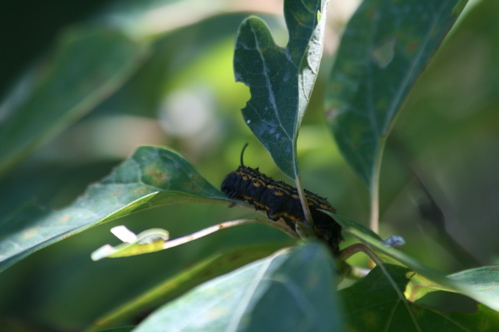
When I was a kid in Virginia the big black oak in our backyard positively rained with orange-striped oakworms, a moth larva. I didn't know what they were, but their greasy, rubbery bodies strewn all over our slate patio at once fascinated and repelled me. I'm always rocketed back to childhood when I discover one in the driveway.
 Anisota senatoria
, the orange-striped oakworm. Think they're poisonous? Probably.
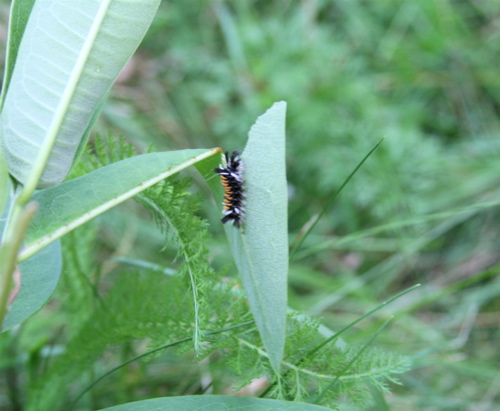
 Euchaetes egle
, the milkweed tussock caterpillar. Aposematic coloration at work. This thing is doubtless distasteful, even if you could get through all that hair! Monarchs aren't the only caterpillars that like milkweed. I'm intrigued by this caterpillar's approach, the way it's cutting the milkweed leaf right down the rachis. Just as they hide their poop, caterpillars will try to hide the damage they do to plants. Often, they'll cut the stem of a leaf they've put holes in, and let it drop to the ground before starting on another leaf. I'm not sure if that's what's going on here, but I'd bet Martha knows.

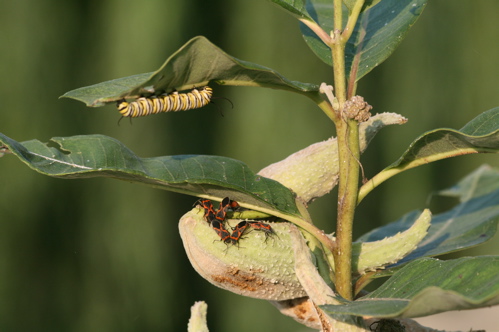
Speaking of other things that like milkweed, here are some milkweed bugs,
Oncopeltus fasciatus. They use their long proboscis to pierce through the seedpod and feed on the seeds inside. You can raise them on hulled sunflower seeds in captivity. Who knew? Notice anything about their coloration? Ain't nobody eating milkweed bugs.
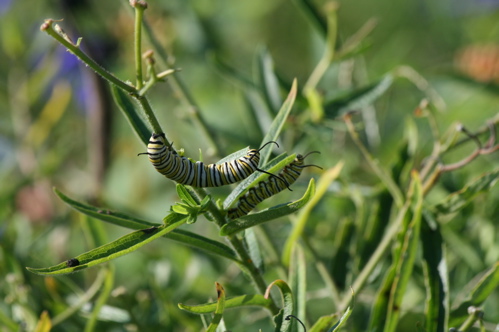
Besides chomping on our copious stands of milkweed, the monarchs were more than happy to lay waste to the butterfly weed in my garden. I don't mind. I can't think of a higher use for a butterfly weed that's almost done blooming than to surrender its leaves to beauty.

This one big plant had eight cats on it. Oh, it was a glorious summer for caterpillaring.
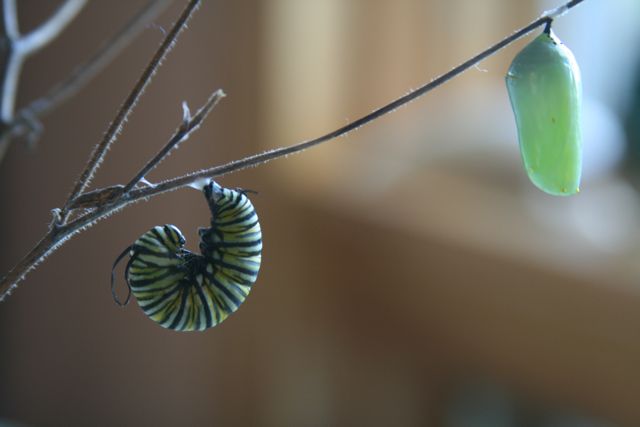
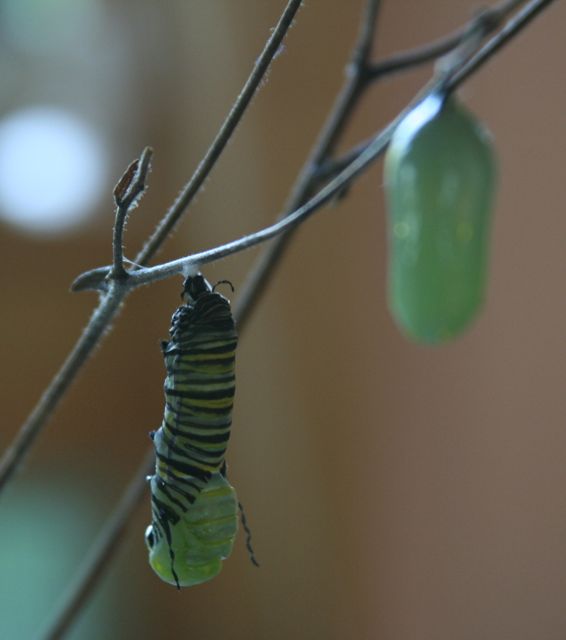
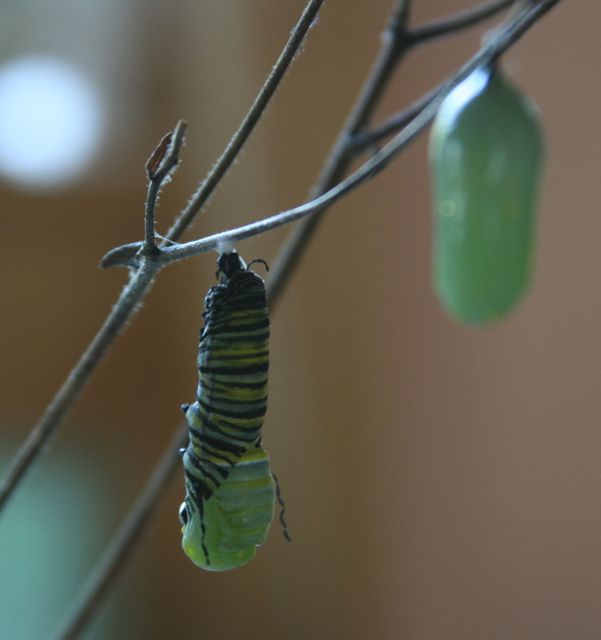
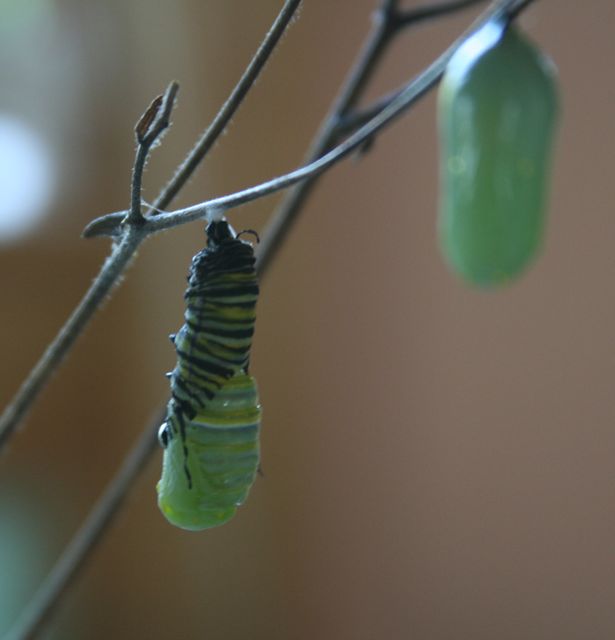
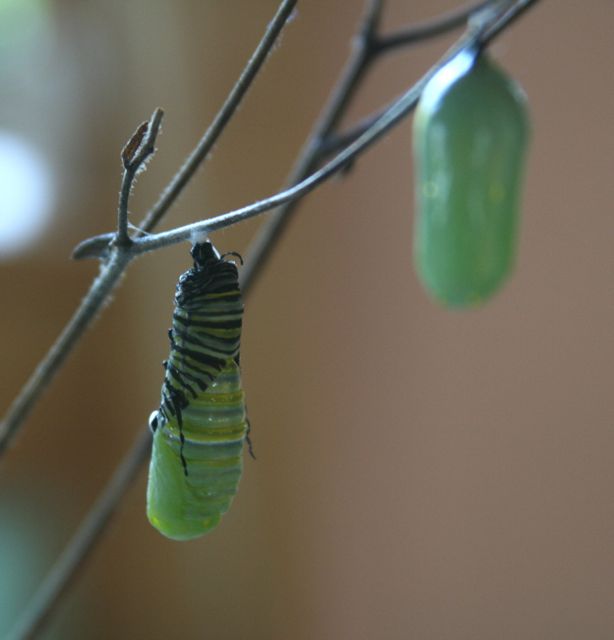
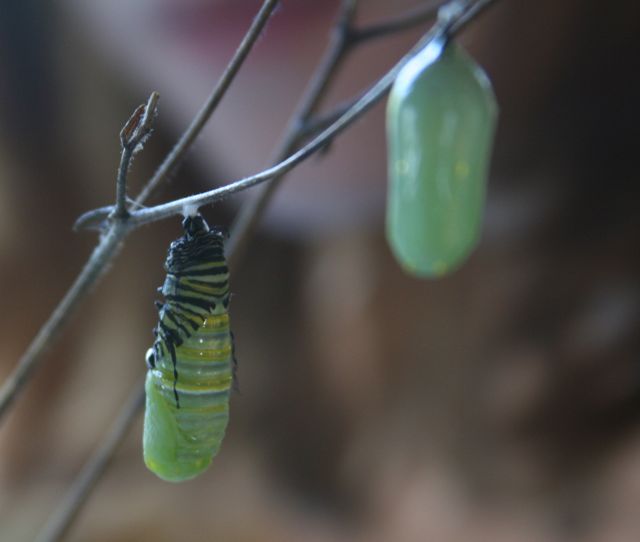
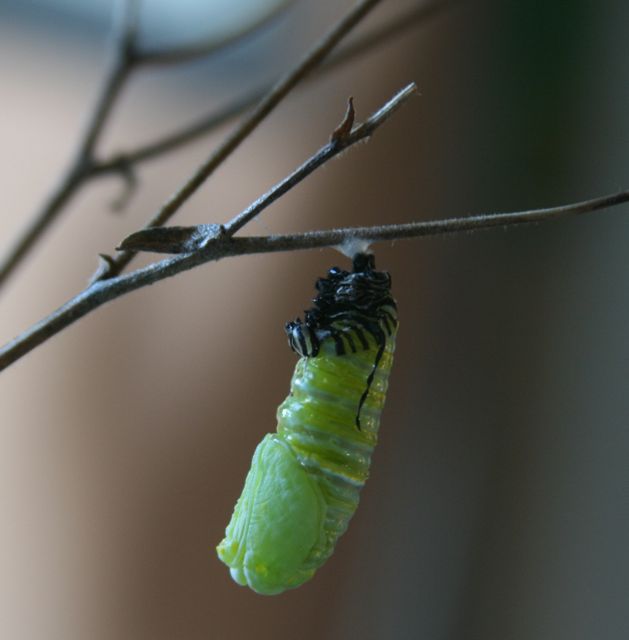
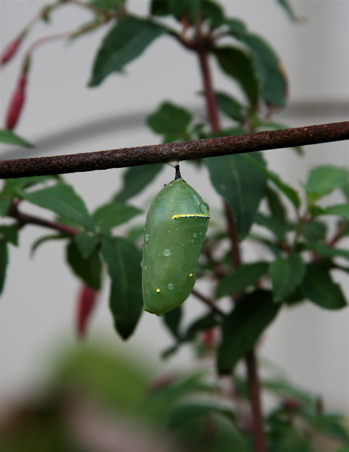
Shila found this magic capsule stuck to a plant support in the front garden. Note that, with its snazzy golden buttons, it's still telling you it tastes bad. I would love to have a silk dress of this exact chrysalid green. With gold buttons, of course.

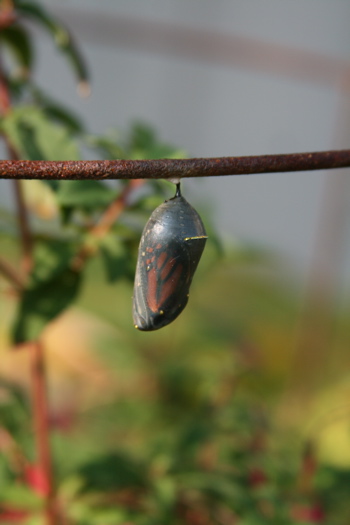
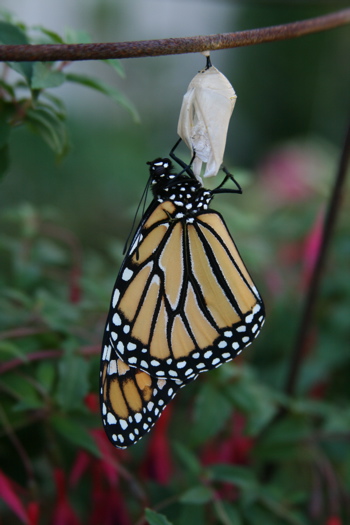
I was almost there when it finally hatched about ten days later. The clue that it's going to happen in the next hour or so is when it goes transparent, and you can see the butterfly right through the wall.

The insect simply flops out of the chrysalis in one motion, its wings crumpled and wet, and over the next six hours it pumps fluid into the wings and they straighten out and harden enough to be useful.

The used chrysalis looks like brown cellophane. When I went to bring in my big terra-cotta Pig of Good Fortune just before frost, I found a chrysalis shell like this one right in his groin. Big grin.
If the new butterfly gets crowded or wedged up against something in this crucial period, its wings may dry crumpled, which is a sad thing. There was one with crumpled wings hanging around the garden for about a week. It could fly about a foot off the ground. Every time I found it I helped it onto a food plant, but I knew it would never make it to the mountains of Mexico like it wanted to.

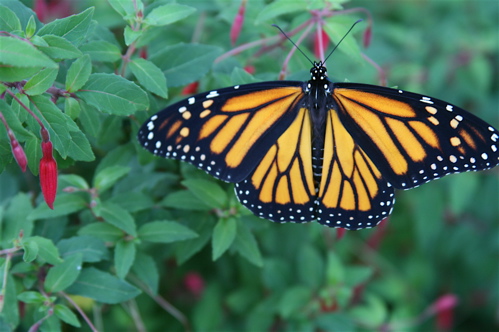
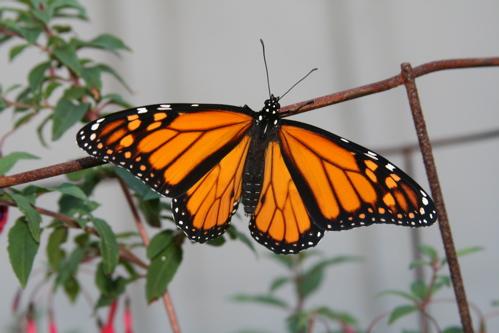
The splendid product of the magic capsule, a female monarch butterfly, or so I thought. The female lacks the black scent glands on the hindwing that characterize males. "She" rested for about four hours, then climbed up atop the plant support.

Whoops! Guess it's a male! See those little black dots on the hindwings, on either side of the abdomen? Wings finally hardened, he flopped away, gaining strength and conviction with every beat of his heart.










Tuesday, September 21, 2010
19 comments