I don't usually post book reviews on this blog. I don't use it for advertising or political purposes. I don't tout anything but stuff I make myself (books, notecards, puzzles and stuff) or the stuff I just happen to love (plants, some jewelry, heated dog dishes, for example). This is a highly personal journal, probably 99% of it a simple celebration of all I find beautiful.
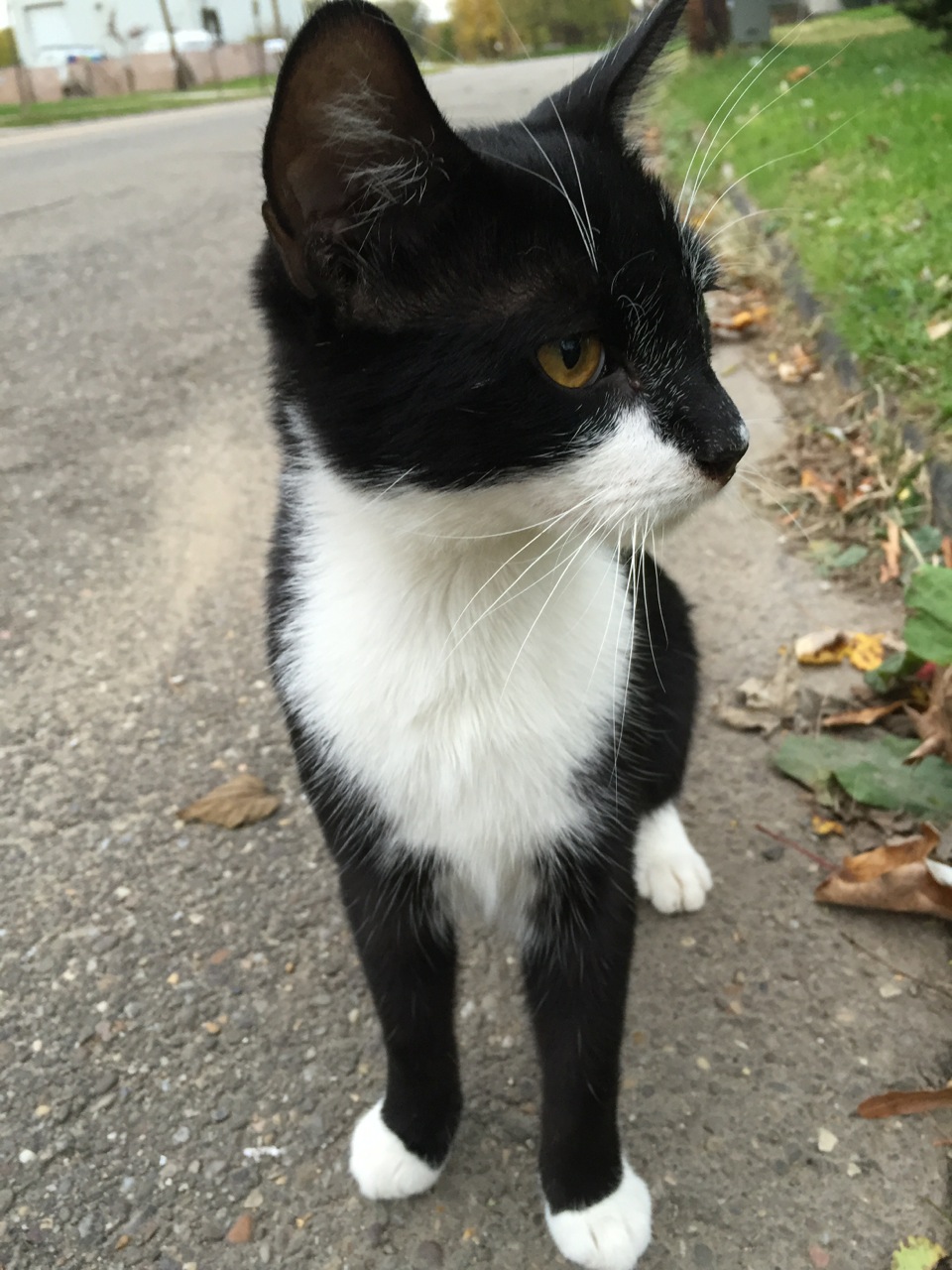
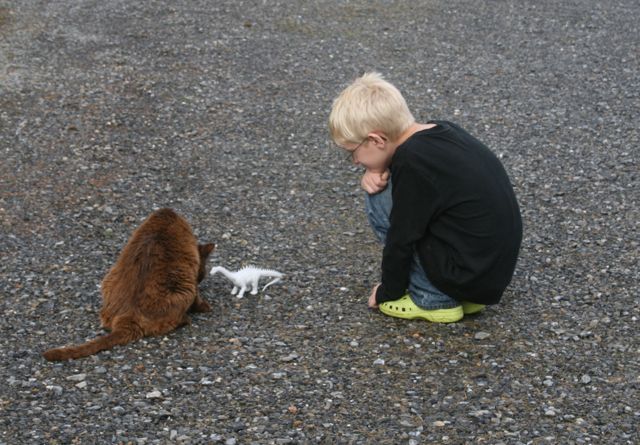
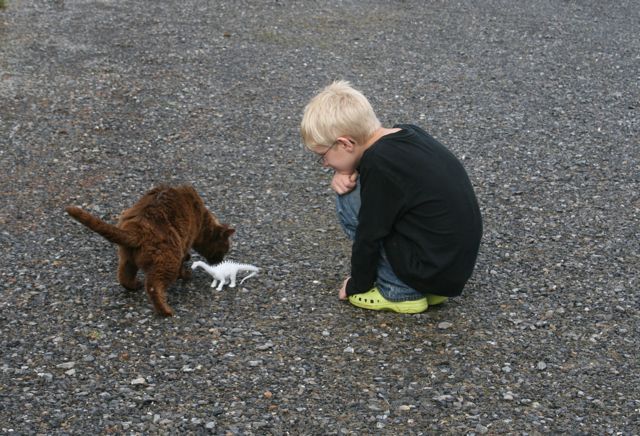
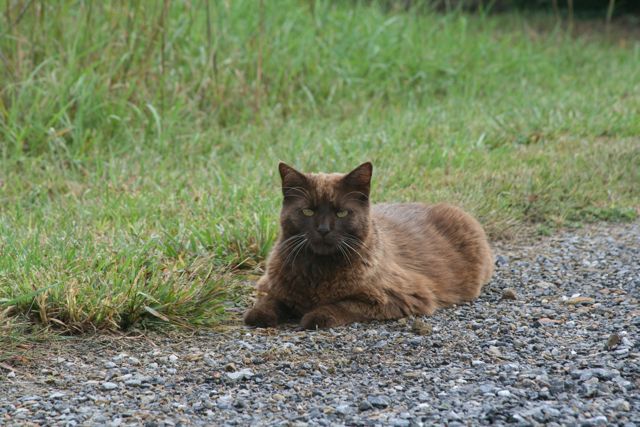
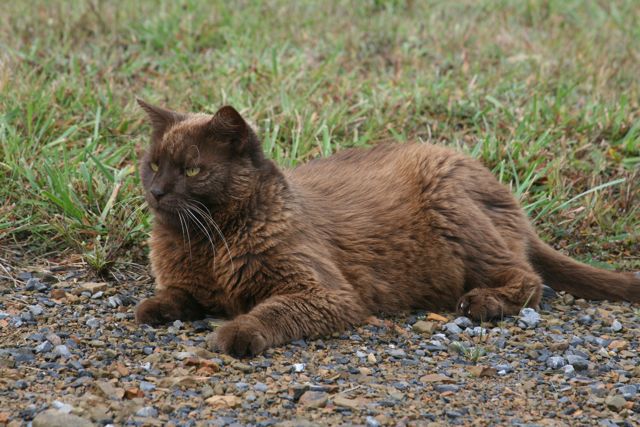
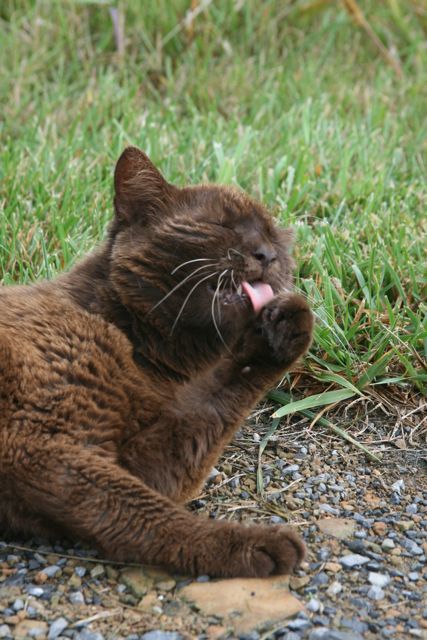
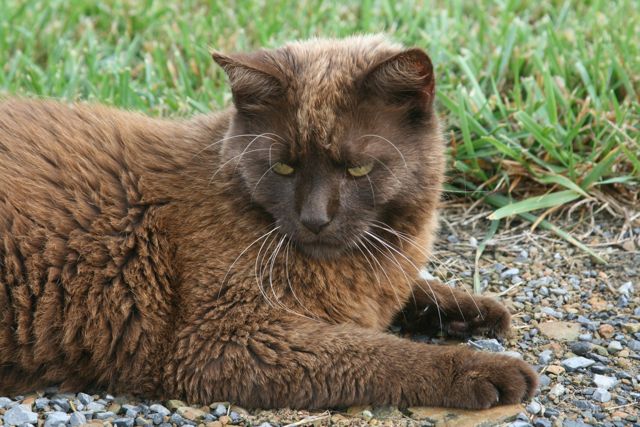
But today, according to Alley Cat Allies, is National Feral Cat Day. Nationwide, events are being planned to celebrate the presence of feral cats in our communities and rural areas. It's OK if you need to read that last sentence twice. All right. So I am celebrating, as an avian rehabilitator and unabashed celebrant of natural diversity. My celebration of National Feral Cat Day might proceed a bit differently than some people's.
I just read a book called Cat Wars: The Devastating Consequences of a Cuddly Killer by Peter Marra and Chris Santella. And while I was flying to and from South Africa, I had something like 34 hours to work on my review, which was commissioned by a major national newspaper. I had read the book carefully at home, but had yet to write the review. I started it over Newfoundland on the outbound leg, and finished it somewhere over Cameroon on the way home. Well, it came out too long and my editor couldn't figure out how to cut it without gutting it, so he had to pass on it. That's OK. There will be other books to review.
So, in honor of National Feral Cat Day, I'm going to publish it for the first time right here.

My painting of the cat that took the power of flight from Vanna, the savannah sparrow who bounced around a cage in my studio for 17 1/2 years.
Cat Wars: The
Devastating Consequences of a Cuddly Killer. Peter P. Marra and Chris
Santella. Princeton University Press.
It’s not often that the word “important” floats up as a
descriptor for a new book, but Cat Wars
amply qualifies; in its treatment of a subject nobody wants to embrace, this
fast-paced, gritty and occasionally terrifying book could sit comfortably on
the shelf beside Rachel Carson’s Silent
Spring. Ornithologist Peter Marra, director of the Smithsonian Migratory
Bird Center, plunks study after scientific study on the table, while popular
writer Chris Santella, author of the Fifty
Places series, pulls back for the long view, then zooms in with anecdote,
constantly changing both scene and topic. The resulting narrative pulls the
reader in like a cat to a laser pointer.
The wake-up call to conservationists and cat owners alike
began in 1989 with Stanley Temple and John Coleman’s University of Wisconsin
study, which attempted to quantify the number of birds killed by free-ranging
rural cats in that state. Through direct observation of radio-collared cats,
fecal analysis, and analysis of stomach contents of live-trapped (unharmed)
cats, they established what their subjects were eating: primarily small mammals
and birds. Using extremely conservative modeling, Temple and Coleman determined
that at least 7.8 million birds die annually at the claws of cats in the state
of Wisconsin alone. Subsequent studies by others refined the counts of cats as
well as birds, taking aim at a nationwide figure. Even with the charitable
guess that only one in ten free-roaming cats takes a bird per day,
ornithologist Rich Stallcup arrived at the estimate of 4.4 million birds per
day, or over one billion birds taken annually by owned cats in the United
States. In his analysis, Stallcup didn’t even address the problem of feral
cats, which is likely much larger.
“Along the California coast it is common to see 10 to 15
during a day’s outing (and these are nocturnal animals.) Certainly, there are
many million, country wide. What do they eat? Wildlife. Nothing but wildlife.”
Scott Loss and colleagues used two independent pet owner
surveys to come up with a mean figure of 84 million owned cats in the U.S. as
of 2013. Using eight independent studies, Loss was able to estimate that more
than half of these are allowed outdoors, and about two-thirds of those animals
hunt. An additional 60-100 million unowned cats likely roam the nation, and
every one of them hunts to survive. Median estimates of the yearly national
toll on wildlife run to 2.4 billion birds per year, 12.3 billion mammals,
around 200 million amphibians and more than 600 million reptiles. This study
points at cats as responsible for more bird deaths than all other anthropogenic
(wind turbines, window collisions, car collisions, pesticides) factors
combined. These figures, sickening as they are, are conservative. They do not, as cat enthusiasts claim, represent a subjective, emotional vendetta against cats. Nor would any scientist deny that habitat loss is a major factor in rapidly declining songbird populations. Direct mortality from cats is real, and it is preventable. This book sounds an alarm too long silent.
Cat Wars could
serve as a textbook for its clear explanations of subjects such as the
processes of extinction, island biogeography, and population modeling, as cat
impacts on wildlife are discussed. But the book hits its stride in illuminating
the rarely discussed and truly terrifying role of domestic cats as vectors for
zoonotic disease in humans. What more perfect vehicle could zoonotic diseases
employ than an animal that kills and eats sickly wildlife, then defecates
around and inside human homes? Black plague, carried by rodent fleas, but now thought to spread through aerosol transmission, killed
one third of Europe’s population, starting in China the 1300’s. It’s still
present in eight western states, infecting small rodents, the cats who eat
them, and (rarely) the people who own those cats.
Far more common, and now taking hold in managed feral cat
colonies in Maryland and elsewhere, is rabies. The baffling double standard
where dogs and cats are concerned is here thrown into sharp relief. Dogs are
registered, licensed, confined with fencing and leash; vaccinated yearly, and annual U.S. cases of rabies in dogs had dropped to 59 in 2014--a 34% decrease from 2013. Cats, on the other hand,
roam freely; are not licensed and are often unvaccinated; and 272 rabid cats
were reported nationwide in 2014, a 10 % increase from the 247 reported in 2013 (CDC data). While people managing colonies with TNR
(trap-neuter-release) vaccinate the cats against rabies on first capturing
them, cats are clever. Once caught, a cat will very rarely enter a trap again, meaning
they do not receive rabies boosters. About 13,000 post-exposure rabies treatments are given annually in the U.S. due to cat exposures, which is approximately 1/3 of all rabies exposures (Gerhold and Jessup, 2012).
Black plague and rabies are rare. There is a cat-specific
parasite which is extremely common; which finds its way into soil and drinking
water; which works in silent, seemingly calculated concert with rodents, cats,
and humans alike, and has been recently found to have public health
implications undreamt of. Toxoplasma
gondii reproduces wildly in the digestive tracts of felines and is shed in
oocysts in their feces; most people recall warnings that pregnant women should
not clean cat boxes, as the parasite can cause birth defects in people. Rodents
pick the oocysts up through contact with contaminated soil and water. And from
here, it gets stranger and stranger. Controlled experiments with Toxoplasma-infected rats have shown that
the parasite alters the limbic regions of their brains such that the rodents
lose their fear of cats, and the smell of cat urine, which repels them when
they’re healthy, becomes irresistible. Seeking out cat urine, of course, helps
ensure that the parasite-laden rodents end up in the guts of cats, where T. gondii reproduces and is shed in
feces to start the cycle again. Most disturbing are findings that people are similarly
affected by toxoplasmosis. It is the most common parasitic infection in humans,
affecting up to 22 percent of the U.S. population. Outdoor cats defecating in
children’s sandboxes and the loose garden soil and mulch around homes present a
concentrated risk of human and cat infection. Even more insidiously, the hardy
cysts of Toxoplasma can persist for
years, finding their way into streams, rivers and marine environments, as well
as drinking water. Toxoplasmosis kills endangered monk seals in Hawaiian
waters; sea otters and seals elsewhere.
Recent studies have shown that humans bearing Toxoplasma antibodies show some of the
same behavioral changes as rodents, including decreased anxiety and an
attraction to the smell of cat urine. If you actually like that smell, having more and more cats around you is a good thing. Along with these changes come a stringer
of others, including tendencies toward severe depression, bipolar disorder,
obsessive-compulsive disorder, and even schizophrenia. Toxoplasma-positive individuals were 2.7 times more likely to
develop schizophrenia than uninfected people. Wait. 22% of the U.S. population is Toxoplasma-positive??
In the face of scientific evidence that cats take a shocking
toll on wildlife; that they are frighteningly efficient vectors of zoonotic
diseases, some of them real doozies, it is puzzling that society has turned a
blind eye to the impact of their largely unregulated, unchallenged, omnipresence
in our ecosystems. Cats kept indoors for life are vastly less likely to come
into contact with diseased animals, and transmit disease to their owners. They
don’t kill birds, mammals, reptiles and amphibians, and are safe from cars,
dogs, fights with other cats, and persecution by people who take exception to
their presence. Indoors, they are graceful, loving, amusing pets. Left free to
roam they are, collectively, a disaster for already-struggling songbird and
small vertebrate populations.
A strong and vocal segment of the population lobbies for the
“rights” of feral cats, such that municipalities nationwide have been convinced
to sanction the maintenance of cat colonies in their midst. Over and over, TNR
(trap-neuter-release) has been shown not to reduce cat numbers, but rather to
provide obvious dumping places for unwanted pets, which go on taking prey as
cats naturally do, subsidized with food and shelter or not. Yet, because it is
presented to municipalities as a solution, however imperfect, for addressing
the feral cat problem, TNR is endorsed, as a less politically repugnant option
than advocating the removal of the animals once and for all. Cat Wars gives cat lovers and pro-cat lobbyists
a chance to be heard, profiling several devoted colony caretakers who work
tirelessly to feed, water and care for street cats, and give them the best
lives possible under the circumstances. It is clear that, along with the belief
that free-roaming cats have a place in communities, goes denial at their real
impact. The most vocal cat advocates hold the "right" of this domestic species to live free and kill wildlife above
any concern for affected wildlife, and stridently question the validity of the studies
cited. Calling any work--no matter how exhaustive, careful or conservative--that counters their conviction "junk science" is a defensive pose that looks all too familiar to scientists and
citizens speaking out, for example, about climate change.
Ironically, it is a microbe—Toxoplasma gondii—which has been predicted to “dethrone” malaria as
the protozooan most dangerous to humans—that may hold the key to changing
hearts and minds. In the end, the multiple public health threats that roaming cats present look to be the only force that could propel any real
initiative to reduce free-ranging cat populations. Cat Wars gathers
together an ironclad case for action over emotion; for a turnabout in public
policy that in many municipalities literally supports the perpetuation of an
introduced domestic predator of dwindling native wildlife; for an overhaul of
the lassiez-faire attitude of more than half of America’s cat owners. If we
would have cats in our midst, we must learn to keep them inside, for they
create nothing but havoc—and countless more cats--when they slip out the door.
If you'd like to do something about all this, please send donations to American Bird Conservancy, whose Cats Indoors educational campaign is the most effective I've seen. You can donate here. Please tell them Zick sent you, on National Feral Cat Day.
You can purchase Cat Wars here. And pay no mind to the stack of one-star "reviews" from cat enthusiasts who haven't read the book. They flooded in before it was even released. Read the five-star reviews now rolling in, then get your hands on this book! It's a beautifully constructed and paced page-turner...I literally couldn't put it down. Thank you.

Happy National Feral Cat Day, 2016!












Sunday, October 16, 2016
26 comments