Background Switcher (Hidden)

Showing posts with label shovelers. Show all posts

Pink Flamingos, Happy Boy

Thursday, February 5, 2015

10 comments

The first thing Liam and I did upon arriving at Merritt Island NWR near Titusville, FL, was to stop right on the road for a bald eagle who was hangin' out on a power pole. I have been there a bunch of times and I'd never seen that. Now, maybe I'm supposed to be blase about an enormous sea eagle 30' over my head. But I'm not. A truck honked at us and swerved, gunning its engine, and it was then I realized it was probably stupid of me to stop on the main road. But still. I was overwhelmed. And as it turned out, we never saw another eagle perched so close. I was glad we'd taken the time to ogle it. Liam took this photo! (I kept handing him my camera, as all the best wildlife was out the passenger side of the car. Wink, wink.)


Great big and itty bitty Florida cooters near the Merritt Island Visitor Center. I want to name a dog Cooter.


Another Liam shot of a majestic high-headed gator. Ahh. Such a grand reptile.


I love packing my long lens around. I can take candid shots of my primate companions. Liam saw some oranges hanging high overhead and wanted one sooo badly.


He scrounged a palm frond petiole and took to leaping and poking.


I so wanted him to score an orange to eat, but they were on there pretty good, wouldn't come down for him. I call my kids The Toucans. It is very difficult to keep them in fruit. I buy apples and kiwis and clementines by the bushel.

We climbed back in the car and drove slowly around Black Point Wildlife Drive. The light was hard and harsh, but we had fun fun fun.


I always forget that roseate spoonbills have head skin the color of used chewing gum. Freaky greenish-blue. That's a winter American avocet exiting, stage left.


We were in Florida for a week and saw oodles of spoonbills, but I never once got used to seeing a large flaming pink bird. I'm glad of that. May I never get used to spoonbills. 


I had a good (silent, inner) chuckle when a woman I was standing near on a viewing platform asked me if I'd seen the flamingo go over. 
"I saw a roseate spoonbill go over just a bit ago, but no flamingo."

"This was a flamingo."

I chewed that over for awhile and decided the fate of the world didn't ride on whether she'd seen a flamingo or not. Flamingos may sometimes be found very sparingly in the Florida Keys. A day's drive south of Titusville.


I replied simply, "Cool!" and ambled off. About twenty minutes later I was peering intently into a shrub at a common yellowthroat. The same woman came up behind me. "What are you looking at?" she asked.

"Common yellowthroat, male, right at the water's edge."

"Really? Now who'd ever think to stop and look at something like that?" she exclaimed.

That took me by surprise. Huh?? I actually laughed out loud. What a bizarre thing to say!

I turned around and smiled at her, meeting her eyes.

"That pink bird you saw fly over? Roseate spoonbill. Flamingos are found only in the Keys, and they're super rare."

"Oh! OK."

Never can pass up a teaching moment, and she'd given me permission to correct her (kindly) by asking me what I was looking at, and making a comment that told me she didn't yet know a hawk from a handsaw. Seemed like the right thing to do, to tell her she'd seen a spoonbill, so she wouldn't go around calling them flamingos to everybody she ran into. Kind of like wiping a daub of ketchup off somebody's lapel.

Or shoulder...I never tire of trying to get a peek or a picture of a spoonbill's saffron tail. Not to mention the used-bubblegum head.


Binocular vision in a young tricolored heron. I like his tighty whities.


Really, what a lovely bird, all painted with rufous. Saw so many of them and never tired of the "Lady of the Lake," either. Pure elegance on the wing or on foot. I do miss the name "Lousiana heron."


When I was a teen, I was pretty sure I'd never get to see a wood stork in my lifetime. They were almost extinct then. I felt the same about brown pelicans and bald eagles. Imagine. I'm that old. But I'm not that old. They've recovered that quickly! There is so much to celebrate in conservation today. Forget the gloom. There are bald eagles on the power poles, and wood storks walking around on lawns and roadside ditches. And that, to me, is a miracle.

 Liam liked this wood stork. He narrated its preening. I love birding with Liam.


A raft of northern pintails, hauled out. They have the right idea. Breed in the prairie potholes, winter along the Florida coast. I could dig that seasonal regime, if I had somebody to fly with.


Another Liam Thompson shot, of shovelers! Watch out world, he's got a telephoto!


He's not bad with an iPhone camera, either. Selfie by the pool... taken for his sister who was freezing her patootie off in a Maine snowstorm at that moment. He said it was so bright he couldn't see the palm tree until he got back in the room. Classic shot!


Yes, it's always worth yanking the kid out of school for a week in January. Never more emphatically so than this January. He told me today (Feb. 2) that he's finally caught up with schoolwork and back in the groove. And that the Florida vacation was worth every minute of grief since he got back.
Atta boy! Way to live.

Bird Beauties of Viera

Sunday, February 13, 2011

9 comments
If you can't get a good photo of a great blue heron in Florida, there is something wrong with you. But you can get wonderful photos of all kinds of much scarcer and shyer birds at Viera Wetlands, and the photographers all know it.


A glossy ibis preens its coppery plumage.


You beautiful thing. For this birdwatcher, for decades, glossy ibis have been just dark shapes through a spotting scope, and now here you stand right before me, preening unconcernedly.

A drake hooded merganser hides in the rushes, yellow eye like a panic button.


He gathers his mate and out they glide, and I am too close to get them both in (I'm digiscoping with Bill of the Bird's Leica rig, and loving every second of it). For more on the equipment I rather inexpertly used for my closeups, go to Jeff Bouton's Leica Birding Blog.


White ibis are confiding and nice, and pretty much everywhere around Space Coast.


 But the limpkin is a specialty of Viera Wetlands, and this is where wonderful photographers like my friend Marie Read come to immortalize them. Just look at her gallery of a spectacular limpkin fight at Viera!

They were in a much more pacific state of mind when we visited, but the air still rang with their staccato calls. Limpkins, more closely related to cranes than to their lookalike ibis, specialize in eating apple snails, and the empty shells strewn on the shore attested to their efficiency. I love their Latin name: Aramus guaruna. The origin of Aramus is unknown, according to Ernest Choate's Dictionary of American Bird Names, but the Guaruna are a tribe inhabiting the Orinoco region of Venezuela. There are not many bird names in Choate's gem of a book whose origins are unknown, and I like the air of tropical and systematic mystery surrounding this strange and noisy bird. According to Whatbird.com, it's called "Limpkin" for its jerky, awkward flight, but the Internet is full of tautologies. Jury's out on that. I can attest that the limpkin's haunting, hollow, cackling call has much of the resonance of the sandhill crane's purr, and that's good enough for me. Here's "Inspirational Sheila's" brief video of a limpkin calling. I have to confess I hadn't really thought about the limpkin's crane affiliations, but the voice truly gives it away. Listen to this bird's putts and then the full-out cry.


It was good to see and hear this dusky little brother of the crane.


News flash! A palm warbler actually on a palm!!  a sabal, to be exact. I like this photo a lot. You can even see its shadow.


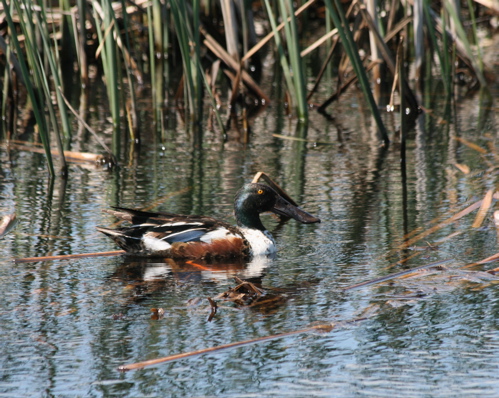
A shoveler nearly in full breeding plumage. Most of them were looking tatty.  


A lady of the lake (tricolored heron) fishes the clear waters. Hard to believe they were in a shower or toilet at one point...


Sun has its myriad attractions, but the colors of tricolored herons really show nicely in overcast, as on this rainy first visit to Viera.


The once endangered wood stork, another success story for conservation. I really though I'd never be lucky enough to see one, so critically endangered were they when I was growing up. It seems Ol' Ironhead is everywhere now. How lovely to have a true stork in North America. Nyah nyah, Old World. We got one too


and ours has pink feet!

Spectacular birdie he is. I almost drove off the road on my first visit to Fort Meyers in the early 90's, when I saw a bunch of wood storks in a roadside ditch. While I was growing up, wood storks were quietly making a comeback in Florida, spreading through the Southeast. I hadn't known. And now they are a reasonably common sight.


So many things to celebrate! It is what it is, and much of it is good.


Immersed in Marshes

Sunday, July 20, 2008

11 comments
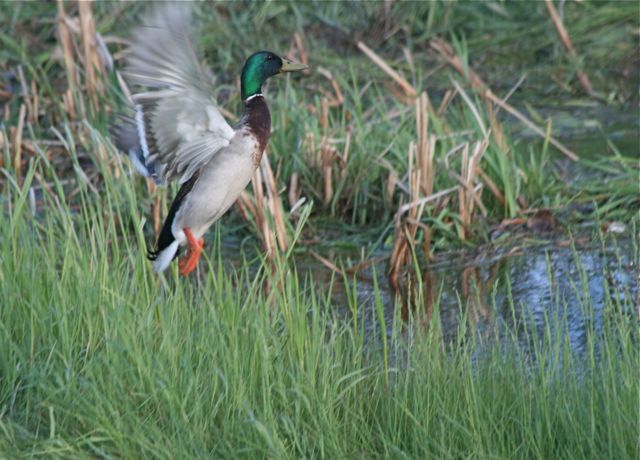
A shoveler glides in for a landing, bill still wet from his last dabble.

Let's face it. Here in unglaciated southeast Ohio, we're starved for marshes. There are very few marshes, almost no natural lakes, and comparatively few opportunities to watch wetland wildlife. That's not to denigrate my beloved habitat; this blog is a celebration of all it HAS. But going to North Dakota is marsh immersion, and I love it.

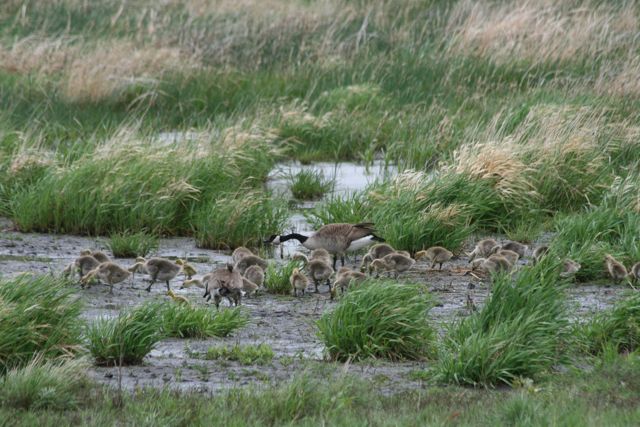
I bring you marsh tidbits in this post. Marsh equals nursery in pothole country. Here, a massive creche of Canada geese from several broods.
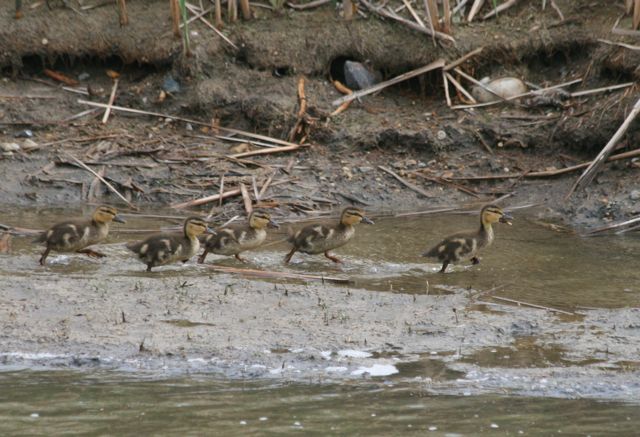
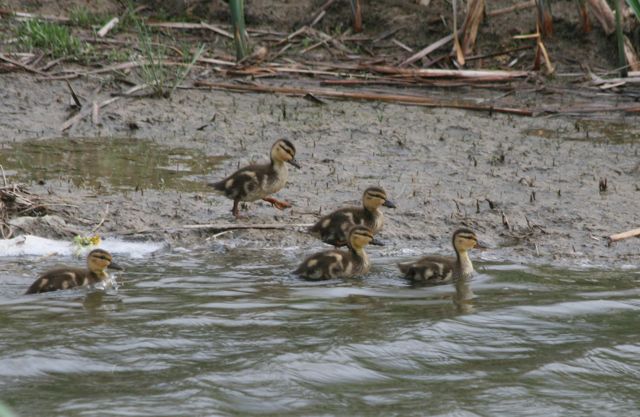
And a racing brood of little mallards, peeping for Mama.
They take to the water, where they feel more comfortable.
Their putative father? Who would know? Although I grew up on Robert McCloskey's Make Way for Ducklings, with its model of mallard monogamy, it's more likely that Dad's out looking for a receptive hen than helping to tend the brood.
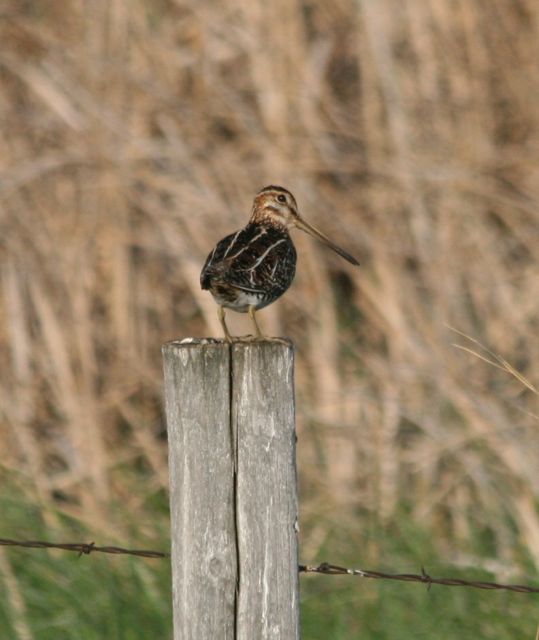
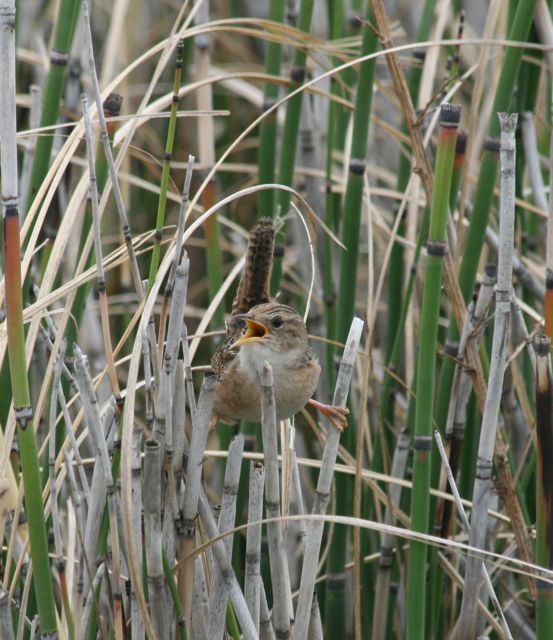
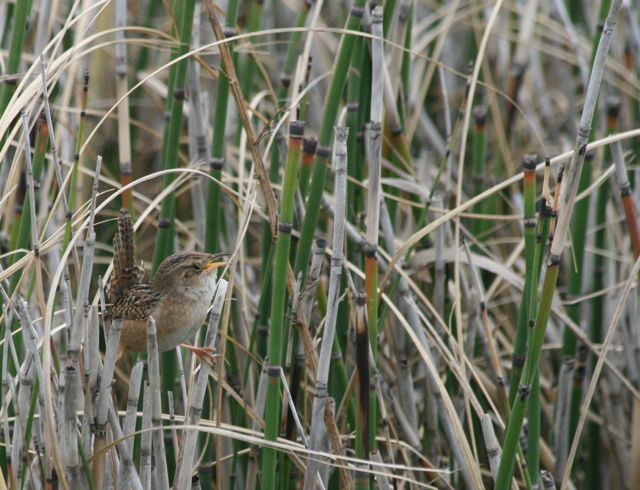
Overhead, snipe winnow, giving an otherworldly woo-woo-woo-woo that seems to be coming from nowhere and everywhere at once. They make the sound by channeling air from their beating wings into narrow, lanceolate outer tail feathers. They tip and tilt, side to side, and spread their tail as they tilt. The woo's occur at precisely the same time as the wings beat down. And the sound is produced. The bird straightens up, folds it tail in a normal flight position, and the sound ceases. In a magic moment, I was able to get everyone in the group on a winnowing snipe, predicting just when the sound would occur. And they understood, and it was beautiful.Everywhere, marsh wrens click and whir. Less frequently, the triple-click and burr of sedge wrens rings out.
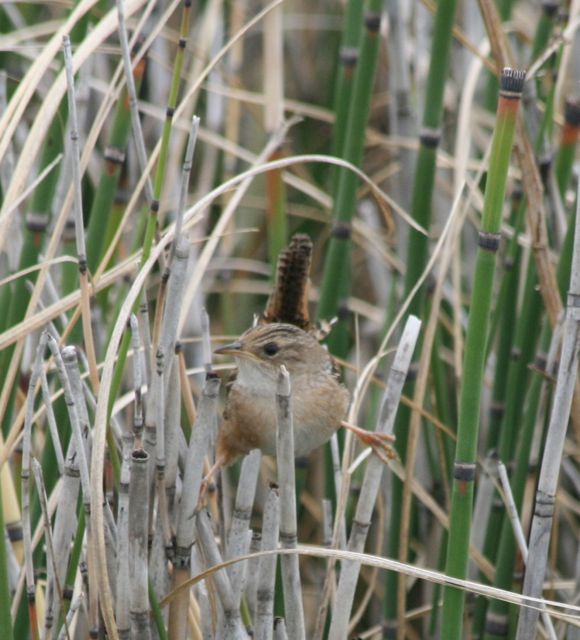
To me, they sound like a song sparrow with a head cold--dry and raspy, as if they were about to cough.
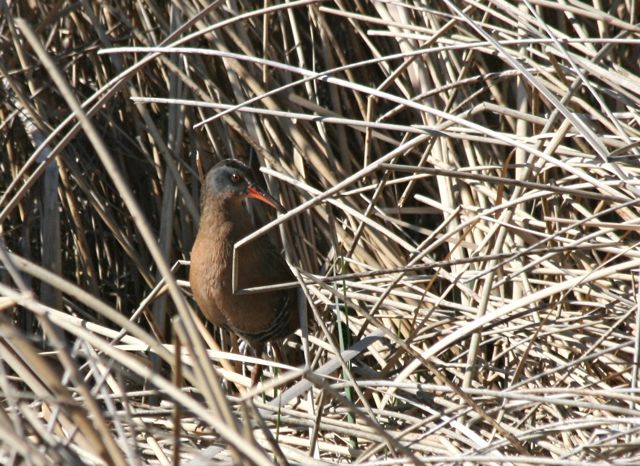
I love the straddly poses marsh birds have to adopt in order to perch in waving sedges, reeds and rushes. Boy, sedge wrens are cute, especially when they're mad.On the bison trip, we coaxed a Virginia rail into view with a recording of his grunting song. A sora popped up briefly but wouldn't oblige. While it bugs me to lure birds in with recordings, it makes me very happy to be able to show perhaps 35 people a rail, who would otherwise remain a mystery, and, after we're gone, will continue to be one.
At least until next June, when it might be duped once again.

Birthplace of Ducks

Wednesday, June 27, 2007

1 comments
A blue-winged teal, Bill of the Birds' favorite duck. They are everywhere in North Dakota, leading little broods of bumbly yellow ducklings.

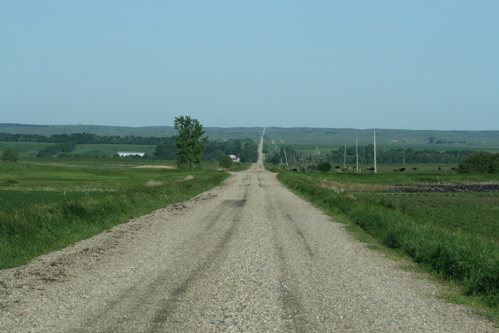
The North Dakota Missouri Coteau region is justly famous for being the birthplace of ducks. Brief, geology-for-morons explanation: The Missouri Coteau is the place where the glacier stopped, and dumped all its gravel. Big chunks of ice bore down into the earth, creating deep potholes, and the gravel that the glacier pushed before it piled up into moraines and ridges, that rise above the flat ancient sea bottom in ridges visible for miles. Here’s a road, going along the flat, then rising up to the Coteau.You get up on the Coteau, and everything seems to come to life. The land rolls and undulates and rises up in sudden promontories. Grasses wave like the sea. Birds pop out of every slough and ditch. It is a birder’s paradise. It is...ridiculously birdy. It is one of the places you MUST go before you die. Start with the Potholes and Prairies Birding Festival. Next June. Be there.

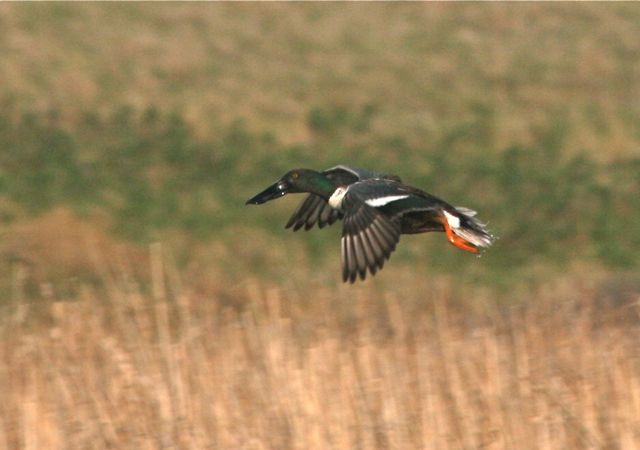
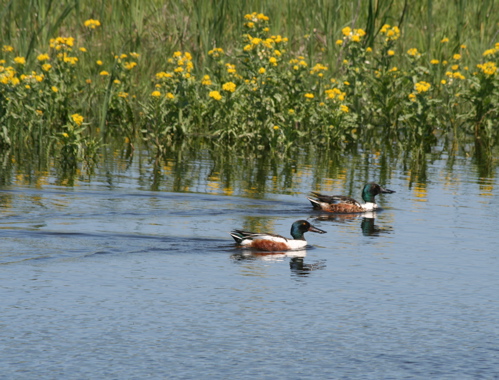
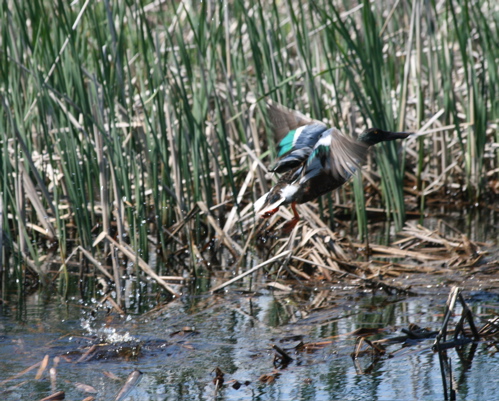
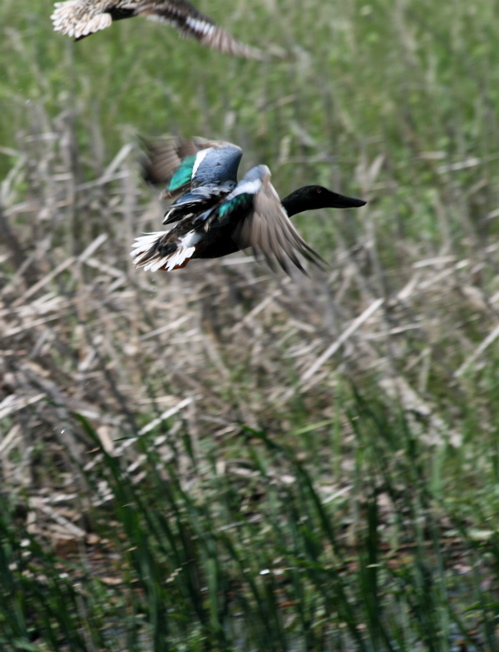
The potholes are full of ducks, like these gorgeous shovelers. This pair of males was keeping company, and even displaying a bit to each other, but I did not feel as though their relationship threatened the institution of marriage. I'll have to check the laws in North Dakota to see what's allowed, but personally, I was cool with it.This male was one of a heterosexual pair, but he looked wary. He exploded into flight, unexpected colors flaring from his epaulets. WOW. Being on the wrong side of the car, I thrust my camera into Bill’s hands, and he captured the images. I doubt I'd have gotten it. Thanks, sweetie.Such an exultation of color! The same sky-blue upper wing coverts as a blue-winged teal, with a teal-green speculum. Whoooo-eee. Imagine if we hadn't been shooting smack into the light. Oh, gosh. I'm sounding more like a photographer all the time. Picky, picky.

flying shoveler photos by Bill Thompson III

I'm painting flying woodpeckers today, slowly losing my mind from boredom. There are like a bazillion polka dots on the outspread wings of every darn one of them, and each one has to be painted around. Yawwwnnn...prairie dreams.
[Back to Top]