Background Switcher (Hidden)

Giant Amazon Otter!

Thursday, January 8, 2009

15 comments
I thought I had seen the Amazon's rarest mammal in the giant anteater, but there were more amazements yet to come. Karanambu Ranch is famed as a rehabilitation/rescue site for orphaned giant otter cubs, in the singular person of Diane McTurk. Diane is one of those people whom you meet, look at and instantly wish you could multiply somehow, to spread all that knowledge and caring around for awhile longer. There's no better way to learn an animal than to live with it, and Diane has been mama to multitudes of orphaned and kidnapped giant otter cubs. Through them, she's come to know the animal as no one else on the planet does. Upon arriving at Karanambu, we were taken down to the banks of the Rupununi to meet two of Diane's charges, who were swimming freely in the river under the eye of an Amerindian attendant .
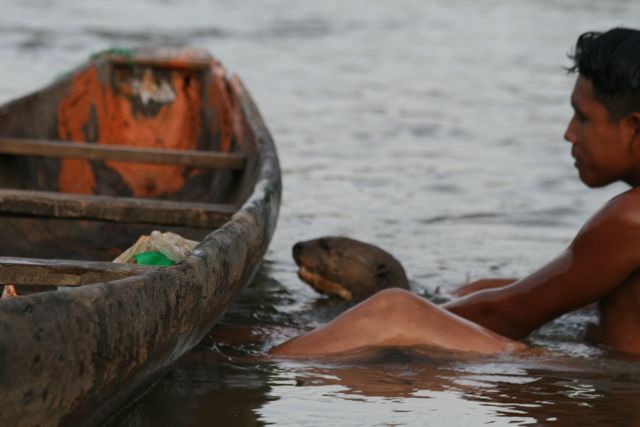
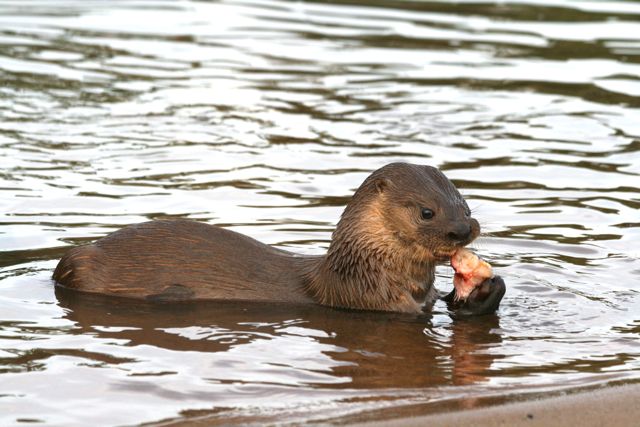
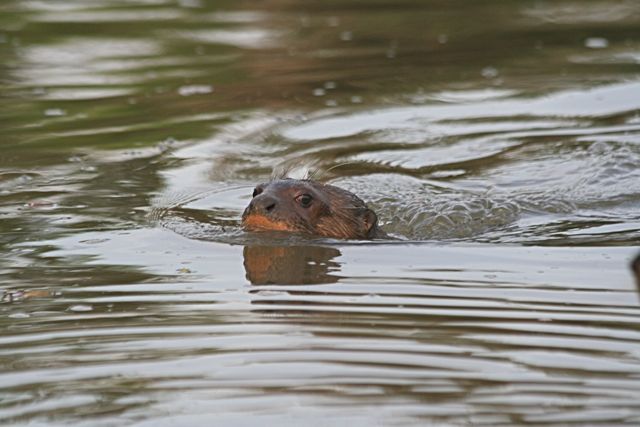
I was confused upon seeing my first semi-wild otter in South America. But for some eye and nose issues, it looked very much like our North American river otter (Lutra canadensis). If this was a giant otter, it must be a baby. I stared and stared, trying to reconcile what I was seeing with what I had been expecting to see. It was a gorgeous little thing.

As became abundantly clear in just a few moments, this was not a giant Amazon otter, but a Neotropical river otter, Lontra longicaudus. A life mammal, to be sure, and endangered (CITES Appendix 1). It was out of habitat here in this silty, slow-moving river, having been brought to Diane as a purported giant otter from an unknown locale. Neotropical river otters inhabit clearer, faster-flowing streams than do giant Amazonian otters. Nevertheless, Diane accepted it and raised it, and it has given vital companionship to the star of the show and central focus of Diane's life work.

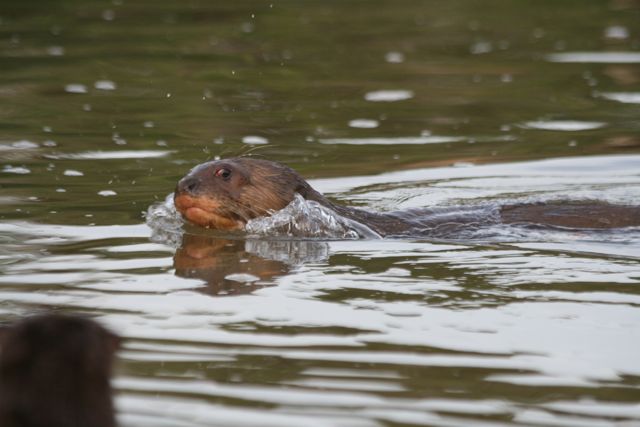
First peek of the giant Amazon otter, Pteronura b. brasiliensis:
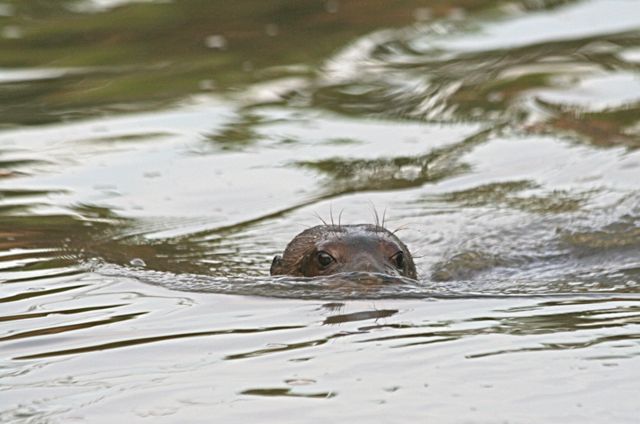
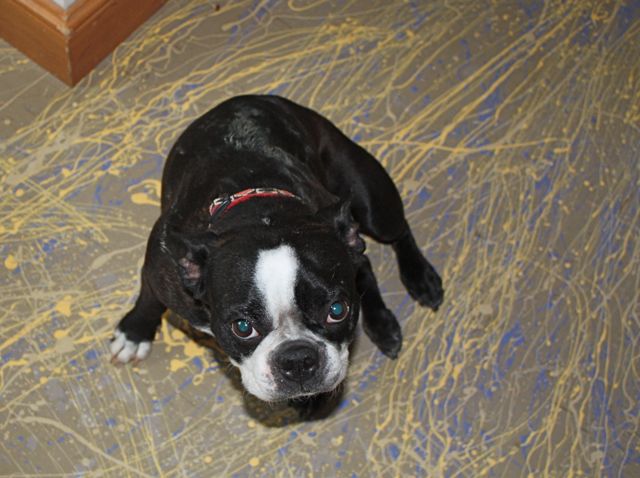
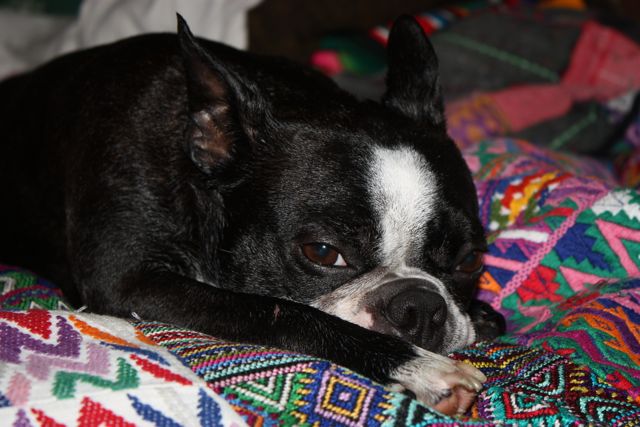
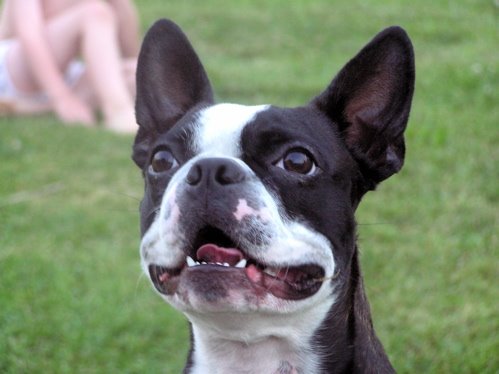
Hello!Oh my! What nice pink lips you have!At this point I had been away from home for several days and was jonesing heavily for Chet Baker. This otter's googly eyes and floppy lips did something for me. If you've always had a Thing for Otters, as I have, a Boston terrier is the next best thing. And unlike otters, they're perfectly legal to keep as pets!
Nah, nothing otterlike about this dog. Couple that pining for The Bacon with the fact that I never thought I'd ever lay eyes on a giant Amazon otter, and I am in a full Science Chimp swoon.
to be continued...
Chet Baker Rolled

Wednesday, January 7, 2009

32 comments
When I was growing up, our standard x mini dachshund, Volks, would sometimes come in the house with a peculiarly hangdog look on his face. He'd lick his lips and lie there, ears pasted back, seemingly waiting for punishment. And sooner or later someone would lean down to pet him and shout accusingly, "Volks ROLLED!"

in something dead and disgusting

and there would be a big kerfuffle and Volks would get put in the catch tub for our old washing machine and my mom would fill it with much-too-hot water, being a German and all, and we'd suds the dog up and afterward having been scalded and soaped to within an inch of his life he would romp around the house dragging a towel, all googly-eyed and grinning in relief.

We loved it when Volks rolled, although I suspect my mom did not. He tended to be a dour little thing and it took the absolution of hot water to make him frisky.

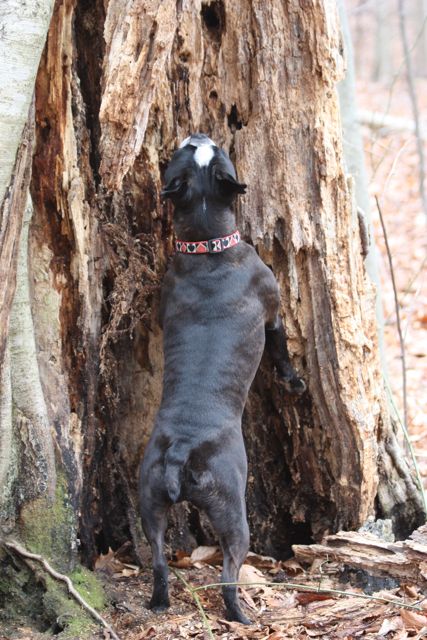
So Chet and I took a lovely hike yesterday full of squirrelts and damp leaves and he peered up trees and into crevices and I reveled in his muscular little body doing its thing

and when we came back inside he sat down and wouldn't move and he had his ears pasted back and I did not have to bend down to discern the fetid odor of coyote ca-ca emanating from my usually sweet-smelling little dog. And I saw the greenish smears all over his shoulders and collar and I was SO mad. I had ten minutes before I had to jump in the car to pick up the kids at the bus stop and I had to spend those minutes not relaxing with a cup of tea thinking about our wonderful hike but scrubbing &#$# off my doggoned dog. Again. He rolled last week, too.

Chet Baker. You are a terrible terrible dog and I am very angry at you. You ROLLED, didn't you?

Yes, Mether, I did, and I deserve whatever I have coming to me. I do.

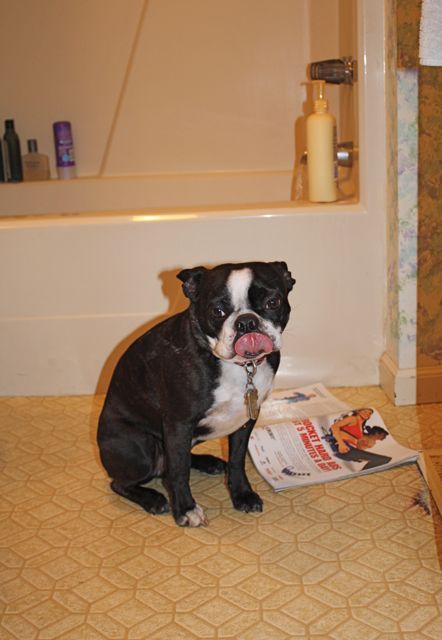
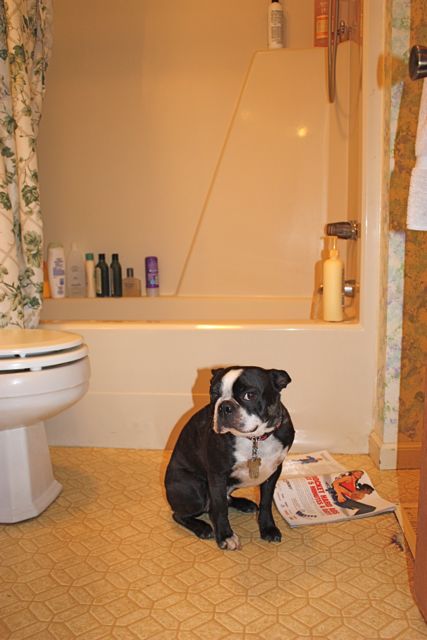
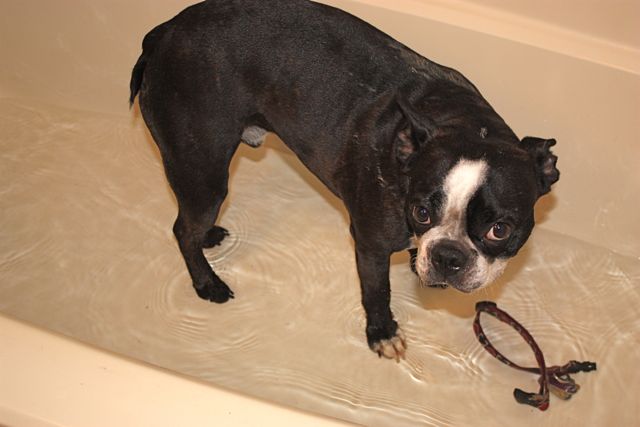
You know EXACTLY what happens now. Get down the hall to the bathroom now. Not now. Right NOW.Here I am, going down the hall to the bathroom. I know that I get in the tub now. Dogs like me do not know much, but we know when it is time to get in the tub.
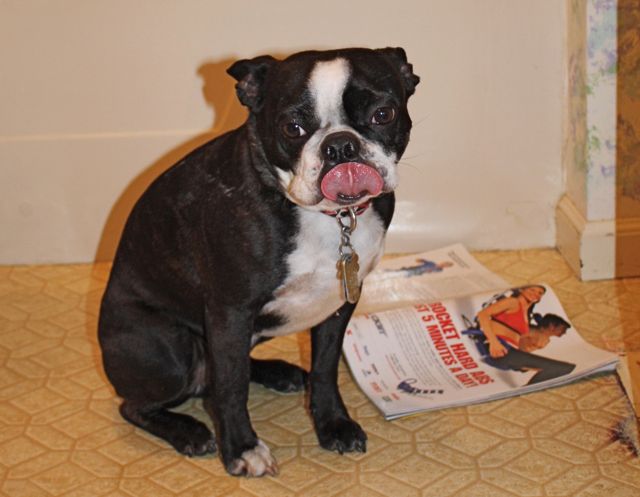
Although I am very angry at you, Chet Baker, I see that you have a very cute little purple lip sticking out from under your tongue. So I am going to enlarge this picture. You stay there.
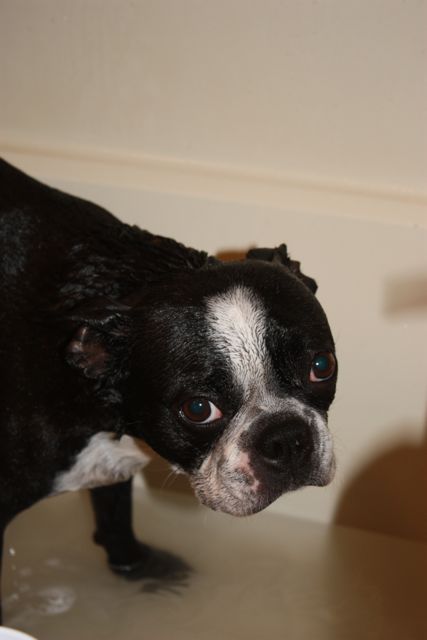
Mether, I am so, so sorry. I do not know why I rolled in coyote poop. But I will smell so good when you are done with me. And to tell you the truth, here is a little secret. I love the hot water on a cold rainy day like this.Chet Baker. If you want a bath just ask for one. You do not have to anoint yourself in feces. You are too disgusting to pick up, so you jump in that tub right now. By yourself. I am not touching you, you foul thing. I am going to get my dishwashing gloves and when I come back you had better be IN THAT TUB.
Yes, Mether. Getting in the tub by myself is the least I can do.
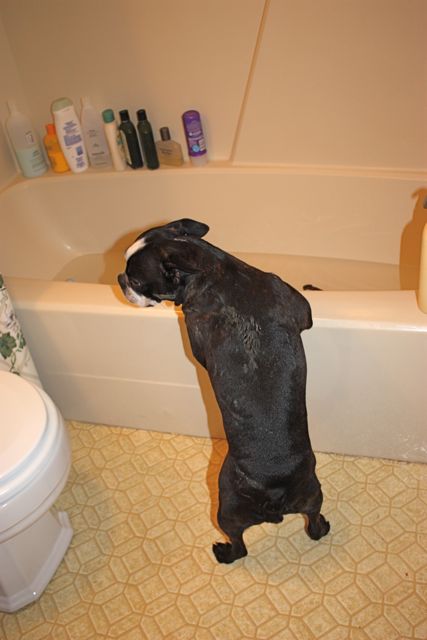
As you requested, I am in the tub now.
Just look at that water. Soaking in fecal broth, you are, you foul little thing.
Have I said I am sorry, Mether?

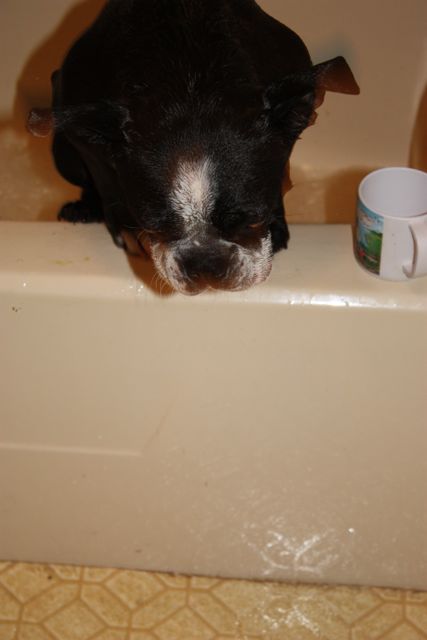
Enough of your sorries. You can get out now. By yourself.


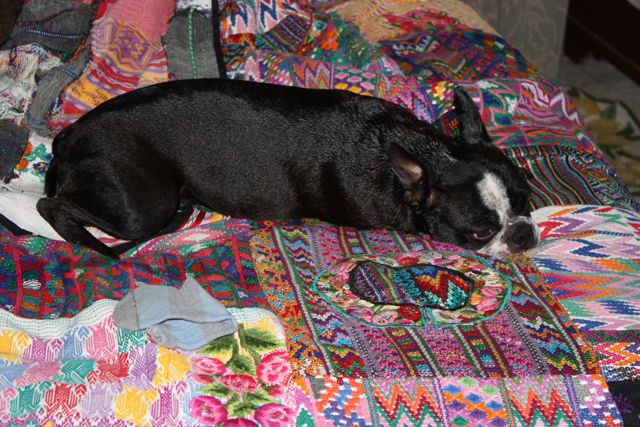
This beautiful hand-loomed bedspread seems like a good place to roll and dry myself. Oh. You do not want me to claw it. I will lie perfectly still and hope that you forget what I have done.
Not for a long time, Chet Baker. That was the stinkiest, stankiest, most disgusting ca-ca you have found in a long long time. Maybe ever. FEH!

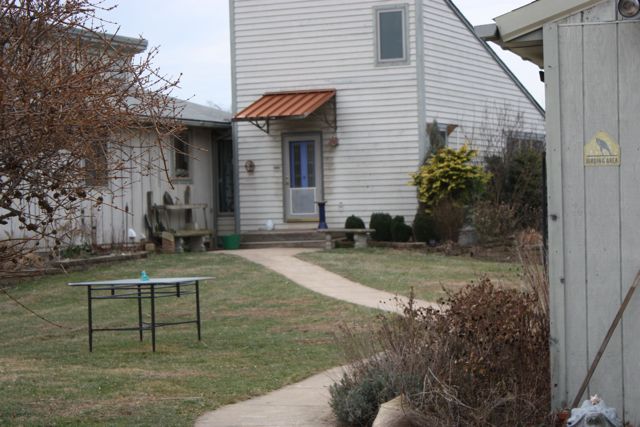
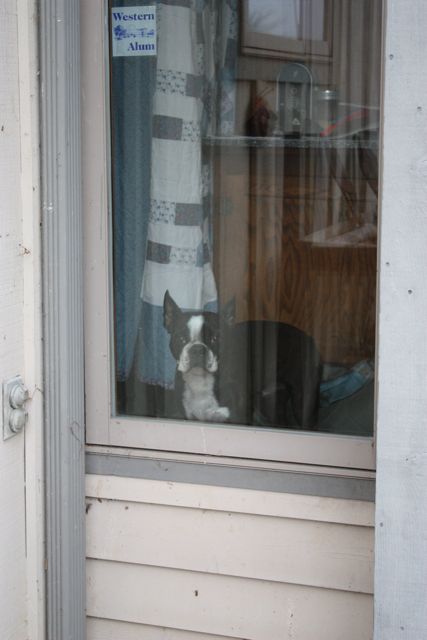
It's time to pick up the children now, your favorite part of the day. But you, Chet Baker, are not going along, because you are all wet, and you would get too cold. You stay here and think about what you have done. (If you look very closely you will see his little cowface in the long foyer window).
Here is a closeup of Chet Baker, when he realizes I am leaving without him.
I am happy to report that on today's hour-long hike, Chet Baker refrained from rolling in coyote bockie. He stuck close to me and kept coming back to tell me he had not rolled. Once I saw him find a pile of poo and a dreamy look came over his face and he started to crouch and drop to the ground and suddenly his head jerked up and he glanced sheepishly over his shoulder at me and collected himself and trotted on.

Good dog, Chet.

Chasing the Giant Anteater

Tuesday, January 6, 2009

19 comments
One of the oddest things about the giant anteater is its huge, sail-like tail. It uses the tail as a sun shade and umbrella when it sleeps in shallow depressions during the day. Extremely coarse, strawlike hair sheds water, and the fine, velour-like hair on its nose and face protects it from ant bites and stings. An odd bit of information: Anteater hair is highly flammable, and the animals are vulnerable to grass fires. What an awful thought.
Though an adult's body is 3 1/2' long, its tongue can extend two more feet. It is detached from the hyoid bone and extends deep into the thorax to the breastbone! Coated with sticky saliva, the tongue lances into termite and ant mounds and instantly ensnares workers and larvae. It lashes forward and back, up to 150 times per minute, dragging the ants and termites to their demise. The anteater strikes and flees before the powerful soldier ants can mount an organized defense. As many as 30,000 insects may fall prey each day. No wonder a giant anteater's home range may cover more than 22,200 acres! Odder yet than its mobile tongue is its skull. The anteater has no jaws; its maxilla and mandible are fused into a single bony tube; thus it cannot open its mouth more than an inch or so. Imagine.

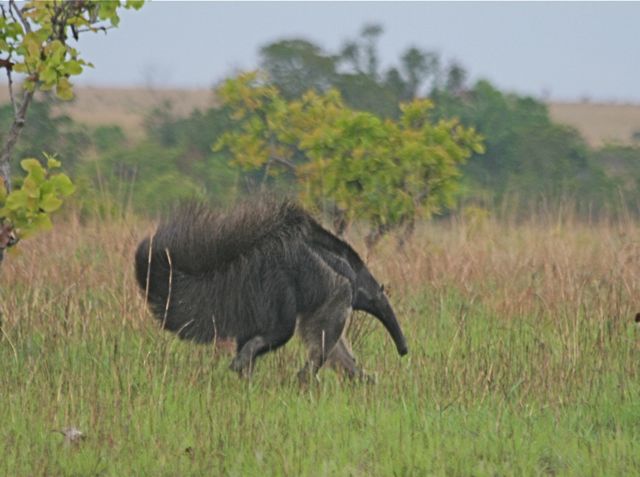
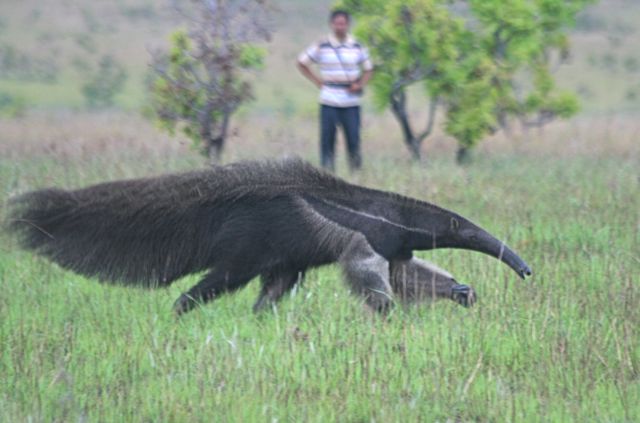
You can see his huge claws folded back along his wrists as he runs, mouth, such as it is, agape.

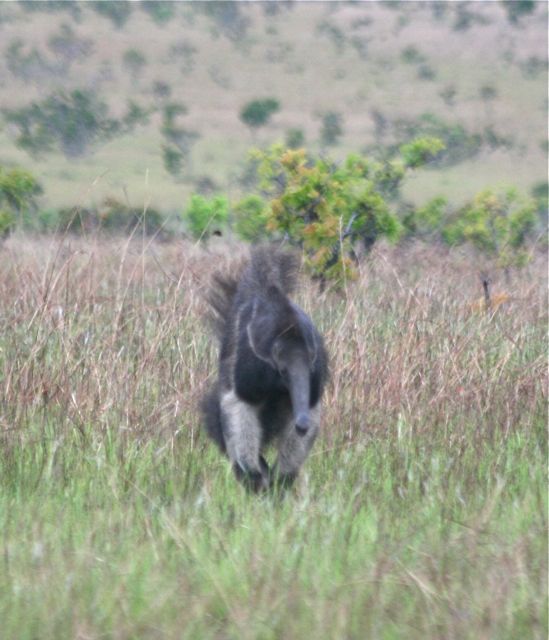
So as flabbergasted and delighted and agog as I was to have a giant anteater thunder right toward and then past me, I was immediately concerned for its welfare. The idea of routing it from its feeding or resting routine just so we could get a look at it didn't sit well with me. I couldn't see how this method of scaring up anteaters could be sustainable in the long run--wouldn't you drive them out of their habitat with such harrassment? I felt abashed that it had been so disturbed just for our entertainment. Imagine being forced to gallop on a hot morning, breathing through a snorkel, and you can see why we were so deeply concerned.

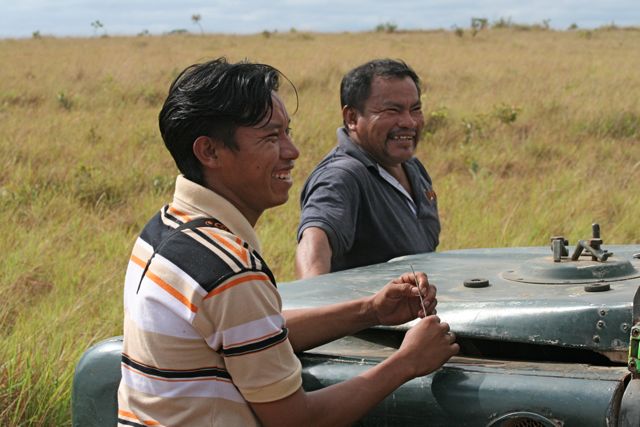
Ecotourism is in its infancy in Guyana, and having run with lightning speed over rough terrain and sent the anteater practically into our arms, our guides glowed with pride that they were able to give us such a thrilling experience. I couldn't fault them; they gave us what they thought we would want. They were great guys.The nuances of watching wildlife without disturbing it have yet to enter into the equation in the isolated case of Karanambu's giant anteaters. (Everywhere else we went, wildlife was approached cautiously and with a great deal of respect. I suspect this driving approach is viewed as the only surefire way to give tourists a decent view of a reclusive mammal). How much more preferable it would have been for us to view the anteater at a distance, perhaps from an elevated platform with a spotting scope, than to stress it this way! Having no scope, the guides resorted to herding it. I can't think about my first, and perhaps only, sighting of this rare animal without a pang of guilt and shame. There has to be a better way. Individually and as a group, we expressed our distress to the trip organizers, pleading the anteater's side of things.

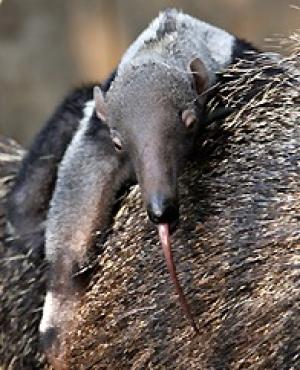
Baby giant anteaters crawl up their mother's legs immediately after birth, to ride clinging to her chest, or astride her like a tiny jockey. Having no jaws with which to pick the baby up, the mother depends on the baby to position itself, and waits for it to cling to her before moving away. This photo from the National Zoo depicts a baby born there on July 24, 2007. Oh my goodness. OK, do they nurse? My sources say they do, but how, if their tongues are long and snaky and they have no jaws? Arrggh. Need to know. Having just viewed some of the amazing giant anteater videos at Arkive.org, and seen the anteater's oral apparatus up close, I'm less concerned. I can imagine even this snaky-tongued youngster mustering up a pretty good vacuum with its tiny mouth. (Thanks, rmharvey!)  Various sources have the young nursing from two to six months, riding on mama for up to nine months. Giant anteaters are thought to live up to 15 years in the wild, and have lived to 26 years in captivity.

Seaworld and Busch Gardens have a wonderful website , from which I garnered the following bit of animal trivia: 

As an outcome of their diet and lifestyle, anteaters have relatively low metabolic rates. As a stark example, the giant anteater has the lowest recorded body temperature of any placental mammal--90.9 degrees F (32.7 degrees C).

When I read that, my heart sank. What do we know about the giant anteater's metabolism? What do we know about what happens when you chase a cool-blooded giant anteater around in stifling heat? Nothing. We know that that's a good way to get a close look at it. But...we also know that they're disappearing throughout their range; I've seen one estimate that places the global population at 5,000. We had seen one of that sadly dwindling number, and we had done him no good. Here comes the pang again.
Like many wondrous animals, giant anteaters are disappearing, and are listed as Threatened/Vulnerable under CITES. At the very least, we owe it to them to admire them from a distance, to observe them living their lives undisturbed, to respect their dignity and their place on the planet, and leave them unharmed by our interest.  May their glorious oddity, and our curiosity about them, not prove to be their demise.
[Back to Top]