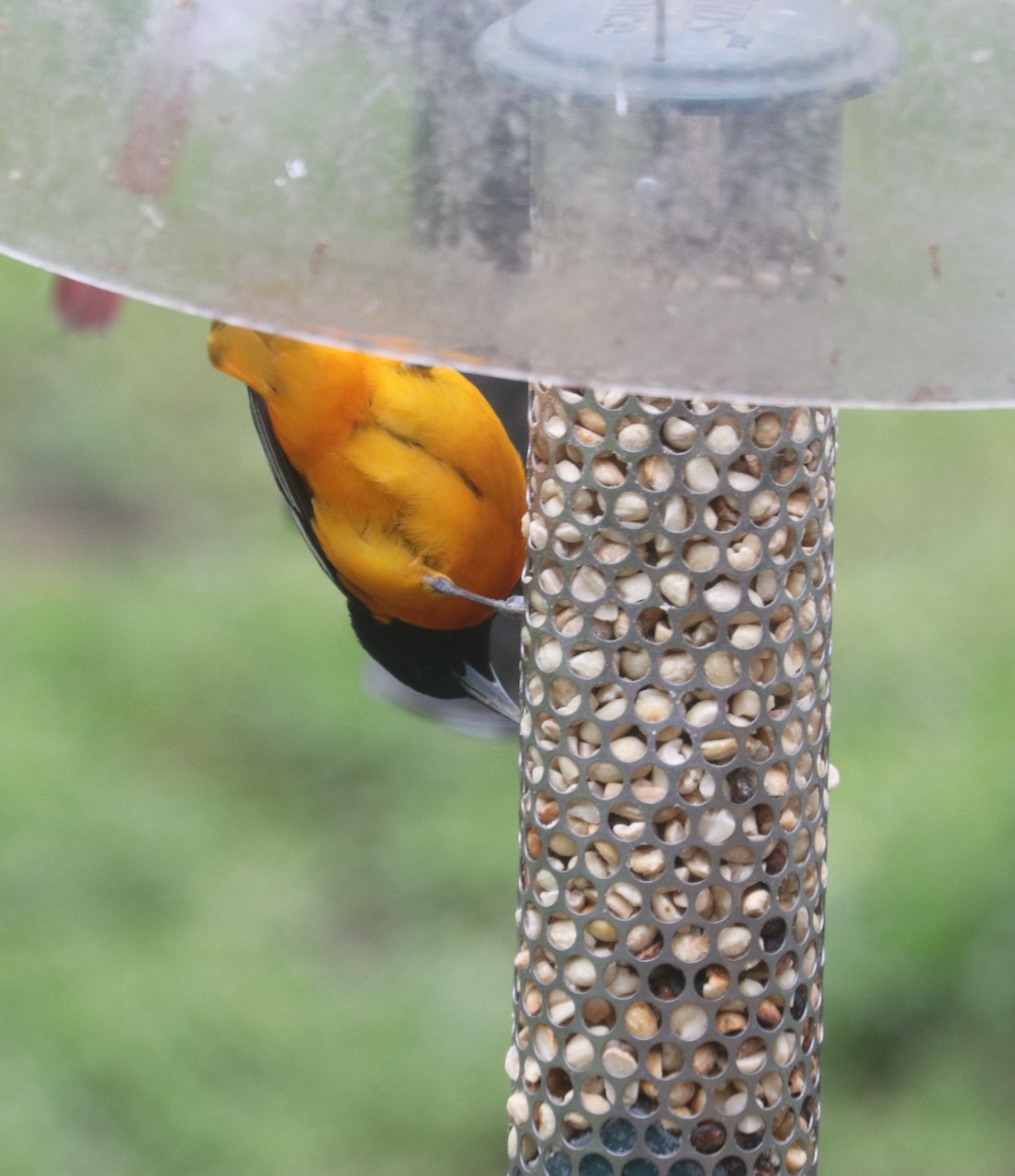
This is an unusual sight: a Baltimore oriole eating sunflower chips with a cardinal. Another unusual sight: the same oriole, eating peanuts!
But then, this is an unusual spring. April was terrible: cold and wet. I had high hopes for May, but it was 38 at wakeup this morning, May 6, in southeast Ohio, and the birds are hurting. I lay awake all night figuring out ways to help them. I've got to go on another Zickpotition to feed baby bluebirds in their boxes today. My third such trip this nesting cycle. I hate that I have to do that, but it's that or clean the dead little ones out of my boxes, and that I really don't want to do.
When it's cold and wet, bluebirds and other insectivores have a terrible time finding enough food for their young. So I help. If you haven't seen the video yet, click here:
http://tinyurl.com/zicklife
These orioles are migrants, and they normally make their living like this. Here, he's spreading apart a dead leaf wad with his opened bill, looking for caterpillars or spiders.
But in this craptastic weather, the orioles are forced to mooch.
I had literally two tiny Clementines in the house when they blew in.
Do you like my oriole orange feeder? It was a gift from my sweet dear friend Kim Beard, last October. It happens to have a prong on it that works for impaling a small orange. :)
The wee clementines were disappearing fast. So as I lay awake all night, it occurred to me that the orioles might accept grapefruit. And they did, though they shake their heads at the sourness. This is a young male, who still has some olive-brown immature plumage around his eyes.
The first thing I did when I got up this morning was make a double batch of Zick Dough. Here's the recipe:
Zick Dough Improved
1 cup peanut butter
1 cup lard (can be bought in large tubs at Walmart)
Melt the fats together in microwave until liquid.
Combine dry ingredients:
2 cups chick starter (make sure it's unmedicated; available at feed store)
1 cup cornmeal
1 cup flour
Add melted fats and stir until crumbly. Does not need refrigeration. Serve in hanging plexi dome feeder so it stays dry. Serve in winter, or during unseasonably cold spells in spring and summer. It is too rich for a steady diet and can possibly cause issues with gout, but it's great for pulling birds through hard times. So feed sparingly, and only when needed.
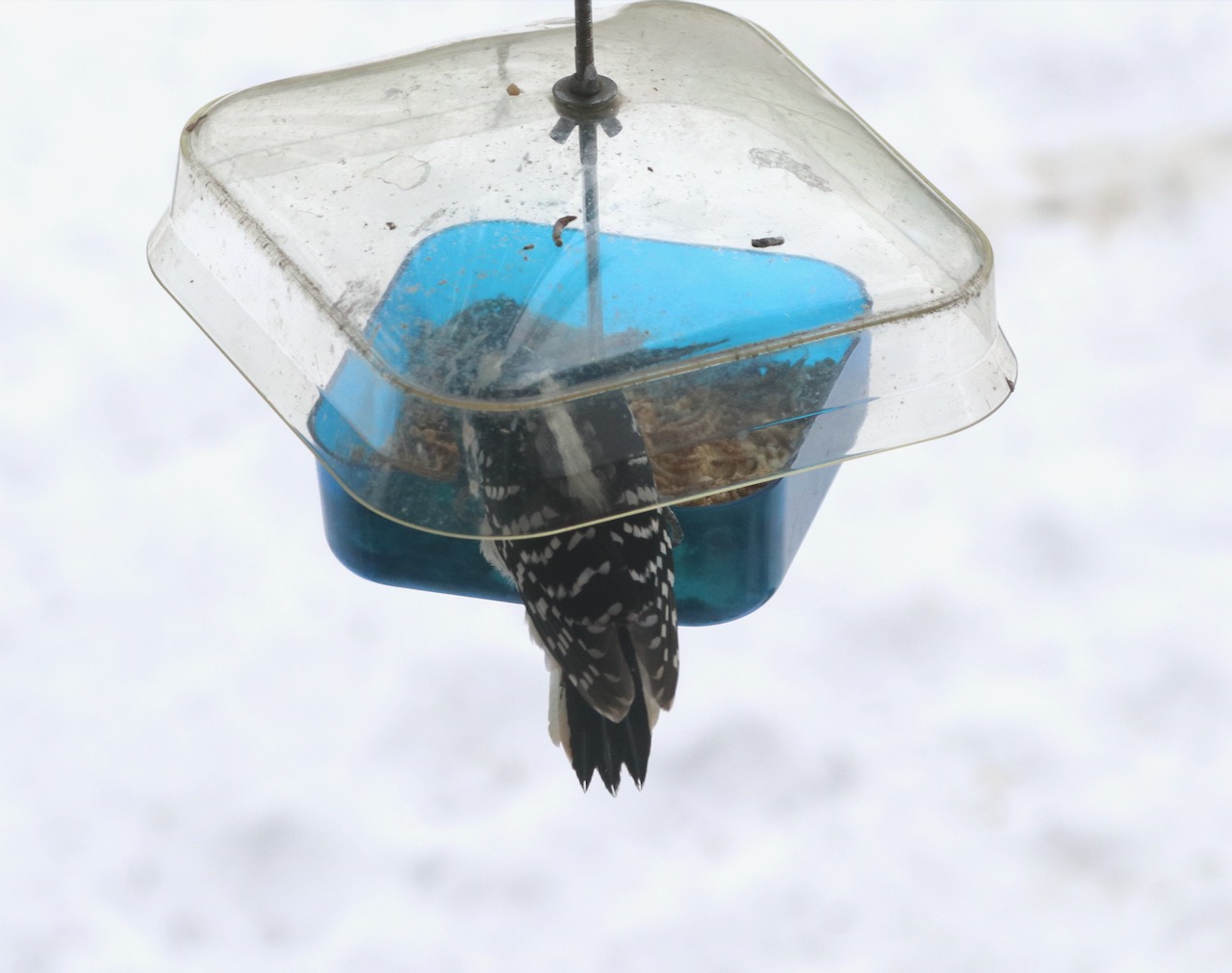
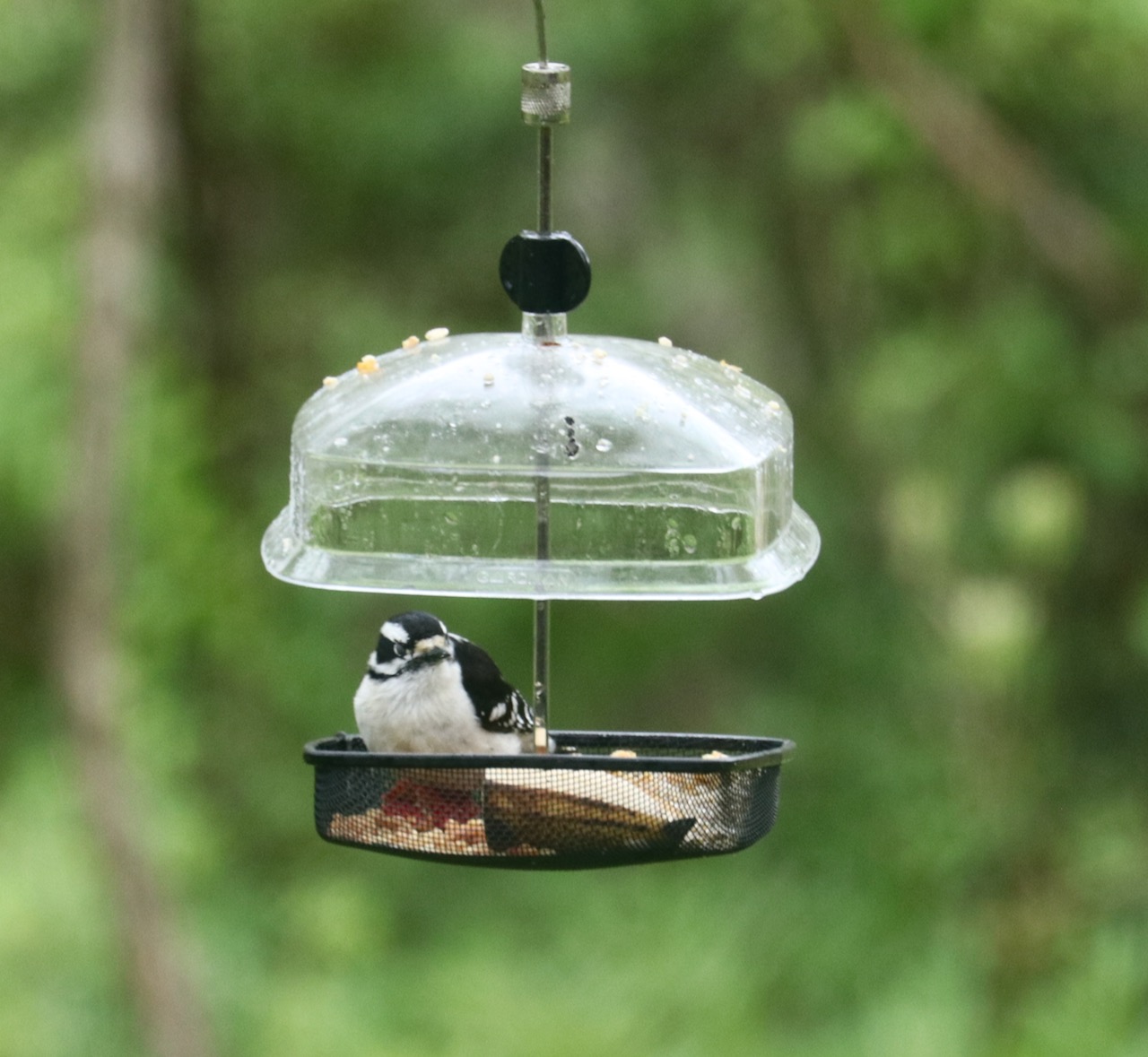
Here's a hanging plexi dome feeder I got at White's Mill in Athens OH. Has a screen bottom so water won't collect, and an adjustable dome so you can keep starlings out by lowering it so only cute little natives like this female downy woodpecker can wiggle in. Such an awesome little feeder!
While I was lying awake this morning, I got this idea that I might entice the orioles to take higher-quality fare than orange pulp by using a little birdy psychology. So as soon as the batch had set, I stuffed an exhausted Clementine skin with fresh warm ZickDough.
The older male oriole came down, tasted it, and approved. I was squealing with joy from inside my studio blind.
Along came the young male. Whatcha got there? (This is how birds learn: by observing each other). And old boy says, "Nothing you'd want! Mine!"
When an older female dropped in, she was attracted to the Clementine, but didn't consider ZickDough fit for consumption. You can see her spreading her mandibles, trying to get down past the dough to the fruit pulp. Oh well. Two out of three ain't bad.
Between the ZickDough and the grapefruit, I've got them covered until I can get some big navel oranges today. I also ordered 3,000 mealworms from
thenaturesway.com , my favorite supplier of mealworms. Tell Tim Vocke that Zick sent you!
(I don't normally feed mealworms to the birds in my yard. But in a spring like this one, they can make the difference between life and death for nestlings).
You will notice that I am NOT feeding grape jelly to these birds. I do not consider straight grape jelly a fit food for any wild bird. It is practically pure refined sugar, full of artificial color, and not a fit food for any bird. I hope that if you are feeding grape jelly to orioles you will stop and consider my warning. I've been rehabilitating and experimenting with feeding wild birds since 1982, and I would never, ever feed straight processed grape jelly to one of my clients. If I did, I'd expect to see it keel over from liver damage in short order.
You will see a lot of people recommending feeding jelly to orioles. This is classic anthropocentric behavior. I enjoy it, so I do it. I don't even think about whether it's good for the birds. It brings them in, they like it, and that's enough for me. Well, just because a bird will eat something doesn't mean they SHOULD eat it.
No, there aren't any studies as yet to prove me right, but you can ask any avian dietitian if they'd feed jelly to orioles. You'd get an "absolutely NOT!" And neither are there targeted studies to back up the assertion that Red Dye #40, as found in artificial hummingbird "food," is harmful, and I think there's now solid agreement on that score (except from the manufacturers who continue to make money on it).
For more information on that, see my blogpost,
Red Alert for Hummingbirds.
And, at the risk of making this post a real linkfarm, I wanted to let you know that I'll be raising money for monarch butterfly research this Saturday, May 9! Mark Garland, my dear friend from Cape May, NJ, has asked me to bird around my home and contribute my sightings to his Virtual World Series of Birding team, The Monarchists. We have an AMAZING team of 15 people. They are:
Lu Ann Daniels, Ron Rollet, Elle McGee, Bert Hixon, Michael O-Brien, Louise Zemaitis, Meg Hedeen, Mark Garland, Dick Walton, Erik Bruhnke, Drew Lanham, me, Seth Benz, Geoff Heeter, and Scott Weidensaul.
Talk about good company! If you'd like to contribute to our knowledge and research on monarch butterfly migration, you can donate a per-bird amount (any amount is fine! A penny! Whatever!) at this link:
Thank you, as always, for reading and enjoying this wonderful spring with me.













Wednesday, January 24, 2024
0 comments