Well, we weren't moving TO Montana, we were moving toward Montana from our stint in North Dakota. And I was completely excited. See, when I was 12, I spent a summer in Opheim, in the northeast corner of the state near the Saskatchewan border. I was staying with my eldest sister and her husband in a little ranch house on the Air Force base there. The first thing I remember noticing is the sky, and the second thing was the way the lawn grass would lay down flat when the wind blew. I'd never seen that before. I also noticed horned larks, long-billed curlews, blue-winged teal, jackrabbits, coyotes and pronghorns. Eastern Montana was a budding naturalist's paradise. Heaven, to be plonked down in a biome that couldn't have been any more different from Richmond, Virginia, where I grew up.
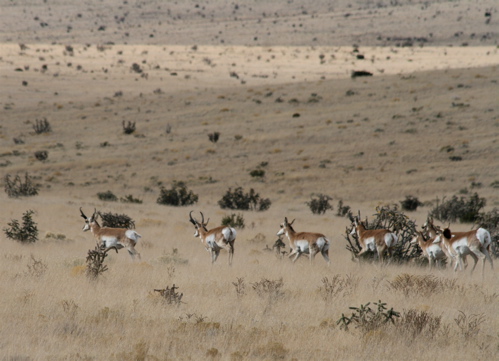
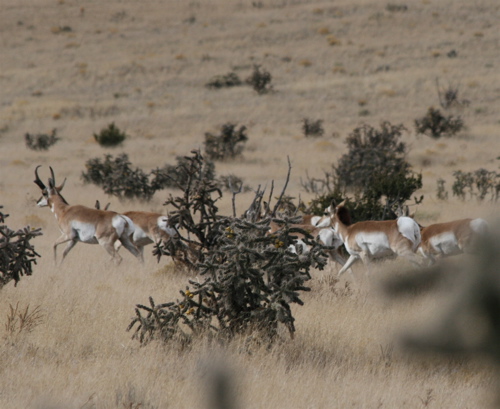
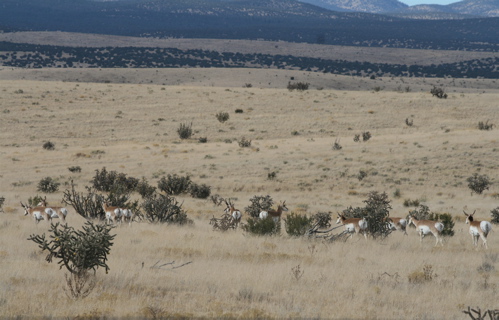
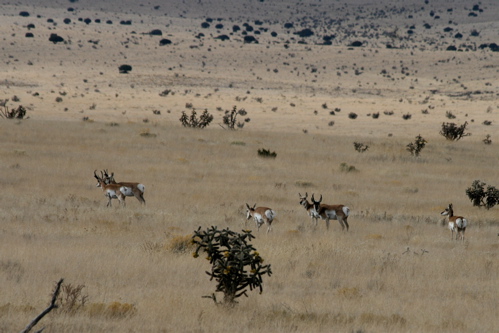
Pronghorns, North America's fastest land mammal, reign supreme on the Montana plains. I love seeing pronghorns, these Pleistocene relics, these antelope in a world of deer. Well, they aren't really antelope, either, but members of their own family, the Antilocapridae. At one time more than 100 million pronghorn raced over the Great Plains of North America, but the same market hunters that eliminated the bison moved to scrub pronghorn out, too, lest the Plains Indians find something left worth eating on the lands we raided, raped and left desolate. They almost succeeded, too, reducing pronghorn numbers to 34,000 by the 1920's. There aren't quite a million pronghorn in all of North America now, 1/100th of their former numbers. Think about that.
And most of them seem to be in Montana.

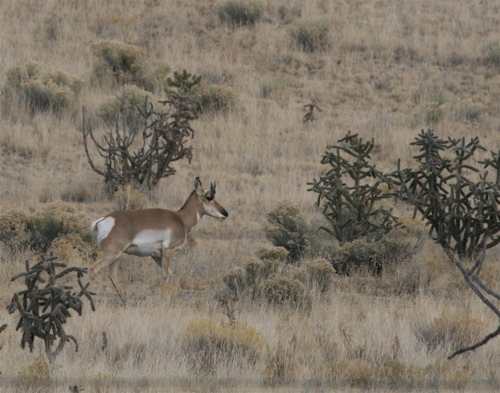
Wearing the equivalent of 8-power binoculars on either side of their heads, pronghorn don't miss much. They eye you carefully and turn tail quickly, seeming to form their opinion and act on it swiftly.

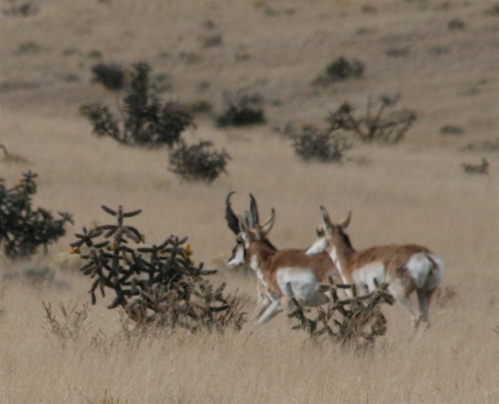
That heart-shaped rump disc can be flared in alarm, letting you know you've been seen. Might as well not try to chase me; I can hit 60 mph if I need to, with a cruising speed of 30.
The pronghorn were looking pretty sheddy, pretty molty.
 This little gal was nursing, and she let us get closer than most, probably because a fawn was flattened down somewhere in the vicinity.
Yep, nursing. See the udder and two teats?
 We did a double-take with this grouping. Has she got three fawns?
 Yes, a litter of pronghornlets, and we watched them all nurse at once.
 A quintessential Montana scene: Sage, bobwire, and a couple of pronghorn
 with a lark bunting on the wire!
 Bill and I chased lark buntings for most of a day, trying to get a photo, any photo, of these elusive and spooky little black birds. Those white shoulders! That song! Ah, well. They're a signature bird of the Montana sage, one that lived in my memory, and it was a tonic to see them again, even if we couldn't get a decent photo.
Poor Liam and Phoebe got quite fed up with our quest for this flighty little bird. Can we go somewhere, anywhere? Now? Did you get your picture? No? Pleeeease? Can we go?
 Sure. We can go. But there will be other sights to behold.
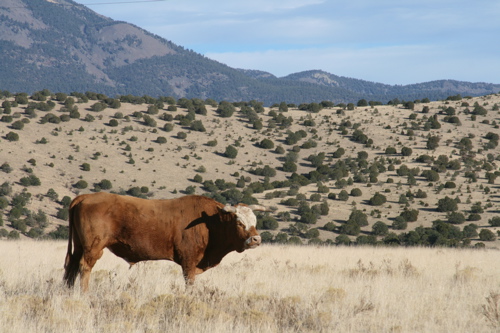
This is open range. As in, fence-free. Talk about free-range grass fed beef! We don't see open range in Ohio, except when a calf gets out. Whoa bossy!
 Bonus points to anyone who can identify this little denizen of the sage. I've caught him in a particularly saucy pose.









Sunday, September 27, 2009
12 comments