I'm an artist and writer who lives in the Appalachian foothills of Ohio. With this blog, I hope to show what happens when you make room in your life, every day, for the things that bring you joy. Strange...most of them are free.
Thurs. Feb. 27, 2020, 7 PM: "Saving Jemima: Life and Love with a Hard-luck Jay" at
Mt. St. Joseph University Theater, 5701 Delhi Rd., Cincinnati, OH 45233. Doors open 6:30 pm.
For info call Colleen McSwiggin (513) 244-4864
Mar. 11-15, 2020: Bird Friendly Backyard workshop and Saving Jemima talk at Joint Conference, N. Am.
Bluebird Society/Bluebirds Across Nebraska, Holiday Inn Convention Center, Kearney, NE. Right in the middle of
sandhill crane migration! Call (308) 237-5971 for reservations.
Mon. Mar. 23, 2020, 6 PM: "Saving Jemima: Life and Love with a Hard-luck Jay" at Morgan Co. Master Gardeners Event, Twin City Opera House, 15 W. Main St., McConnelsville, OH. Free and open to the public. Call (740) 962-4854 for information.
Sun. Mar. 29, 2020, 3 PM: "Saving Jemima: Life and Love with a Hard-luck Jay" at
Sunday With Friends,, Washington Co. Public Library, 205 Oak Hill St. NE, Abingdon, VA 24210. For more information, call (276) 676-6390
Apr. 30-May 2, 2020: Julie Zickefoose at New River Birding Festival, Opossum Creek Retreat, Fayetteville, WV. Friday night keynote: Saving Jemima. Curtis Loew, miracle curdoggie, presiding.
May 7, 2020, 7 pm: "Saving Jemima: Life and Love with a Hard-luck Jay" at Campus Martius Museum, Washington and Third Streets, Marietta, OH. Booksigning after. If you missed the Esbenshade lecture/ People's Bank talk in November 2019, this is your event!
Weds. May 13 2020, 5:30 PM: "Saving Jemima: Life and Love with a Hard-luck Jay" at Roger Tory Peterson Estuary Center's event at Essex Meadows, 30 Bokum Rd., Essex, CT 06426
This event is open to the public.
Thurs. May 14 2020, 6 PM: "Saving Jemima: Life and Love with a Hard-luck Jay" at New Haven Bird Club's Annual Banquet, Amarante's Restaurant, 62 Cove St., New Haven, CT 06512. This event is open to the public!
Sat. May 16, 2020: "Saving Jemima: Life and Love with a Hard-luck Jay" for Bergen Co. Audubon Society at
Meadowlands Environment Center, 2 DeKorte Park Plz, Lyndhurst, NJ 07071
Time to be announced. Call (201) 460-1700 for more info.
Sun. May 17, 2020, 2 PM: "Saving Jemima: Life and Love with a Hard-luck Jay" at White Memorial Conservation Center, 80 Whitehall Rd., Litchfield, CT 06759. Call (860) 567-0857 for information.
Tues. May 19, 2020, 7 PM: Good Reads on Earth Author Series, by PRI's Living On Earth with Julie Zickefoose and Saving Jemima at Mass Audubon's Drumlin Farm Wildlife Sanctuary, 208 South Great Rd., Lincoln MA 01773. Includes audience participation, and will be taped for airing on public radio! Get the book first, read up and call (781) 259-2200 for information.
Thurs. May 21, 2020 6 pm: Julie Zickefoose, "Saving Jemima: Life and Love with a Hard-luck Jay" at
Bigelow Chapel, Mount Auburn Cemetery, 580 Mt. Auburn St. Cambridge MA 02138. Call (617) 547-7105 for more info.
I'm actually trembling, I'm so excited to share this with you.
Last June, the nationally syndicated radio program Living on Earth held a live interview with me, via Zoom, on my newest book, Saving Jemima: Life and Love with a Hard-luck Jay. If you missed it, it's at this link: https://tinyurl.com/zickonloe
I guess host Bobby Bascomb and the staff liked what happened last spring, because they've asked me back to tell some animal stories for their New Year's Day show, which will air all across the country on NPR affiliate stations, starting today, January 1, 2021, and continuing through the weekend. You can listen here: https://tinyurl.com/zickanimals
a cottontail in my driveway in the morning, light coming through its ears (ever my favorite scenario)
Thinking about it a bit, though I have lots of good bird stories, for this special show I wanted to tell stories about the underdogs: animals most people consider varmints-- namely woodchucks and cottontail rabbits. As you know, I'm an avid gardener, and I've had more than my share of run-ins and losses to these mammals. But I still love them, and I work around them, because they were here before we were, and I believe that having a taste for my vegetables and flowers should not be a capital crime.
In this podcast, I'll tell a couple stories about heroic mother rabbits, doing what they must to feed and protect their nests. And what it feels like to reach down through straw and fur and hit a nest of slick baby rabbits.
There is also a woodchuck story. I love woodchucks as much as most people hate them.
This is a magical woodchuck story.
Obviously, my ulterior motive in telling these stories over National Public Radio is maybe to sway a few gentleman farmers and gardeners who might otherwise shoot rabbits and woodchucks, to pause and consider what is going on between those sweet ears, behind those dark eyes.
Listening to the podcast, you'll hear some bewitching guitar music.
They are composed and performed by Josh Kimbrough, who happens to be my niece Katie Zickefoose's husband. I think they're the perfect pairing, don't you?
For more of Josh Kimbrough's music, and to buy his excellent new album, Slither, Soar and Disappear,
This, rather than calling it up on a streaming service, is how to support an independent artist. We get nothing when you listen on Spotify or Pandora. With song titles like "Sunbathing Water Snake" and "Backyard Hawk," Josh's beautiful finger-picking style is a perfect fit for this podcast, and your taste!
Go here to listen to my part of the Living on Earth podcast:
If you're an habitual podcast listener, just look for the Living on Earth podcast on your favorite app.
My deepest thanks to Bobby Bascomb, Jenni Doering and the fabulous staff at Living on Earth for featuring these tales of the underdogs and Josh's beautiful music for a brand new year.
I spent most of three days last week recording the audiobook for Saving Jemima: Life and Love with a Hard-luck Jay. Normally, Houghton Mifflin Harcourt hires voice talent to record books. Not this time. Nope, it would be me or nobody! As I read, I chuckled to myself, thinking the following random thoughts:
1. Criminy this writer loves polysyllabic words!
2. This is HARD to READ
3. Who but me would even know how to pronounce this stuff?
4. Much less how to emphasize this sentence?
5. Uh-oh. Here comes a rough passage. Don't choke up. DON'T CHOKE UP.
It was certainly interesting to have to read my own writing aloud. Mostly, it was a blast! I was surprised how much fun it was. Reading an audiobook incorporates acting and emotion, timing, storytelling and some technical know-how (like what to do when you flub a line). But it also is a really good way to discern if you're telling the story well.
5 1/2 years delivering commentaries for National Public Radio's afternoon show All Things Considered was the best possible training for this gig. I felt completely comfortable and pre-adapted. And after all, these are my words, so I might as well own them and read them like they mean something.
I cut my teeth in radio, writing and performing the three-minute commentary form. This, though, was a slightly different animal. This was reading entire chapters at a time, ranging from 1,200 to more than 4,000 words.
I found out I could read only about 3 1/2 hours total in a day, but I got almost half the book done in that amount of time. Gotta say I'm kind of a beast at this. I really, really dig it. I think it's going to change the way I write, to make it more conversational and easy.
I really enjoyed working with Houghton's Executive Producer of Audiobooks, Tommy Harron. He was patched in via Skype from Park Avenue in New York CITY!! (thinking of the old salsa commercial). We worked with a local sound engineer named Joe Huck, and that was great, because I could just drive into town and set up in his studio and go with it. I was sad at first, because Bill and I had set up this beautiful soundproof booth in our basement in March, and we'd done a couple sound tests with Tommy, using Bill's wonderful podcasting equipment. We were all ready to go, but it wasn't to be. If I could have gotten eight hours out of him in a few sessions, it would have been so lovely both to read my new book to him and have him engineer the recording. But in the end he just didn't have the strength to do it.
It's just one small thing in the pantheon of things that were taken away from us when he had to leave.
Anyway. I was grateful to be recording my book with anyone, grateful to have the job, grateful that there seems to be a growing market for audio books again. It made me think about podcasting, which Bill was so damn good at, and kept urging me to dive into. Well, I have a lot of irons in the fire, and I never got to it while he was alive, but maybe I will when the dust settles and I can look around.
Liam was newly home from school, and I hated to leave when he was home, but he's sleeping until almost noon, so I didn't miss all that much time with him.
Now, Curtis was another matter. It hasn't taken this dog long to get utterly spoiled, assuming his Ma is going to be home 24/7. And I have been, mostly, and the only trip I've taken, I took him along! (New River Birding and Nature Festival in Fayetteville, WV).
This is the extreme stinkeye he fixed on me as I pulled away the first morning.
The weather was cold and kind of nasty, so that was fine. But oh, I hate to miss any spring skies, being indoors.
I hate to miss any spring light.
But I got to see Marietta in that light on my lunch breaks This is our awesome ca. 1904 courthouse! It's really marvelous inside, too.
I saw this awesome Pontiac LeMans 350, ca. 1972, in its original paint (ya think?)
The rear view was even better. They knew how to design cars then. For looks. They weren't terribly functional, but man, they looked cool.
This car was being driven, I surmised, apparently without preciousness or irony. It was strewn with the ordinary stuff of daily life, and there were no oversized fuzzy dice hanging from the rearview mirror. You don't see that very much.
I did a bit of dogspotting and found this young refugee from the Humane Society shelter, who was adopted with her brother. Her owner was lovely and we had a wonderful lively yak. This doggie is half Lab, half coonhound, and she had the most marvelous disposition and the slidy loose shiny skin of youth. A delicious buttercream sundae of a dog.
On one lunch break I walked the railroad tracks behind the home recording studio in the Harmar section of old Marietta. I could have walked them all day, listening to the catbirds, orioles, tanagers and vireos singing.
And then I got to come home to my road and my Three Graces in spring afternoon light. Let me know if you ever get tired of seeing them dance, because I don't.
And when I got home, someone jumped right up into the driver's seat and told me I was not to leave without him again. Ever, ever, ever again.
Yes, this brilliant, empathetic, sleek, kind, clairvoyant tigerdog is wrapped tightly around my heart, wound in and out of the ventricles, and I'd have it no other way.
After a long drought, I'll be on National Public Radio's All Things Considered this afternoon, sometime after 4 pm ET, exulting about some strange purple tomatoes that grew on my heirloom plants. As you know, I love messing about with plants and seeds, but then so do bumblebees. So I got a surprise when my seed-grown babies finally bore fruit.
Here are the tired old snap beans in the foreground. See those tiny white blossoms? They keep making dinner for me. So they get to live.
The purple tomatoes on the hoof.
Zinnias, a florist's strain called "Blue Point." Much the finest zinnias since "Yoga," also a Shepherd's Garden Seeds offering.
Man, it feels good to be back on the air. Listen in. Go to the story page on the NPR site, register if you haven't already (it takes a matter of seconds), and leave a comment. Hit Recommend at the top of the story page. Let 'em know you liked it (if you did). I don't want any more long NPR droughts. I need radio like I need Boston terriers, katydids and strange purple tomatoes.
I'm all ate up today because we have the hugest week and weekend coming up. Tonight, a monster rehearsal for a long-awaited re-engagement of The Swinging Orangutangs at the Whipple Tavern on Friday, February 13. Oh my goodness. Our small band of hangers-on is primed to storm the Whipple (as everyone calls it), have a ball, dance, and not smoke. Two rehearsals today: the gig rehearsal, and also one for Phoebe's and my maiden recital on Sunday--she for piano, me for voice. Eek.
Phoebe and our teacher Jessica Baldwin will play the duet, "Old Abe Lincoln," while I'll sing a pop song, because that's what I do. No German opera just yet.
When I'm practicing my song (I'll sing "I Can't Make You Love Me" by Mike Reid/Allen Shamblin, made popular by Bonnie Raitt and Bruce Hornsby) I have to push away this image of Simon Cowell saying, "That was in-DUL-gent, it was cabaRET, it was an AB-so-lute dis-AHS-tah." He's always there, up in my head, although I have been able to get through the song twice recently without hearing that voice. I think I am watching too many American Idol auditions.It's funny how I can sing in front of a lot of people in a bar without breaking a sweat, but call it a recital, put me alone by a piano with a bunch of well-dressed people sitting politely with their hands folded in their laps, and it's a whole 'nother beast. A recital is like golf---all mental, instead of a gig, which is like basketball, where either you're able to pound the ball down the court and into the basket or you aren't, but either way you don't have much time to think about it. You just get down and deal with it.
So Friday we'll be going nuts with the Orangs, and Sunday I'll be in recital mode. I don't know if that's a good thing or not; I just hope I don't shred my voice at The Whipple. That's mainly why I'm taking voice lessons--I want to save what I've got; I want to be singing when I'm 88. Whatever Simon says.
So, in addition to the gig and the recital, we have friends coming down from Columbus to catch the gig and visit us. They are the city mice to our country mice. Although they spend most of the summer in the country in Vermont, and absolutely love to hike and be outdoors, they are accustomed to, shall we say, somewhat finer provisions than we are able to get 'round these parts. Luckily, they bring them to us, always offering to make a Trader Joe's stop for us before embarking. If you are a fan of Trader Joe's, you MUST watch this video.
If I have succeeded in embedding a video, the recital should go just fine. Thanks to my fine friend Matthew for alerting me to this homemade masterpiece.
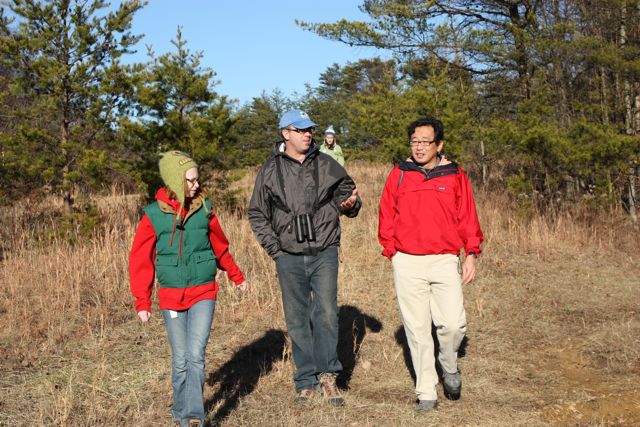
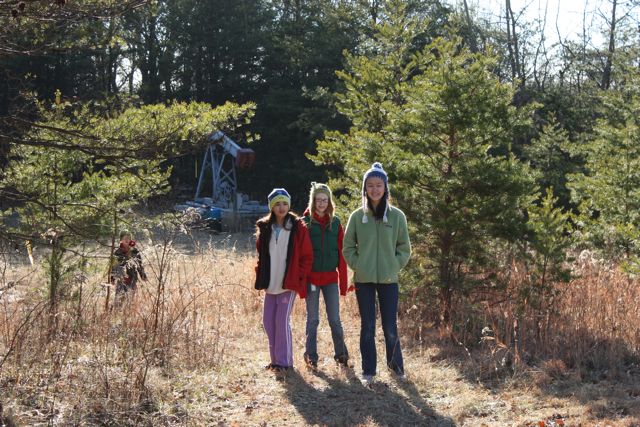
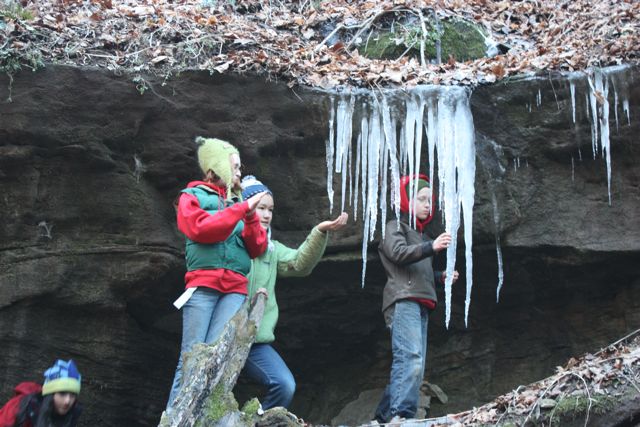
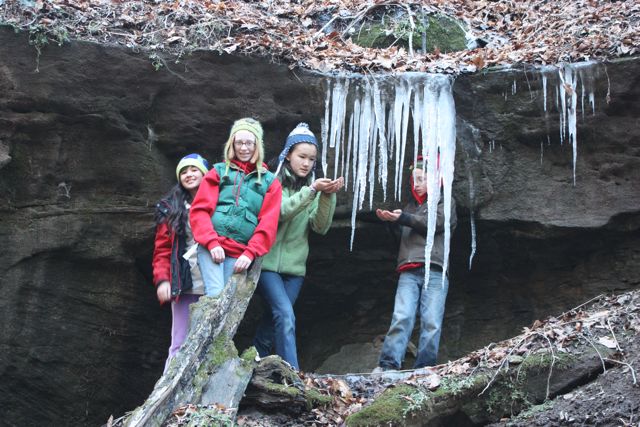
Anyway, I thought I'd share a few pictures of Yo, Kate, Anna and Kellie from their last visit.Yo and I went to high school together in Richmond, Virginia, and for a couple of years we even waited at the same bus stop. We had the same amazing English and World Lit teacher, my guiding light who I love and still talk to after 30 years. I was a year or two ahead of him, and we didn't really know each other, and it kills me now to think that we were a couple of blocks away and didn't hang out. We're making up for lost time now. Yo heard me talking about a dying beech tree on NPR one afternoon, emailed, and now we're yakking all the time. The best part is that our kids get along like a house afire. The worst part is that our kids now pester us constantly to go to Columbus and Whipple. We took the Yo's, as we call the family, down to Beechy Crash, a place where, 17 years ago, a huge beech smashed down in a ravine. That beech is nothing but a mossy log now, but the name stuck. There are always good icicles in the weepy seepy cliffs of Beechy Crash. Luckily no one was impaled. I had to tell Liam to get out from under the icicles; he was catching drips with his tongue...Kids don't think that the icicle's ever going to come crashing down, but I've seen them crash, and no kid of mine is going to be under something like that when it lets go. Shila and I learned that the hard way in Beechy Crash a few years ago.
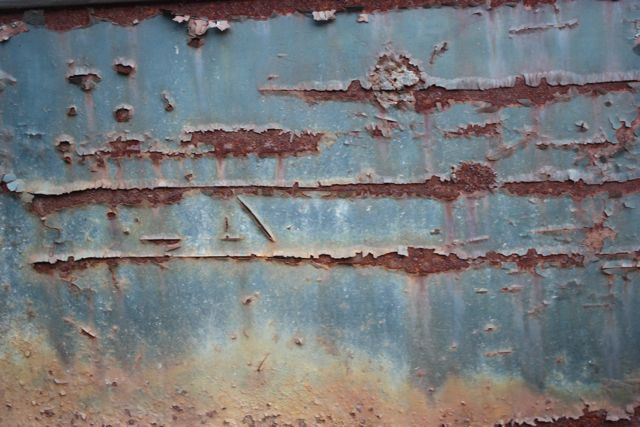
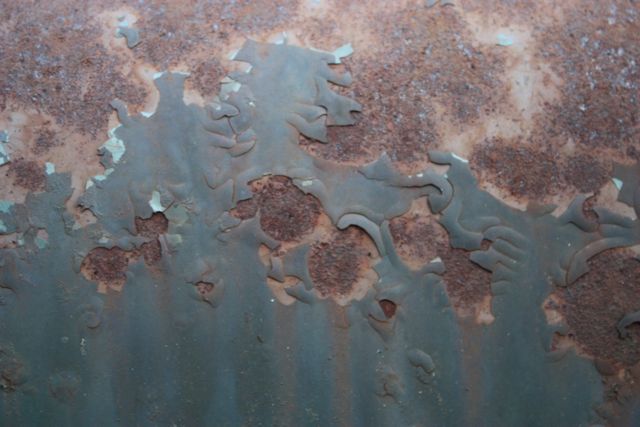
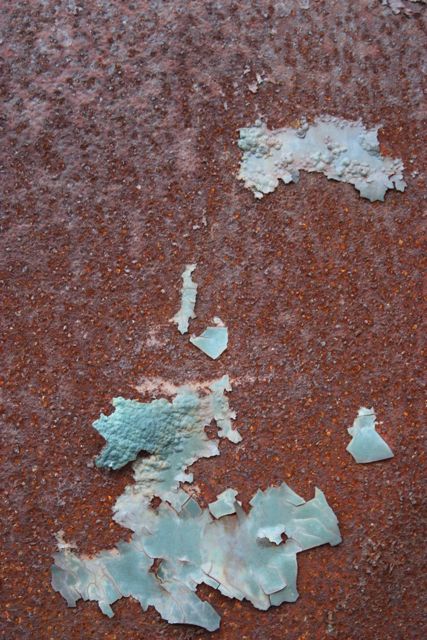
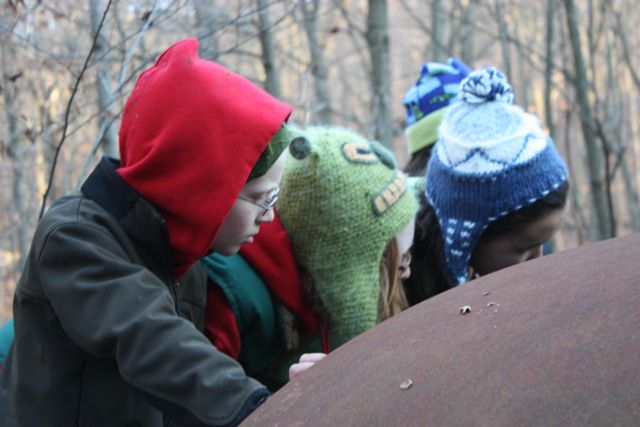
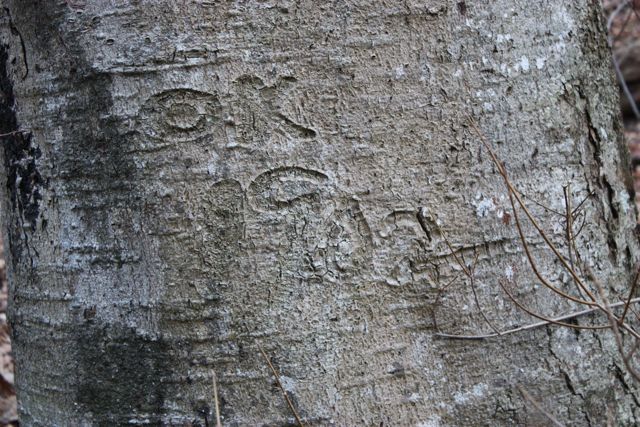
We came up to the old car that used to run a wildcat oil well deep in the woods. It's slowly deliquescing, and I commented on its beauty. The kids wanted to know what was beautiful about a rotting car. Well, I said, take a look at this: and this: and then there's this bit:Abstract paintings, all, reminiscent of lichens and shells, landscapes and skies...
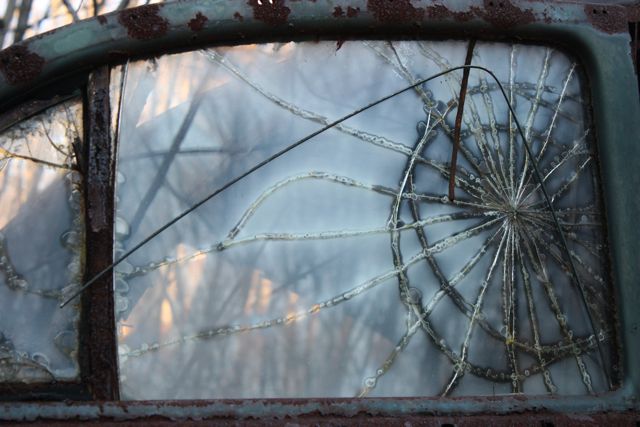
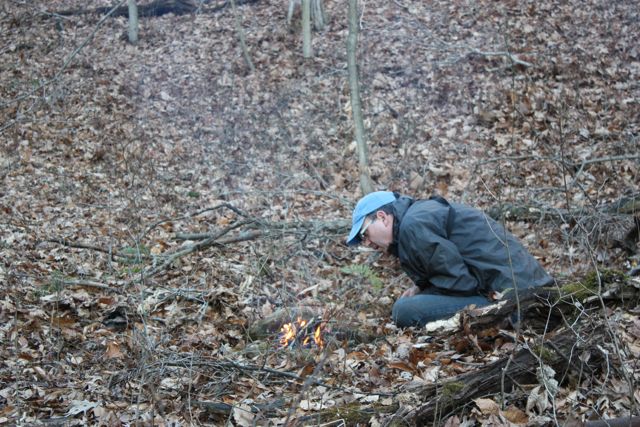
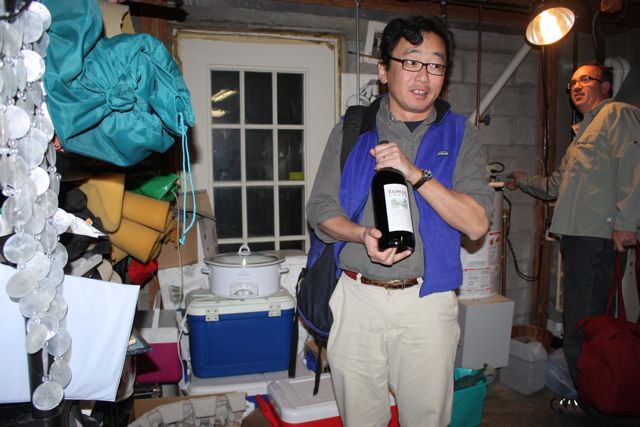
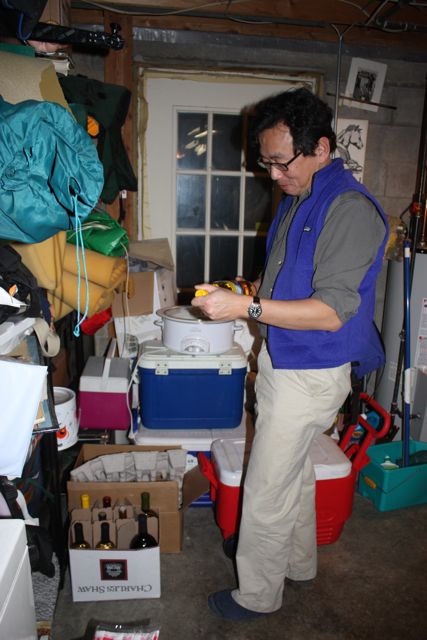
and let's not forget this: and I believe they looked at the car a bit differently then, with more sympathy and reverence for all it had once been. We visited the beech tree, OK 1902, which brought us together in 2007, and which is now thoroughly and sadly dead. If bringing us together was its highest purpose on earth, I hope it is content. We were hiking along when suddenly Bill hurried forward and disappeared up the trail. It wasn't long before the smell of smoke came on the air, uncomfortably, alarmingly close. I never want to smell that unless I know exactly where it's coming from. It took me a minute to figure out what was going on. I was pleased but not surprised to find my caveman hunkered down near the carcass of OK 1902. In no time at all he had a fire big enough to warm Liam's feet, which were very wet after a slide down a steep bank into the stream. It was time to put out the fire (Bill, Liam and Yo took care of that in the most manly of ways while the females went on ahead) and turn for home. This gave Yo, a frighteningly well-versed oenophile, a chance to razz us about our "wine cellar," which is a climate and humidity-controlled cardboard box nestled against a roll of extra insulation and some mops in our messy basement. He went through our collection, which is heavy on Ohio wines because those are the ones that are left. This one is from Trader Joe's, and it was a special buyout, and it wasn't very good. It has a train on the label, so we took to calling it Night Train.
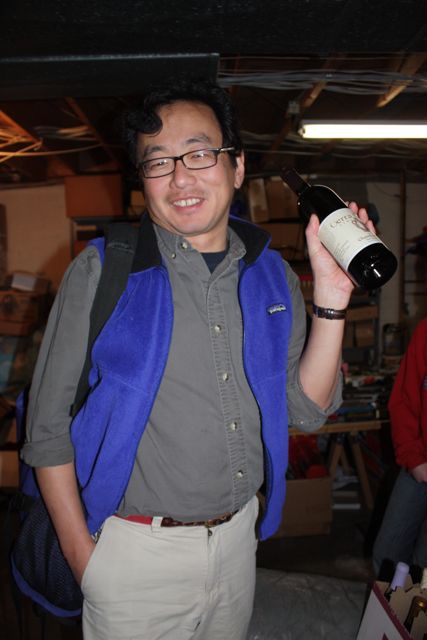
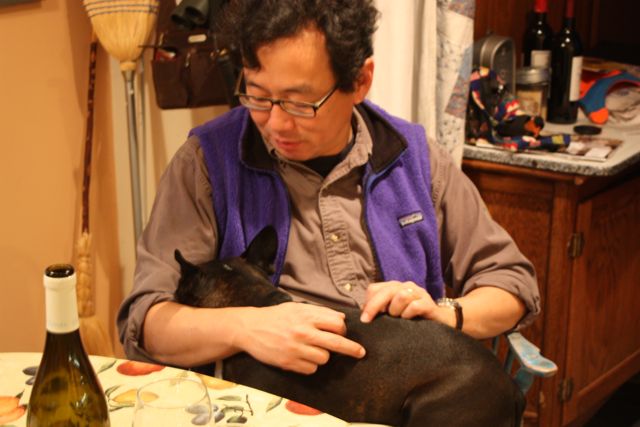
Yo likes burgundies and vouvets and all kinds of types of wines I haven't even heard of, and he brings bottles for us to experience and completely ruins us for the grocery-store rotgut we usually drink. It is no favor he does us, though it's really nice at the time.
If he weren't so cute, and didn't arrive bearing burgundies, I'd probably clobber him with a bottle of Terra Cotta Sweet Red Table Wine.
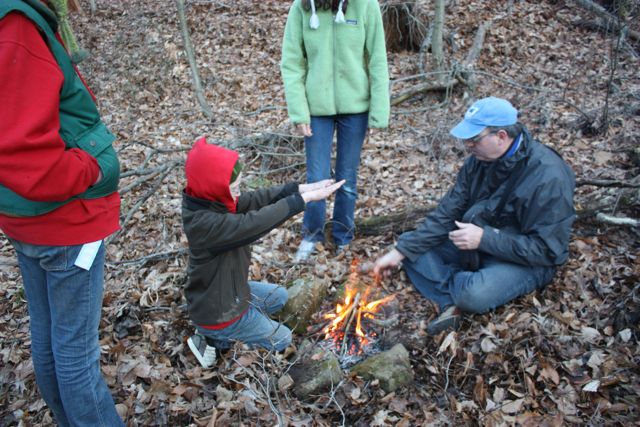
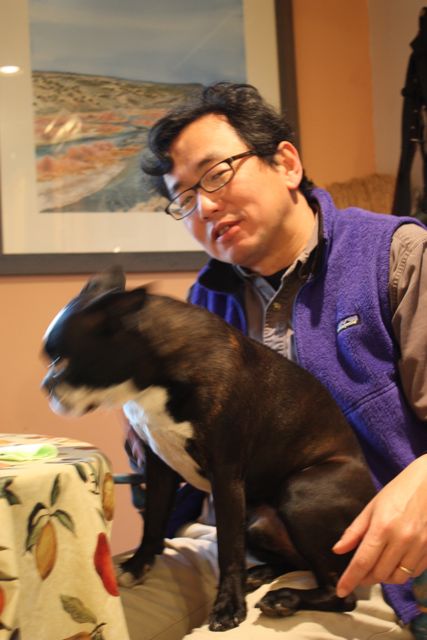
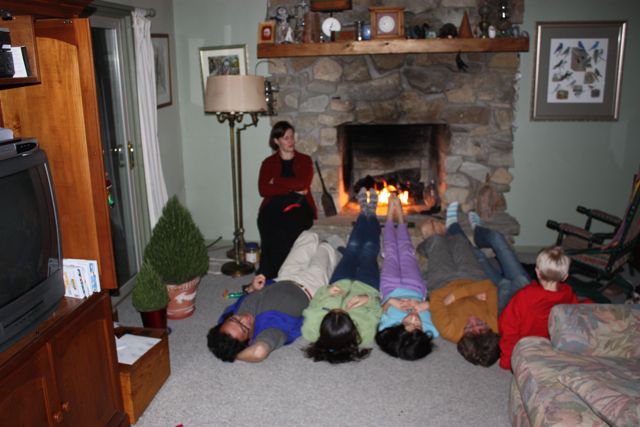
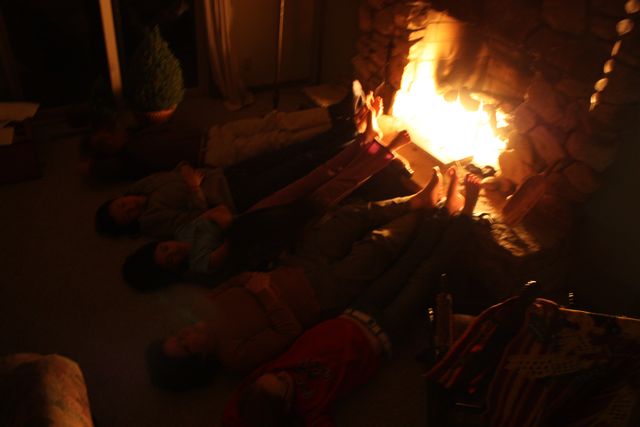
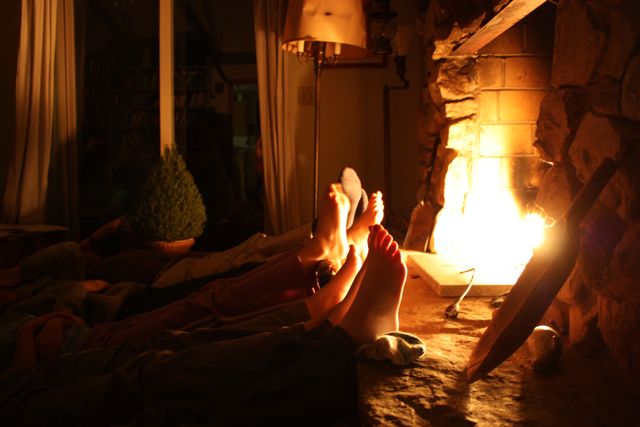
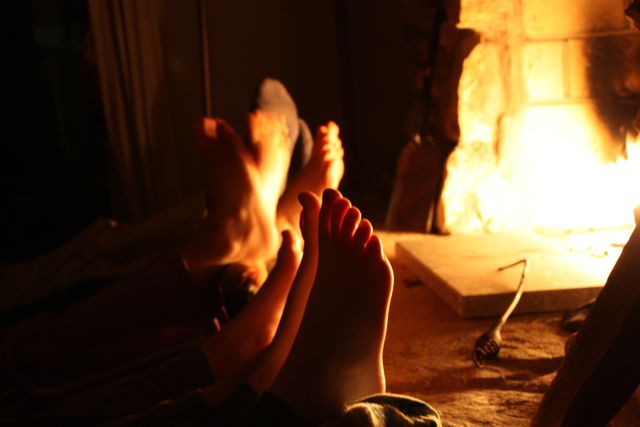
Plus, Chet Baker likes him. And anyone who will let Chet Baker fall asleep in the crook of his arm and stay still until he wakes up is a friend of mine. We were all kind of cold from the walk so we started a fire and put our feet to it, but in a nice way. These photos are by Bill Thompson III. The first, ugly flash photo is to show the lineup. But this is what it really looked and felt like. Friends are the best.
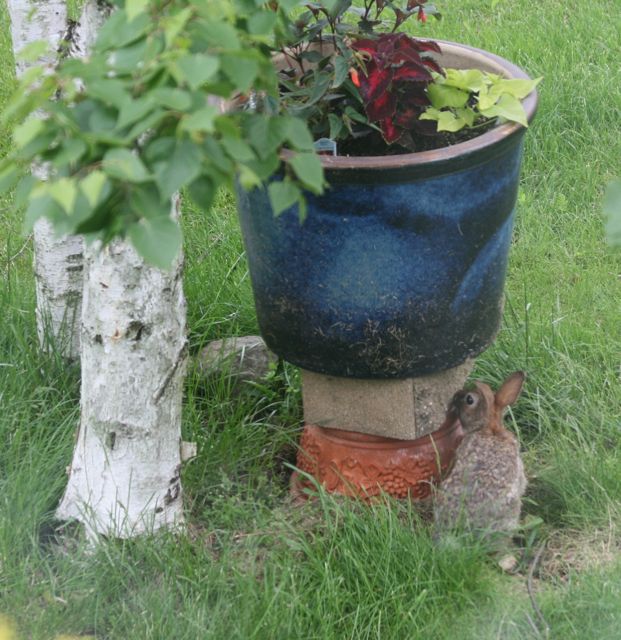
All my container plants are up on blocks. This is Appalachia, after all, it matches the cars. Actually, it's because I have a rabbit nemesis in the yard who climbs up into my planters and eats everything down to stubs. She chews up geraniums, reducing them to a pile of leaves and stem segments. Some thanks that is for saving her babies.
I am happy to report that the shadbush she bit down from 14" to 1" has resprouted, and is now enclosed in chicken wire. Thought you'd like to know, TreeLady.
On Thursday, July 12, my commentary on heroic rabbit mothers aired on All Things Considered. You can listen to it here.
This essay aired today on All Things Considered, in honor of Earth Day. You can hear me read it here. I couldn't have written it, much less felt it, without a letter that Mojo Man, a self-described frustrated forester, wrote to me more than a year ago, when I was complaining about selective cutting. In essence, he said, "Get over it. Think of the alternative. Logging is a sustainable use of a forest. Forests are dynamic systems, and even logged-over woods beat a housing development."
Sometimes we don't know the impact a few well-chosen words to a friend can have. Mojo's letter got me through the logging, got me through the snarling chainsaws and the shrieks and cracks of dying trees. Did I enjoy it? No. Would I allow it to be done to our forest? Never. But I repeated Mojo's wisdom to myself over and over throughout February and March; I repeated it to Bill and the kids; kept it in my head as I spoke respectfully to my neighbor, and it truly got me through. This old earth is a renewable resource, bouncing back after unthinkable injury and insult. Think of the Exxon Valdez disaster, the healing that's gone on in those diesel-soaked beaches. We owe her so much more honor, love and respect than we'll ever give her, but like a good wife and mother, she keeps coming back, taking care of us even at our spoiled, self-centered and destructive worst.
Our neighbor is logging his woods. We listened as the bulldozers and chainsaws moved closer each day. One by one, the big trees fell. The loggers were taking everything over 18” in diameter, leaving the smaller trees to mature. After three weeks, there was only one giant left, the tulip tree we called the Privacy Tree. We called it that because it shielded our house from the road, made it feel like a secret.
I knew the logger was saving the biggest tree for last. He couldn’t have overlooked it. It was time to say good-bye. I walked out through the snow, meaning to wrap my arms around it, and had to spread them for a good-bye hug. I know, I’m a tree hugger. But it’s something, in this cut-over, degraded forest, to find a tulip tree that’s 36” at breast height.
“Can’t we ask them not to cut the Privacy Tree?” asked Phoebe, her voice plaintive. “Doesn’t the logger have a heart?” Well, no, honey, we can’t ask him. A 36” tulip is worth money, and it’s on our neighbor’s land, and that, dear, is that.
While she was at school, I did call my neighbor and offer to compensate him for the value of the tree if he’d leave it standing. It was a reckless act, born of a mother’s desire to fix what’s wrong. I had no idea what it was worth, figuring I’d either be able to meet the price or not. I just wanted to buy it, to leave it standing, so the tanagers and wood thrushes could still perch in it and sing. He turned me down flat. “Nope, I’m gonna cut it. If it dies and falls down, I can’t get anything for it. And I don’t want it lying on the ground. Trees are a crop, just like anything else, and you need to harvest them before they fall down.” I suggested that trees might have another value as habitat, even after they fell down, and we hung up, agreeing that we saw things differently when it came to trees.
Two days later, my husband and I watched in silence as a chainsaw snarled into its base. The Privacy Tulip trembled, groaned, spun slowly, and smashed down, taking five other trees with it.
Four years ago, I watched with dismay as another forest I loved was logged just like this one. I’d drive by every day, watching it get thinner and thinner. The loggers took all the big trees, piling them like Lincoln logs on a flatbed truck, hauling the forest away in a cloud of diesel fumes. I ground my teeth and muttered as I passed. The next spring, underbrush sprang up in the newly opened woods, from seeds that had been waiting for decades in the soil for just such conditions.
Within three years, new, strange bird songs rang through the opened stand: Wild turkeys, American redstarts, blue-winged, prairie, hooded and Kentucky warblers flocked to the thick young growth that sprang up in the wake of the cutting. Come spring, I’ll park my car where the logging truck once sat, and watch jewellike birds fetching insects and nesting materials in the flickering sun, in the new growth racing toward the sky.
For birds like these to survive and thrive, some trees must fall, some sunlight must strike the forest floor. Even as I mourn the Privacy Tree, I know that my neighbor’s is a changed woodland, and not necessarily for the worse. Come spring, I’ll be listening for new songs.A postscript: Even before the branches had settled, five hawks appeared in the sky directly over where the Privacy Tree had stood for so many years. Two red-shoulders and three redtails circled and screamed, keening an unearthly chorus in the space where the tree had been. Their cries tore through the pearly sky. Who can say why? I think that we are not the only ones who mourn it.











Friday, January 1, 2021
4 comments