Background Switcher (Hidden)

Showing posts with label Cindy House. Show all posts

Painting the Prairie

Sunday, January 9, 2022

9 comments

 I always figured I'd be a career illustrator. And I was, for a long time. I did my first illustration for pay as a freshman in college, and slowly built a clientele from 1976 onward. By around 1988, I was chugging along doing commissioned watercolors at (gulp) $50 to $75 apiece. I wonder where some of those are now. Lots of book and magazine illustration; some packaging art; even got some drawings into The New Yorker.  I enjoyed it all. 

Around 2004, I decided that it was time to write and illustrate my own books. If I kept taking illustration jobs, I'd never be able to create a book of my own. Bill helped me with that, so much. "Just do a compilation of stuff you've already written! Your columns would make a great book!" Well, I had years of columns from the Backyard Bird Newsletter, which was sent out to a smattering of Bird Watcher's Digest's subscribers in the off months when the magazine wasn't coming out (it was a bimonthly, six issues a year). And they were pretty good--I was writing with a lot of heart and fire at that point. So they'd been published, but not to a wide audience, and they needed to be put together in a book. Bill was so right: it was a good, accessible, nonthreatening way to put my first book together. And I had the best little partner helping me along then. That boy could sell books.

Chet Baker, May 2006, age 3, with Mether's First Book.

Letters from Eden came out in 2006, with a truly ridiculous number of paintings and sketches inside. I really loved illustrating my own writing, and decided to do that from then on. There followed The Bluebird Effect in 2012, and Baby Birds in 2016. Saving Jemima came in 2019. After saying yes to almost every job that had come down the pike since 1976, it felt weird to turn down jobs, but I had to if I was going to finish my books. It was while I was writing The Bluebird Effect that I also realized that daily blogging was a huge block to my productivity, so I cooled it a bit on the frequency of my posts. Every day? Really? What was I thinking??

As I think about it, painting commissioned watercolors is in many ways a return to my old illustration days, when I enjoyed the challenge of creating a work of art with specific elements requested by the client. Some are very loose (perhaps just giving me the species of bird and leaving the setting up to my discretion), but most are pretty exacting and specific. People want a bird in a specific place, and sometimes it goes farther than that. The painting I'll show you now is one of the most exacting I've done, but I loved every minute of creating it. It presented more than an ordinary challenge.

This client is an ornithologist who has studied phoebes for much of his career. He wanted a painting of a Say's phoebe in the Smoky Hills of Kansas. This is a region known for distinctive chalk bluffs which rise up out of the ancient prairie like buildings. It's also known for its limestone fenceposts (lacking trees, I suppose, they made them out of the material at hand). My client wanted those in the painting. And native sunflowers, and yucca (!). He wanted the phoebe to be large in the frame. That would be the biggest challenge of all--to convincingly place a very small bird in a limitless landscape. 

  That is, in fact, the challenge that I face over and over as a bird painter. If someone likes a bird enough to request a painting of it in a specific place, they want to see the bird in detail. But how do I convey the vastness of the Kansas prairie, while placing a 7" bird in it right up close? Much to think about.

I don't have photos of my compositional phase, which is a lot of scribbles in soft pencil on large paper.
I shot some drafts to the client and got approval and tweaks, too. One of the things that became abundantly clear was that I couldn't use a limestone fencepost as a perch, because the post was too huge in relation to the bird. To be true, the post would have to be maybe twice the size it is in this draft composition, which was unacceptable to my eye. So I decided to put the bird on Maximilian sunflowers, which are in much better scale to its size.

The post is probably 1/4 the size it needs to be here in relation to the bird, and even that is getting a bit too big for the composition. Let's go to Plan B, push the posts into the middle distance, and put flowers up front instead.


Then I painted the most important thing: a half-sized study of the painting which would be my guide for executing the real thing. I just Xeroxed my sketch onto some watercolor paper, stretched the paper and painted it as quickly and messily as I could. In the process, I figured out what to do and what not to do; what to paint first and how to handle a very complex and (to be honest) rather vexing foregound.


I traced the composition onto a large sheet of watercolor paper (Winsor & Newton), then stretched the wet paper on a board using packing tape on the edges.


When it dried, I applied masking film and masking fluid around its edges to the parts I wanted to paint last. Then I could paint the landscape freely over those masked parts, knowing I could peel the mask off and have nice white paper to work on when the landscape was done. You can see here that the sunflowers and bird are masked off as a chunk. Same for the chalk bluff in the middle distance, and the white limestone fenceposts staggered across the prairie.


I learn a lot by looking at my colleagues' work, and I decided to try a technique the Barry Van Dusen explains in his magnificent book, Finding Sanctuary, which was published by the Massachusetts Audubon Society and Puritan Press.
If you're curious, here's my post about Barry's work, and a guest post from Barry himself.

If you click that link you probably won't come back to see my stuff! But I hope you do.

Anyway, Barry mixes a neutral tint (I think it's ultramarine, burnt sienna and ultramarine violet) and paints the shadows in his paintings before adding any color. This is completely different from the way I usually work, but I wanted to try it here. I'm self-taught, and never learned the proper way to paint.


Here I go, tickling in those shadows.


So far, so good. I marched the shadows up to the middle ground. I was so excited to see how it would look with the prairie greens over the tinted shadows!


Well, that's cool! Here's a little close-up of the far-out ridges. I love those shadow colors of distant hills.


Something about having the shadows already in made it less scary to handle these wide-open spaces.


My work always gets harder, the closer to the foreground I get. 


Grasses are my nemesis. Making them look realistic without getting too regular and fussy always stretches me to the limit. I look at Cindy House's pastel paintings and just cannot believe how well she handles grass. She ENJOYS painting grass. There's So Much Grass here. I knew, because its leaves were so delicate and thin, that I would be unable to mask out the yucca plant in the right foregound, so I painstakingly painted it in opaque gouache over the grassy foreground.


Only when I had the foreground grasses under control would I allow myself to start on the Maximilian sunflowers and chalk bluff. I peeled off the masking film and rubbed the dried masking fluid away with my fingers and a soft white eraser.


Because it was September, I could go out and cut Maximilian sunflowers on my very own prairie patch and paint it from life! That was awesome.

Oh look! A song sparrow. I think I know him...


The sunflowers brought a needed touch of green to a rather sere landscape. I did not want to do a big green painting. Greens can get away from you. So I kept them very dialed back.


Here come the sunflowers!  I still have the limestone fenceposts masked out here. 


I got absorbed in the fenceposts and painted the chalk bluff, too, before I remembered to take another shot.
One of the ways you say, "It's sunny" is to paint deep sharp shadows on things like bluffs and fenceposts. I could feel the light pouring through, and the sky wasn't even in yet. 


I couldn't wait to paint the sky! All the shadows were in--now I need a sky that will convince you it's sunny out!


But first the Say's phoebe--such a subtly beautiful bird it is. I painted a fresh immature with cinnamon wingbars and a strong cinnamon wash below.


All in but its black tail!


It's sky time, y'all. No progress photos on the sky--that happens too fast to take pictures, and all wet on wet! I am particularly pleased with the perspective of the clouds going off in the distance, and the sunny space they create in the landscape beneath. They're blurry, which for me evokes the prairie wind, which never stops. The sunflowers are tossing in that wind.


I didn't want to pack this one up to send. Sometimes I wish I could keep my paintings. But off it went, to Kansas, where it truly belongs.


Say's Phoebe in the Smoky Hills, Kansas.  Private Commission, October 2021 Watercolor, 14" x 18"


Art and Love in Wisconsin

Sunday, September 9, 2018

5 comments
 Displaying two perfect, squeaky squidgy Wisconsin cheese curds. From left, Master Artists Robert Bateman, Cindy House, and Not-Master Artist me.


The center of art in Wisconsin: Leigh Yawkey Woodson Art Museum, with a fabulous crane installation called "The Dance" by Donna Dodson and Andy Moerlein.

What a sculpture garden this museum has! 


It's not at all like me to blog something so current, but I'm stuck for 7 hours in Detroit's airport, just trying to get home on a dreary gray day, victim of a malfunctioning emergency aisle light on a plane, that had to be fixed before it would be cleared for takeoff. That little burned out light meant I missed my connection in Detroit, and the next plane going to Akron doesn't leave Detroit until 10  tonight. That gets me in at Indigo Hill at approximately 1:30 AM, after I drive the two hours home in blinding rain. Yay. First world problems. I have a car, I have a home to go to, right? Still, it is a bit of a bummer to be so tired and not be able to get home in a remotely timely way.

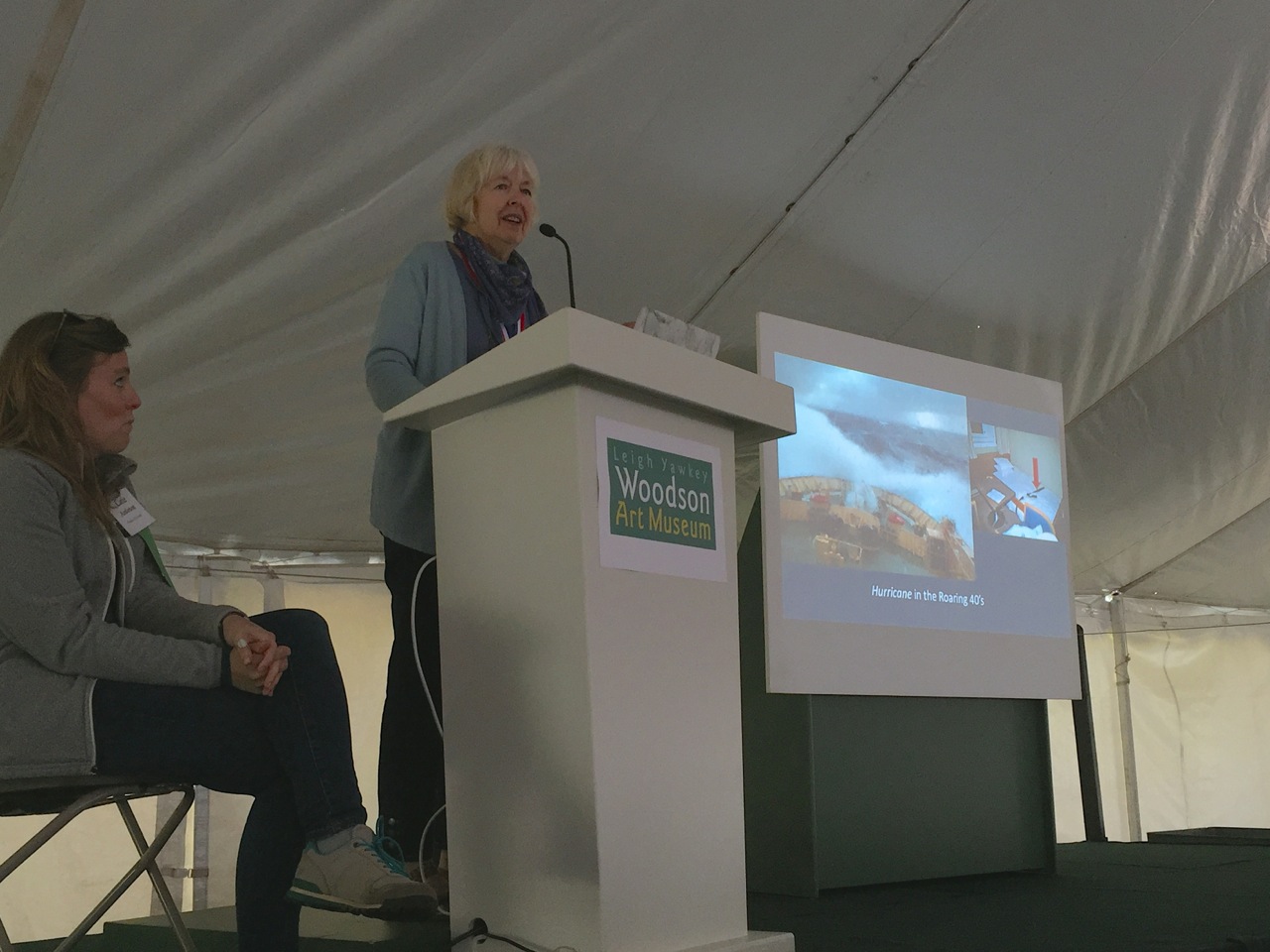
Reflecting on the great time I had while in the care of Leigh Yawkey Woodson Art Museum's wonderful staff seems a good way to feel thankful while sitting in a corner on my enforced staycation. Cindy House, fabulous pastel artist and dear friend, asked me to introduce her at two functions during the Birds in Art show at which she received the Master Artist medal. I got to hang it around her neck!!  I also wrote a long article for the show catalogue, in which I attempted to say enlightened things about the importance of her glorious art. Better than that was getting to tell a lot of other artists and art appreciators how much Cindy means to me personally. I really loved getting to do that.


One thing I wanted everyone to know was how funny Cindy is, something that doesn't come through in her majestic pastels at all. My intro turned out well, because Cindy's talk immediately after my little speech was cripplingly funny. Here, she's describing being on enormous Antarctic seas in a hurricane, and saying, "You know you're in trouble when the maid puts a seatbelt on your bed..."


The talent packed into this wee person is inestimable. Go to her website and look at her pastels. This is one of my favorites. You can see through the waves way down into the water.


We had no trouble at all with PDA's. That's how we roll.


It was such a delight to be among friends and fellow bird artists. I got to see Elwin Van der Kolk, with his gorgeous miniature of shelducks on a mudflat.


Such a simple concept, but so, so beautifully realized.  His website: for more of Elwin's incredible work click here.


I've no idea how it came up, but somehow Elwin and I discovered that we had both contributed art to the cover of two different editions of Vernon Head's wonderful book, The Rarest Bird in the World: The Search for the Nechisar Nightjar. Elwin did the cover of the Dutch language edition:


and my painting was used for the cover of the English language paperback edition:

The bird is known only from one dried wing from a roadkill, which is why our paintings have a certain similarity.

More beauty--John Pitcher's breathtaking nesting parasitic jaeger.  Holy wow.


Irish artist Julian Friers' incredible northern fulmar painting. He's a barrel of monkeys--plays guitar and pennywhistle; paints portraits of rock stars, extinct animals and other awesome things. His website is here.


I gloried in a huge auxiliary exhibit of Master Artist Anne Senechal Faust's serigraphs. Oh My Gosh. 


It was such a privilege to be here among such gifted people. Utterly humbling. 


Speaking of soul-feeding... I got to spend some incredible quality time with the wildly talented Debby Kaspari. We made music together, yakked, talked art and life, and soaked each other in. Oh my heart.


The artists all had to stand by their paintings in the Birds in Art show, which left me orbiting rather aimlessly, and wanting to get out into the warm September sunshine. There's no way you can put out enough cheese and crackers for several thousand people, so I got really hungry at the cheeseless Saturday morning public opening.  I decided to go foraging. I only walked about five blocks before I lucked out and found some wild plums dropping their fruit with abandon along a driveway in Wausau. 

 I gobbled about a dozen of them, and wish I'd taken more.

Saturday afternoon is given over to a trip to Hazelhurst, the private estate of the Woodson family which so graciously hosts Birds in Art. There are ravishing gardens which looked fabulous, even in September.  Glorious tall Japanese anemones blew me away.


 Morning glories were just starting to bloom, and already closed for the day. Mine in Ohio are only thinking about making buds. It is ever thus.

  
 I was delighted to find a new bee for me: Tri-colored or Orange-belted Bumblebee, Bombus ternarius. It's on Sedum "Autumn Joy."

They're zippy little bees, tolerant but fast. 

I found a Grail--a plant I've grown but once and then lost touch with. This is Salvia patens, Gentian Sage, so called because the only flower that comes close to its jaw-dropping pure royal blue would be bottle gentian. I have to say that this salvia beats even gentian for a true blue. It's bluer than almost any delphinium I've seen. Not a hint of lavender. BLUE. blue blue electric blue. Nothing like it.  Not that I'm hung up on blue or anything.


Debby Kaspari, a fellow plant freak and awesome gardener, caught me massaging Salvia seedpods until I found some fat brown ripe seeds. Eureka!


I would imagine you know what will happen to those. It's gonna take about a year, but expect to see this plant in my garden in 2019. Garden goals!


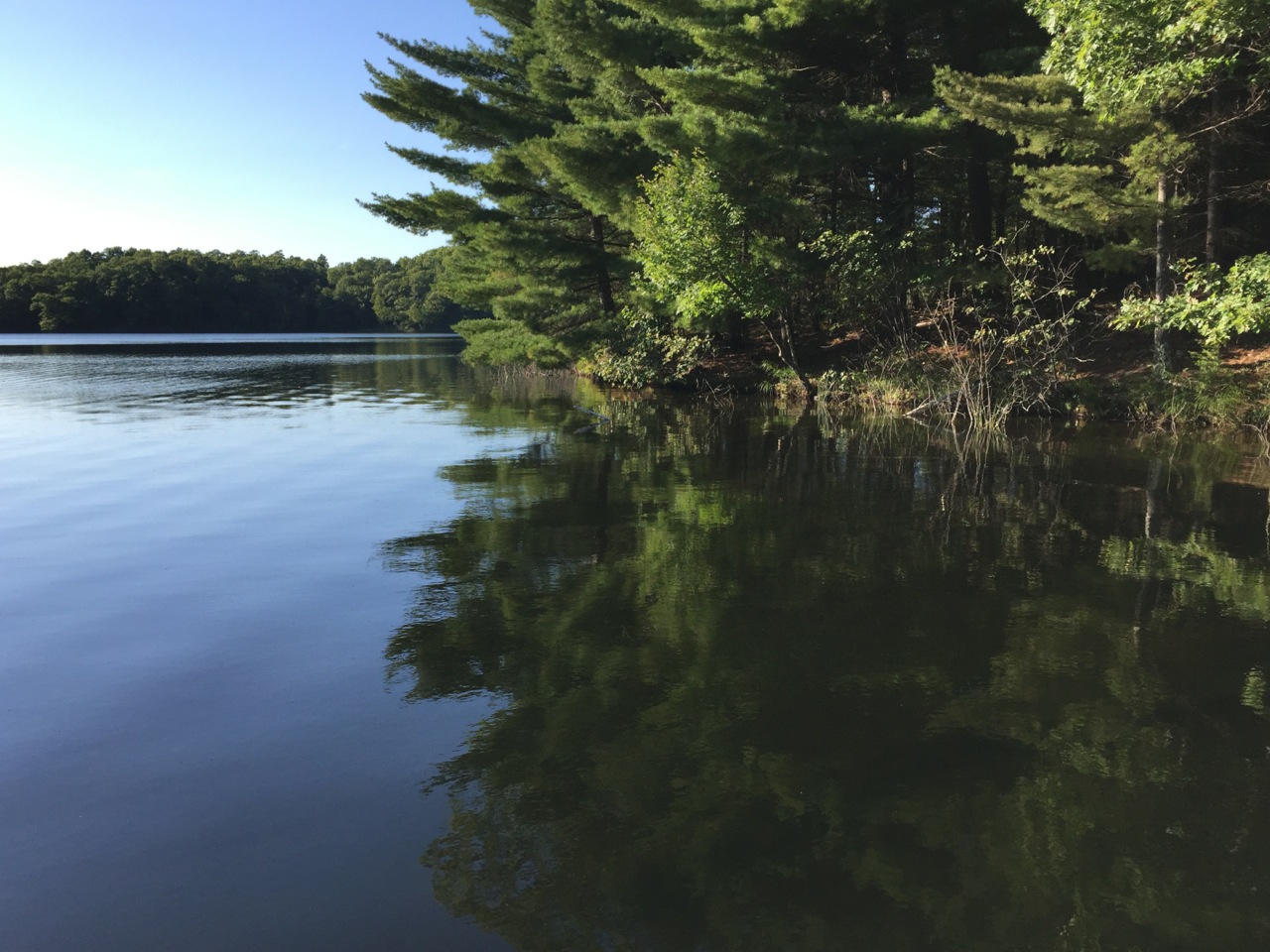
Debby and I were taken on a deluxe two-person sunset pontoon boat cruise around the lake, during which we ogled a young common loon, three hooded mergansers, a bald eagle and about ten billion whirligig beetles. I fell asleep with the sun on my cheek.  I dreamt I was in a Cindy House painting.  And that is a beautiful dream indeed.

Thank you, Kathy Foley and the Leigh Yawkey Woodson Art Museum staff, for having me up to honor one of my dearest friends. It was a trip I'll never forget. 
Thank you my dear dear friends for all the love. I'm going to try and store it up for awhile. 
A badly-lit goodbye clench at the hotel last night. I had soul-feeding conversations with (from left) Amy Montague, Larry Barth, Cindy House, Barry (and Lisa, far left!) Van Dusen and Eric Derleth, and I'm much the better for it. Gosh I love these people. I feel so lucky to call them friends. Shoutout to my beloved James Coe who was yakkin' elsewhere when this shot was taken.

 
Now to walk .6 miles in search of dinner. DTW Terminal A, here I come.

Pitcher Plant Hell

Saturday, December 31, 2011

7 comments
I looked at my fine plant with new eyes. Not only was it beautiful, it was deadly!


As you might imagine, I had a problem leaving live moths in the pitchers, scrabbling helplessly against the leaf's slickly haired sides. 

Judging that the plants had more than enough to eat, I saved them.


oh thank you giant primate

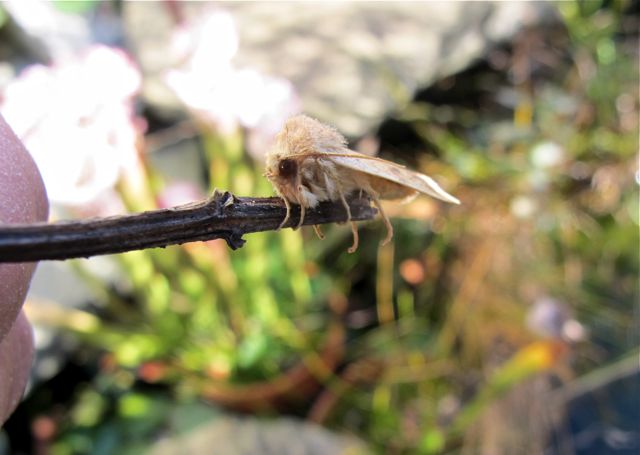
One I freed was a lovely Virginia Ctenucha, one of the wasp-mimic moths.


Just couldn't let it sink down into the goo.


Also had two gorgeous Ailanthus Webworm moths, Atteva punctella, one of the larger microlepidopterans, with a beautiful veined orange-and-white rolled wing. They flew away the second they were out in the air. Couldn't get a photo.


Earwigs, wasps, bees, flies, honeybees, syrphid flies, hoverflies--anything that comes to flowers will come to a pitcher plant, apparently, only it's the Hotel California for pollinators.


Even paper wasps are not immune to its sweet, honey-scented charms. It has a competitive advantage in that it's quite hardy and in full, sweet-scented bloom when practically everything else has croaked from the first frosts.


 Stick to flowers, guys. These plants are bad news.


Pollinators swarm my Suffolk Pink chrysanthemum just a few feet away. It's the hardiest and latest-blooming of all. It doesn't even get going until Halloween in southern Ohio, and it's a blessing blooming that late. (It's done now; these photos have aged a bit since I took them.) 

"Suffolk," in a few different colors, was probably the first mum ever brought to the New World. The foundation stock for my plants (yes, it spreads modestly and delightfully) came from peerless pastel painter and partner in peripatetic hilarity Cindy House, from her Vermont/New Hampshire gardens. (You may remember her spotting the "body bags" outside a Massachusetts restaurant).

A nice, super hardy, willing plant. Not like those nasty carnivorous ones.

I have the pitcher plants in the greenhouse, on the cold floor next to an outside vent, for the winter. Hoping I'm doing right by them. They're just too precious to me now to let them freeze into the pond ice again. Thanks again, Cheryl! All it took was five years and some sphagnum...

[Back to Top]