Showing posts with label black skimmer. Show all posts
Skimmerrama!!
Liam didn't really remember meeting Corey Finger of 10,000 Birds Blog at Midwest Birding Symposium a few years back. So he was wondering what it would be like to go birding with him in Florida.
I told him, "Corey's one of my favorite people. He's cool, he's funny, he has a sweet son named Desi, and the best thing about him is he gets as excited about seeing birds as I do. You'll like him."
They were thick as thieves within a few minutes.
Plus, we got to wear shorts in January. That worked for us.
Liam discovered that he and Corey shared a mutual love of boat-tailed grackles. Which appear to be eating some kind of breakfast cereal here. Saw a woman feeding disgusting sugary breakfast cereal to the gulls on Daytona Beach, too. What's with that? I don't believe in feeding wild birds food I wouldn't eat myself, with the possible exception of suet...I'd eat Zick Dough in a pinch.
We went to see the pack of black skimmers that hang out by a causeway near Historic Titusville.
I loves me some skimmers. Their weird asymmetrical bills are used as fish lures. The skimmer beats low over quiet waters, raking the surface with the tip of the mandible, its bill open wide. Fish rise to the line cut in the water. When the mandible hits a fish, the maxilla(upper bill) snaps downward, trapping the fish in a millisecond. The bird's head bends under and it comes up with a fish, which it often swallows in flight. I really don't understand how they do it, or how in the heck you catch a slippery little fish with two knives on edge, but they've got it down. It must work pretty well.
There always seems to be such a range of bill and body sizes in any skimmer flock. Males are about 1/4 bigger than females, and young skimmers take awhile to attain full size.
They're among the most graceful fliers of all. I love to watch them slice the air and water.
Black skimmers have spread up the East Coast, nesting in New York and Massachusetts now. Huzzah! I love it when cool birds expand their range.
I also love seeing that incredible bill head-on. Get a load of the left top male.
Well, that helps explain how he cuts the water without dragging himself under.
It's pretty unusual to see a black skimmer's eyes, so well-concealed they are in the black cap. I'm thinking the black cap functions to cut glare in the brilliant sun-on-water conditions the skimmer lives in, much like the black stuff football players wipe under their eyes.
I remember looking at a beautiful skimmer painting the terrific artist Don Eckelberry showed to a little group of us bird artists at his house on Long Island back in the 1980's. He hadn't painted their eyes. "Have you ever seen a black skimmer's eyes?" he asked. Nope. We hadn't. So Don didn't paint them in. And the skimmers looked fine.
I also remember his saying, "If a bird is black, get out your tube of black paint and paint it BLACK. Don't paint it blue or brown or anything else. Just paint it BLACK."
I love the breathless moment when they lift off. Oh, to fly with them.
We saw a handful of brown pelicans, and some white ones, too, flapping slowly over Canaveral Seashore. Birds a-poppin'.

|
Widget for blogger by Way2Blogging | Via Spice Up Your Blog Gadgets
|
Sandbar Birds
Wednesday, April 15, 2009
5 comments
Birding along Guyana's Issequibo and Rupununi Rivers is wonderful, heavenly. As it twists and turns, you never know what might be around the next bend. A family of giant otters or a little klatsch of large-billed terns? A cocoi heron or an Amazon kingfisher? From a boat, you can get close without alarming the birds.
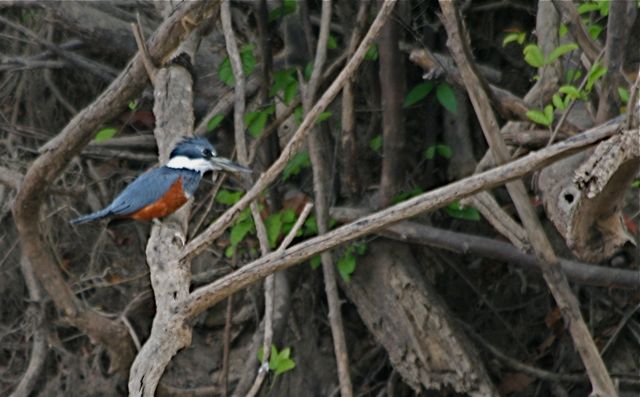
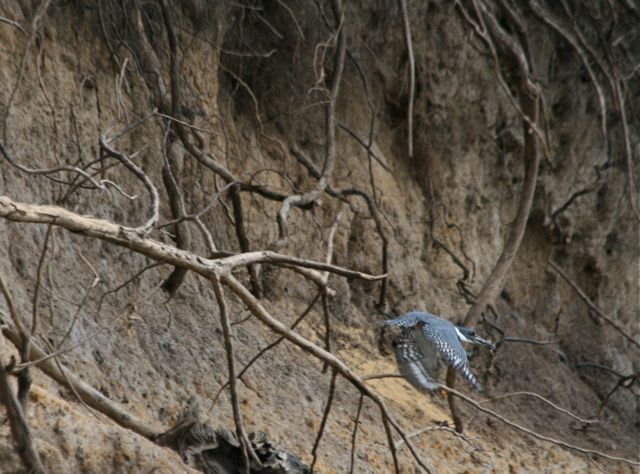
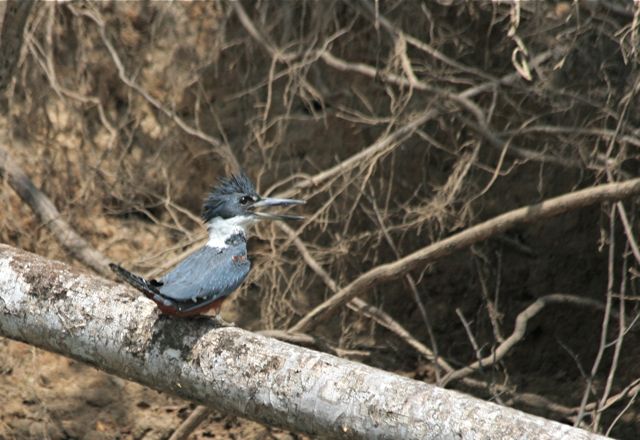
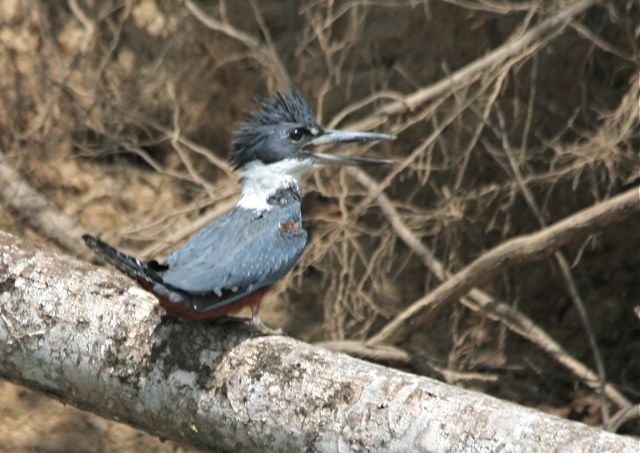
Here are some of my favorite ringed kingfisher photos from the trip. Some were taken on the Rupununi, some on the Issequibo.
I like the composition of this one.
Beautiful wings and a harsh call as it takes off.
Ringed kingfishers are much more approachable than belted kingfishers.
Maybe it's because they're the King Kongfisher, easily twice the belted's size.
Grand feisty birds they are.

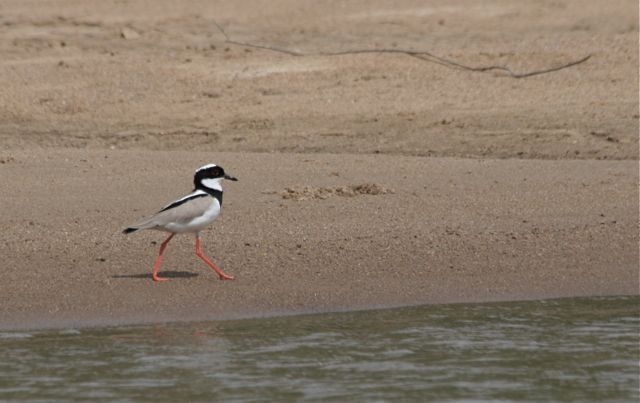
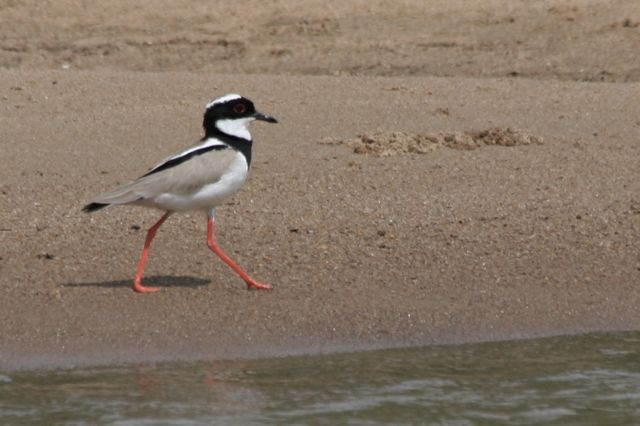
These little pied lapwings Vanellus cayanus reminded me vividly of the piping plovers I studied and protected for three years in Connecticut back in the 1980's. They were so smart, military in their markings and bearings, and always escorting us along the sandbars (probably under the impression they were leading us away from their eggs or chicks).
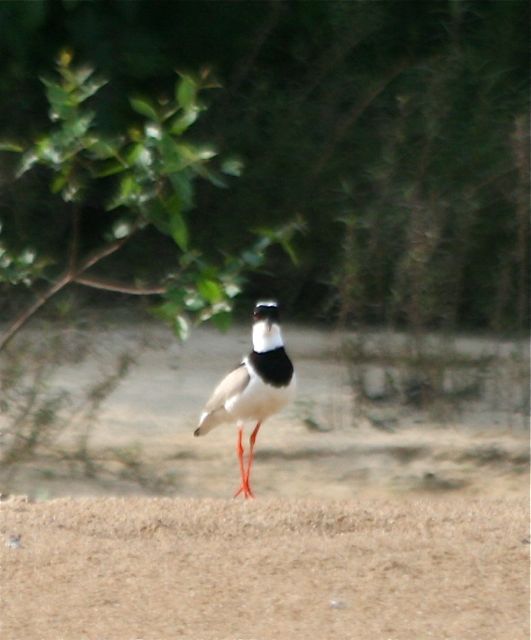
A head-on shot, showing how the black breast band seems to expand when the bird stretches its neck. Could there be any better graphic pattern for catching the attention of another pied lapwing across a wide river? Hey! You!
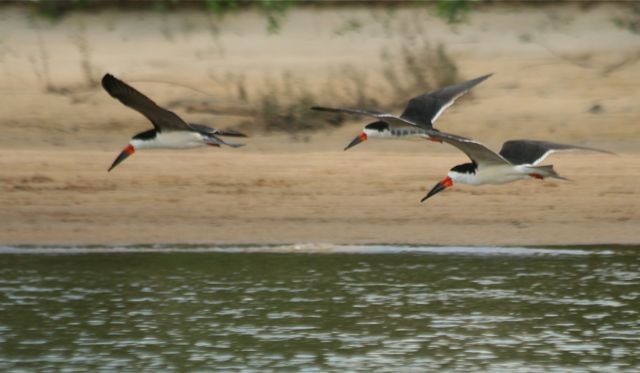
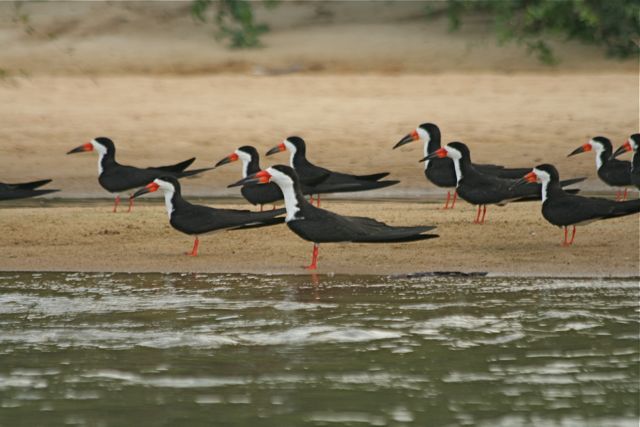
I was delighted to find black skimmers Rhynchops nigra abundant in one section of the river, and went into photo overdrive as they beat their black wings all around us.
This is the same species we see in North America, but it's resident here in Guyana. The bird at lower right is a juvenile, as you can tell from its nearly normal-looking bill. As the birds age, their thin, bladelike lower mandibles get longer and longer. They use the mandible to slice the water in a long, low pass, and grab up any small fish they encounter with a dizzyingly fast snap of the bill. Fish will actually rise to the track the skimmer makes in the water's surface, thinking it's made by a swimming insect, perhaps?
Skimmers on high alert, about to take wing.
You can almost never make out their eyes, but that's part of their unique appeal. I'm sure this color pattern, like the black marks football players put under their eyes, reduces glare as they work the bright waters.
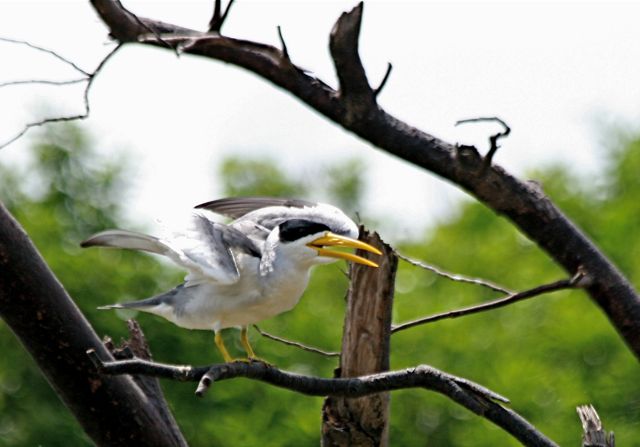
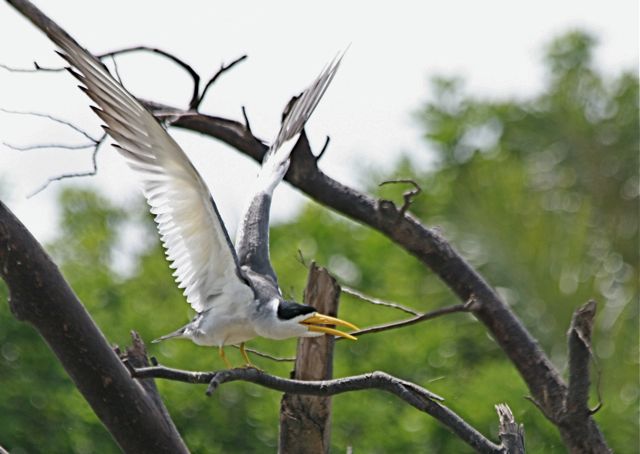
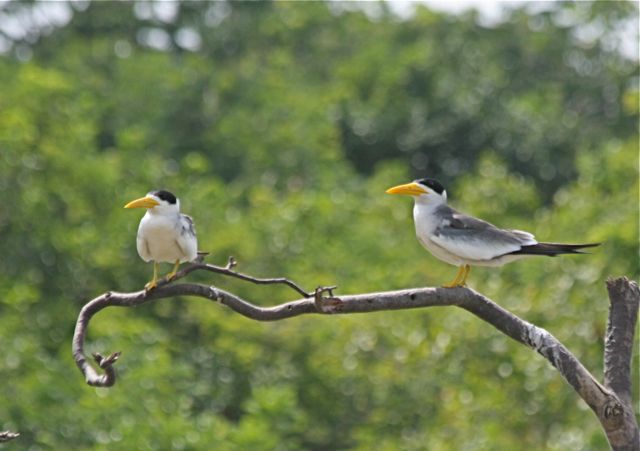
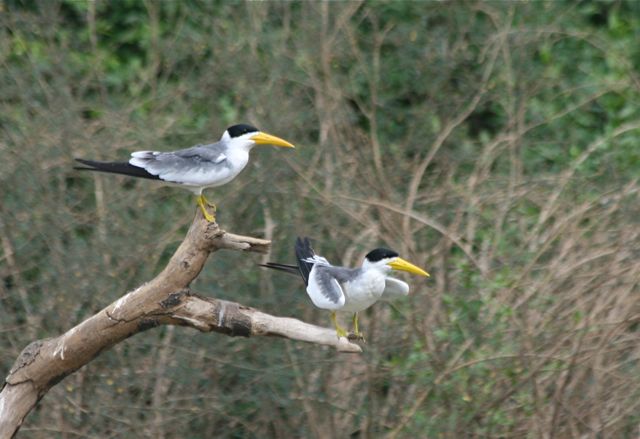
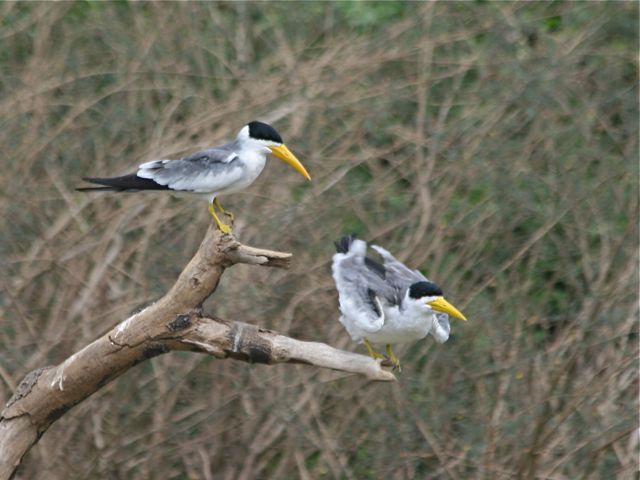
I was beside myself when we came upon some large-billed terns Phaetusa simplex. I remembered them so fondly from my time along the Rio Tapajos in Brazil. Noisy, even raucous, the terns, which nested in large colonies on river sandbars with black skimmers, yammered all night long, as if they were having a never-ending party.
To me, there's something quite skimmerlike about the large-billed tern's proportions and GISS.
It's kind of like a skimmer in tern's clothing, though it makes its living more like a tern, plunge-diving instead of skimming.
I just adore this bird. It reminds me of the crows in the old cartoon I loved, Hekyll and Jekyll.

For a bird with such a wide range (throughout South America) it's amazing how little information is available on the large-billed tern's natural history. I would love to have the leisure and time to go find out something about its life.
Here are some of my favorite ringed kingfisher photos from the trip. Some were taken on the Rupununi, some on the Issequibo.
I like the composition of this one.
Beautiful wings and a harsh call as it takes off.Ringed kingfishers are much more approachable than belted kingfishers.
Maybe it's because they're the King Kongfisher, easily twice the belted's size.
Grand feisty birds they are.
These little pied lapwings Vanellus cayanus reminded me vividly of the piping plovers I studied and protected for three years in Connecticut back in the 1980's. They were so smart, military in their markings and bearings, and always escorting us along the sandbars (probably under the impression they were leading us away from their eggs or chicks).
A head-on shot, showing how the black breast band seems to expand when the bird stretches its neck. Could there be any better graphic pattern for catching the attention of another pied lapwing across a wide river? Hey! You!
I was delighted to find black skimmers Rhynchops nigra abundant in one section of the river, and went into photo overdrive as they beat their black wings all around us.
This is the same species we see in North America, but it's resident here in Guyana. The bird at lower right is a juvenile, as you can tell from its nearly normal-looking bill. As the birds age, their thin, bladelike lower mandibles get longer and longer. They use the mandible to slice the water in a long, low pass, and grab up any small fish they encounter with a dizzyingly fast snap of the bill. Fish will actually rise to the track the skimmer makes in the water's surface, thinking it's made by a swimming insect, perhaps?
Skimmers on high alert, about to take wing.

You can almost never make out their eyes, but that's part of their unique appeal. I'm sure this color pattern, like the black marks football players put under their eyes, reduces glare as they work the bright waters.
I was beside myself when we came upon some large-billed terns Phaetusa simplex. I remembered them so fondly from my time along the Rio Tapajos in Brazil. Noisy, even raucous, the terns, which nested in large colonies on river sandbars with black skimmers, yammered all night long, as if they were having a never-ending party.

To me, there's something quite skimmerlike about the large-billed tern's proportions and GISS.

It's kind of like a skimmer in tern's clothing, though it makes its living more like a tern, plunge-diving instead of skimming.

I just adore this bird. It reminds me of the crows in the old cartoon I loved, Hekyll and Jekyll.


For a bird with such a wide range (throughout South America) it's amazing how little information is available on the large-billed tern's natural history. I would love to have the leisure and time to go find out something about its life.
|
Widget for blogger by Way2Blogging | Via Spice Up Your Blog Gadgets
|


Sunday, February 15, 2015
10 comments